Argentina economy retreats in April as growth stays uneven
Argentina economy activity fell 1.5% in April from March, highlighting uneven growth as agriculture outperformed while manufacturing and retail weakened.
Atlas Newsdesk ·
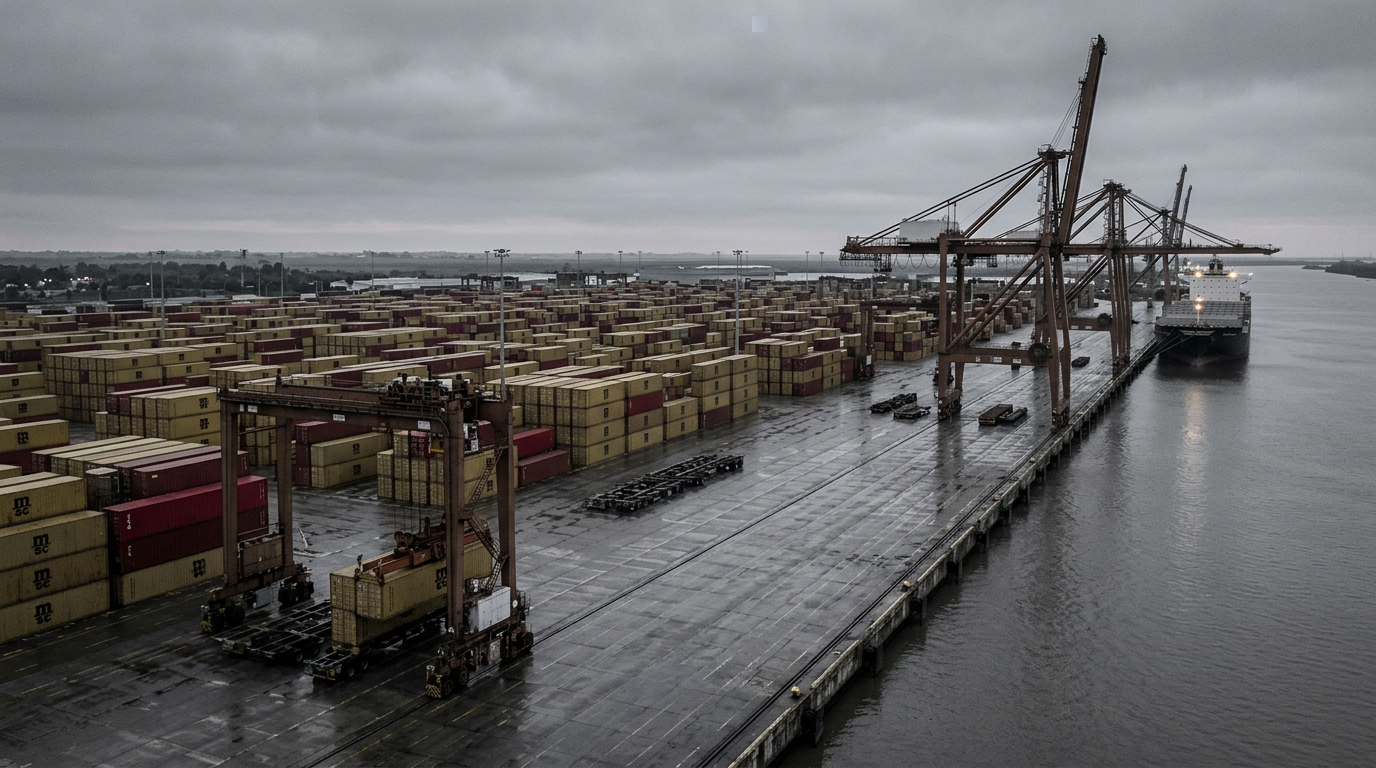
Argentina economy activity fell 1.5% in April from March, reversing the prior month’s rebound and reinforcing a patchy recovery under President Javier Milei.
The monthly decline was larger than Bloomberg Economics’ estimate of a 1% drop, based on government data released Monday. On a year-over-year basis, the activity gauge rose 1.6%, below the 3.3% median forecast in a Bloomberg economist survey.
April data point to a two-speed economy
Sector results showed a split between export-oriented areas and domestically linked industries. Agriculture posted the strongest annual performance, while manufacturing, retail and fishing recorded declines.
Other high-frequency signals had already suggested an uneven pattern. Mining expanded from a year earlier, but both manufacturing and construction fell by more than 2%, indicating that broader demand remained soft even as select commodity sectors improved.
Bloomberg Economics described the core issue as concentration: growth momentum has been centered in a limited set of competitive, tradable industries. The same assessment noted little evidence that activity is broadening across the rest of the economy.
Earlier quarter outturn was positive, but fragile
The April pullback arrives after a stronger-than-expected start to the year. Argentina’s gross domestic product rose 0.7% in the first quarter versus the prior quarter, with consumer spending cited as a key driver.
Even so, the new monthly decline underscores the stop-start nature of the rebound. With activity gains concentrated in a few sectors, the economy can post headline improvements while many households and businesses experience continued weakness.
For policymakers, the pattern matters because it affects tax receipts, employment, and the pace at which inflation pressures ease. A recovery led by a narrow band of exporters may support external accounts, but it does not automatically translate into widespread job creation.
2026 outlook leans on exports as jobs worsen
Looking beyond 2025, forecasts compiled by Argentina’s central bank point to continued expansion in 2026. Economists surveyed in May projected 2.9% growth that year, alongside inflation slowing to 30.5%.
The medium-term growth narrative is closely tied to exports. Argentina’s GDP is expected to expand for a second straight year in 2026, supported by high export volumes from energy, agriculture and mining.
However, labor-market signals remain a key constraint. Unemployment has been rising, and the formal sector has shed nearly half a million jobs, suggesting that the benefits of improved commodity activity have not yet spread broadly through hiring.
The next test will be whether weaker areas such as manufacturing, retail and construction stabilize after April’s setback. Investors and households will be watching for signs that growth is becoming more diversified rather than relying primarily on a small group of tradable sectors.