US Navy Fires on Iranian Missiles in Hormuz
U.S. and Iran have intensified maritime hostilities, exchanging missile fire and tanker strikes for control over the strategic Strait of Hormuz.
Atlas Newsdesk ·
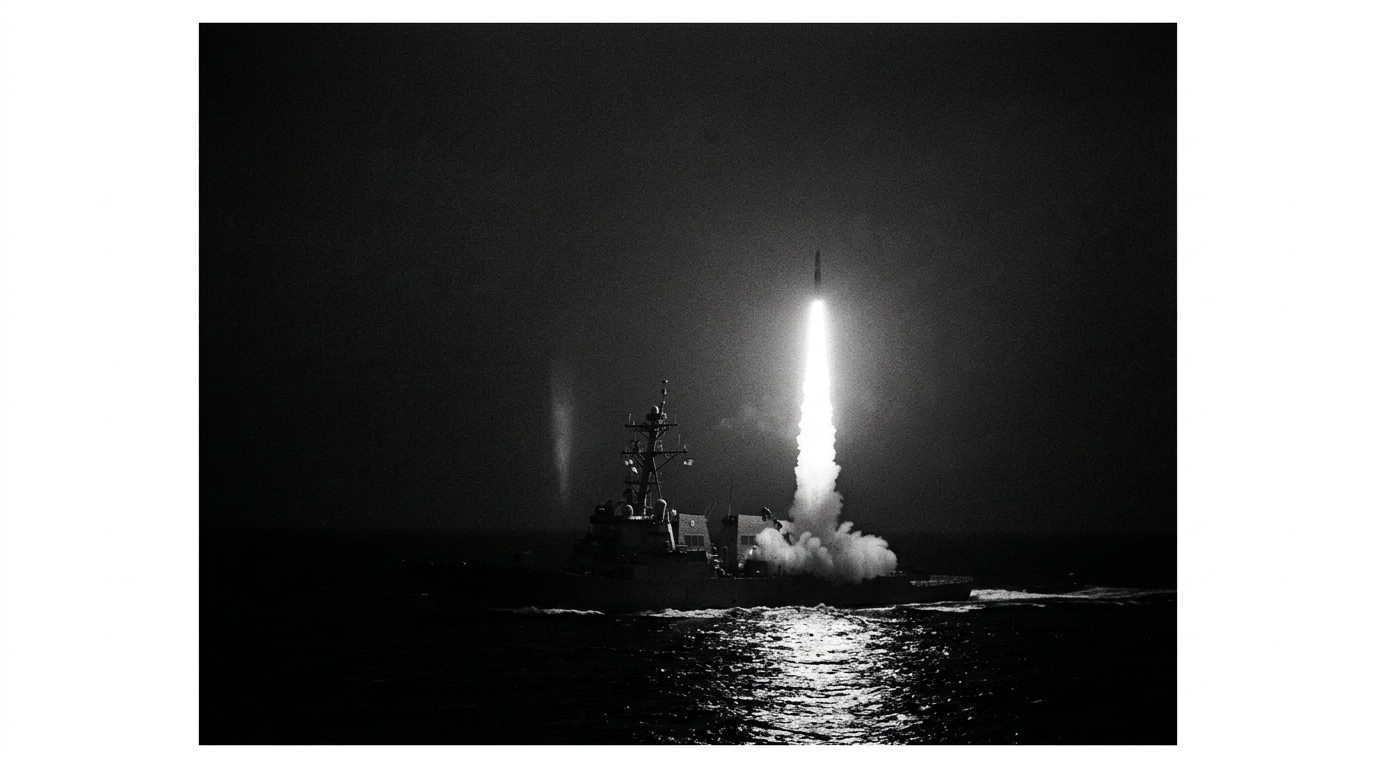
The United States and Iran engaged in a series of direct military exchanges over the past 24 hours, intensifying a months-long conflict centered on the strategic Strait of Hormuz. U.S. Central Command reported striking three Iranian oil tankers near Kharg Island and Jask, following Iranian ballistic missile launches directed at a U.S. aircraft carrier and a destroyer.
The escalation marks a significant shift in the maritime theater, as Tehran increasingly utilizes the strait as leverage against U.S.-led naval blockades. The Islamic Revolutionary Guard Corps confirmed the missile strikes, citing the need to counter what it described as the harassment of Iranian vessels and the enforcement of an unauthorized naval blockade. While the U.S. maintains that the waterway remains operational, marine analytics data indicates a sharp decline in transit volume, with a 10-day average of only 13 vessels passing through the chokepoint.
The mechanism of the conflict involves a cycle of retaliatory strikes: U.S. economic and military pressure on Iranian oil revenue triggers Iranian ballistic responses, which in turn prompt further U.S. naval retaliation. This cycle has effectively disrupted regional energy flows and diminished prospects for diplomatic de-escalation. Analysts note that the targeting of U.S. capital ships represents a calculated expansion of the conflict, moving beyond shadow-fleet interdiction into direct state-on-state military engagement.