U.S. forces board Majestic X tanker to block Iranian oil
Lauren Collins ·
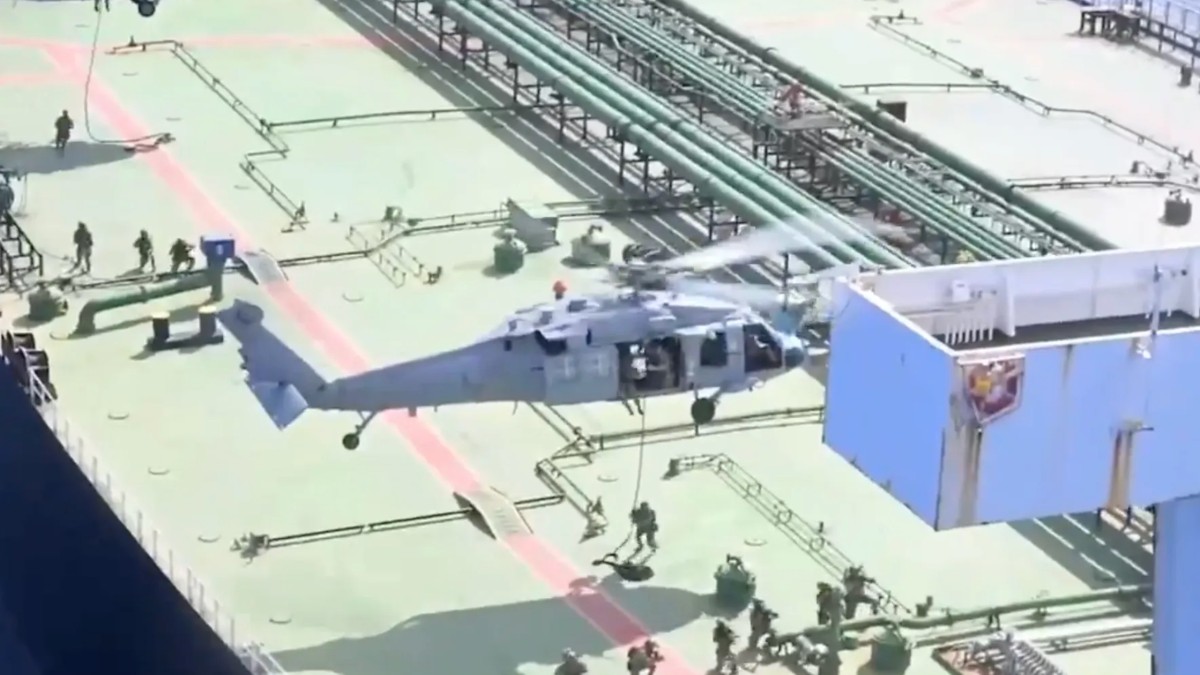
United States military personnel recently boarded an oil tanker in the Indian Ocean that was operating under sanctions, signaling an intensification of Washington's efforts to curtail Iran's crude oil exports. The vessel, identified by the Pentagon as Majestic X and also known as Phonix, is a Very Large Crude Carrier with a capacity of approximately 2 million barrels of oil.
Operation Details
This operation occurred hundreds of miles from Iran's territorial waters, indicating a strategic shift in the U.S. approach to enforcing restrictions on Tehran's energy trade. Officials stated that the tanker was operating without a legitimate national registry, while the shipping database Equasis reported that it was sailing under a false flag.
The boarding of the Majestic X follows several similar interdictions in recent days, suggesting a concerted effort to tighten control over shipments linked to Iran. Earlier this week, U.S. forces intercepted another crude carrier situated east of Sri Lanka, demonstrating that enforcement actions are no longer confined to critical chokepoints adjacent to the Persian Gulf.
Heightened Maritime Tensions
This expanded reach by the U.S. coincides with heightened maritime tensions. Iran has effectively halted traffic through the Strait of Hormuz, a vital global oil corridor, thereby disrupting the movement of substantial volumes of crude oil, refined fuels, and commercial goods.
The Strait of Hormuz typically facilitates a significant portion of global energy flows, meaning any disruption swiftly impacts prices and shipping patterns. With passage now restricted, energy markets have already reacted, pushing oil and gas prices above levels observed at the onset of the current conflict.
Concurrently, shipping routes have become increasingly unpredictable. Tankers are being rerouted, delayed, or intercepted, creating bottlenecks that propagate throughout global supply chains. Producers have also begun to reduce output, reflecting both logistical challenges and uncertainty regarding future demand.
Recent Seizures
The recent seizure exacerbates pressure on tanker operators and traders navigating the region. According to U.S. Central Command, two other Very Large Crude Carriers, the Hedy and the Hero II, were intercepted earlier this week and are currently anchored at Chabahar, an Iranian port located on the Gulf of Oman.
Data from the analytics firm Vortexa revealed that these vessels had entered the Arabian Sea, seemingly testing the boundaries of the U.S. enforcement campaign before their interdiction. This pattern suggests an ongoing probing of thresholds by both sides, increasing the potential for further confrontations.
Impact on Oil Markets
For the oil market, the combination of interdictions and restricted waterways is contributing to a tightening of available supply. Even when crude oil is produced, its transportation to buyers has become more complex and expensive. Insurance premiums for vessels operating in the region have escalated, leading some operators to avoid high-risk routes entirely.
This environment benefits producers located outside the conflict zone, who can deliver cargo with fewer disruptions. Simultaneously, refiners dependent on Middle Eastern crude may face elevated input costs or be compelled to seek alternative suppliers.
Broader Implications
The implications of this situation extend beyond regional politics. Higher energy prices contribute to global inflation, complicating central bank policies and economic planning worldwide. Countries reliant on imported fuel are particularly vulnerable, as shipping delays and increased costs strain national budgets and trade balances.
Moreover, the geographic expansion of U.S. enforcement actions indicates that maritime disputes related to sanctions can unfold across vast oceanic stretches, not solely in proximity to production sources.
Future Outlook
The current trajectory suggests continued volatility. Iran has previously demonstrated a willingness to detain or redirect vessels, including recent attacks on at least three ships within the Strait of Hormuz. Further retaliation remains a possibility as pressure on its export channels intensifies.
For Washington, sustaining a broad-reaching enforcement effort will necessitate significant resources and coordination across key maritime routes. The risk of miscalculation—whether through mistaken identity, escalation at sea, or disruption to neutral shipping—remains high, prompting close observation by markets and governments awaiting subsequent developments.