Beijing`s Capital Club Shuts 50th Floor for Trump Visit Business Reception
Business leaders from the US and China will meet at Beijing's Capital Club during President Trump's visit for a high-level networking reception.
Atlas Newsdesk ·
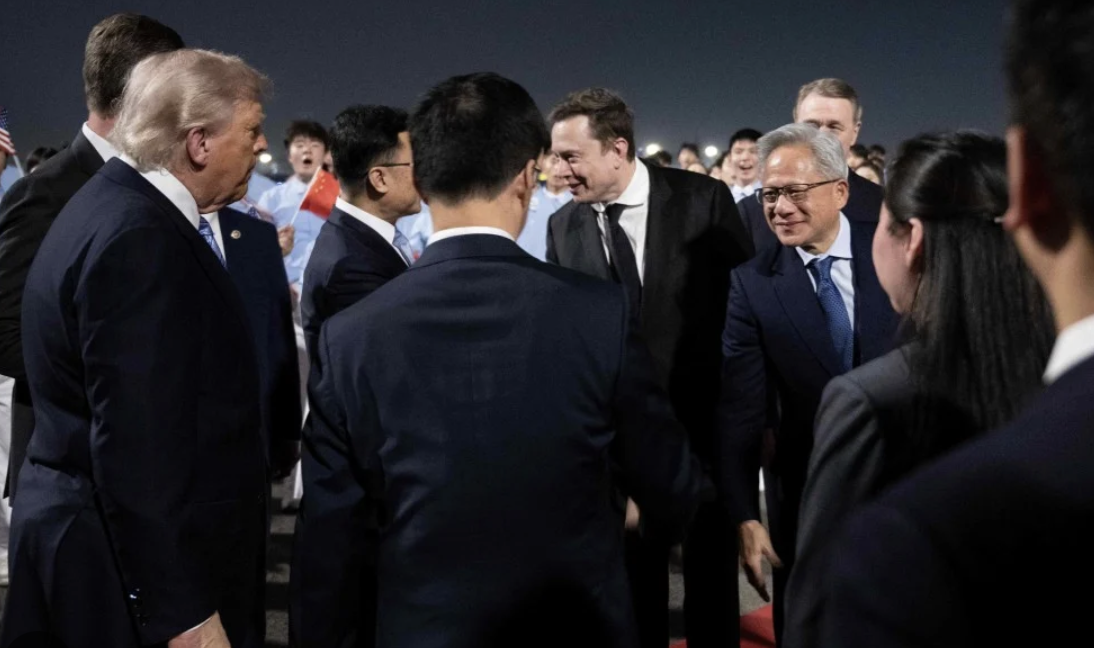
American and Chinese business executives are expected to gather Thursday evening at Beijing’s Capital Club during President Donald Trump’s visit to China, creating a private commercial track alongside the official summit with President Xi Jinping. The reception is being held at the club inside Capital Mansion in the city’s embassy district, according to reporting on the planned event. The club’s 50th-floor VIP space was listed as closed from Wednesday through Friday for equipment maintenance, a routine-sounding notice that coincides with the executive meetings. The timing makes the gathering a useful window into how companies on both sides are trying to preserve business access while the two governments test the limits of a diplomatic reset.
The 50th Floor Closes
The Capital Club is not a neutral choice of venue. Founded in 1994, it has long marketed itself as an international business and social club for senior executives, diplomats and members of Beijing’s foreign commercial community. Its own materials place the club on the 50th floor of Capital Mansion at 6 Xin Yuan Nan Road in Chaoyang district, and describe private meeting rooms used for business events, forums and tailored gatherings. That mix of altitude, access and discretion is the point: the reception gives executives a controlled setting away from cameras, without removing the event from the orbit of the official state visit.
Trump and Xi Set the Frame
The business event is unfolding during Trump’s May 14-15 summit with Xi in Beijing, the first visit by a U.S. president to China in almost nine years. AP reported that the leaders’ agenda includes trade, artificial intelligence, the Iran war and U.S. arms sales to Taiwan, while other coverage said the trip has drawn major U.S. executives from technology, finance, manufacturing and agriculture. The corporate presence is not decorative; it gives Trump a way to emphasize market access and commercial deals while Xi seeks to project confidence to foreign investors. For both governments, executives can sometimes say what diplomats cannot: that business ties remain valuable even when strategic trust is thin.
Banks, Chips and Gatekeepers
The expected mix of Chinese state-linked investment banks and technology executives reflects how China’s economy actually works. Financing, industrial policy and market access often sit close together, especially in sectors such as semiconductors, electric vehicles, advanced manufacturing and cloud infrastructure. For U.S. executives, a private encounter with senior Chinese counterparts can help test whether a licensing issue, joint venture, procurement plan or investment proposal has political space to move. For Chinese institutions, the same room offers a chance to show that China remains investable despite slower growth, tighter security rules and U.S. export controls on sensitive technology.
Commercial Ties Under Strain
The reception also carries more weight because U.S.-China commerce has become harder to separate from national security. The two countries have spent years trading tariffs, export curbs and investment restrictions, while companies have tried to protect supply chains that still run through both economies. Analysts ahead of the summit said the leaders were expected to focus on keeping relations stable, with trade deliverables more likely than breakthroughs on the hardest security disputes. That makes a private executive event useful but limited: it can build contact and identify transactions, but it cannot erase the political constraints around chips, rare earths, Taiwan or sanctions exposure.
China’s Investor Pitch
Beijing has a clear reason to welcome this type of corporate diplomacy. China wants foreign capital, technology partnerships and confidence from multinationals at a time when investors are weighing regulatory risk, weak demand and geopolitical exposure. Financial Times reporting said Xi told visiting U.S. executives that China would keep opening its markets, a message aimed at reassuring companies that still see China as too large to ignore. The Capital Club reception gives Chinese officials and state-connected dealmakers a softer venue to reinforce that pitch, while leaving formal policy commitments to the summit table.
Deals or Diplomatic Theater
The test will be whether the evening produces anything beyond handshakes. Investors will watch for confirmed attendees, company statements, memoranda of understanding, financing updates or follow-on meetings that show commercial intent turning into specific activity. The risk is that the reception becomes a polished symbol of engagement while the underlying business climate remains constrained by export controls, political scrutiny and weak trust between Washington and Beijing. Even without an announcement, the event matters because it shows both sides still believe direct business contact has value; the uncertainty is whether that contact can survive the next policy shock.