Ukraine ballistic missiles may reach operations in 3-6 months
Ukraine ballistic missiles could reach operational capability in 3-6 months, officials cited, as drone strikes and NATO-border incidents persist.
Atlas Newsdesk ·
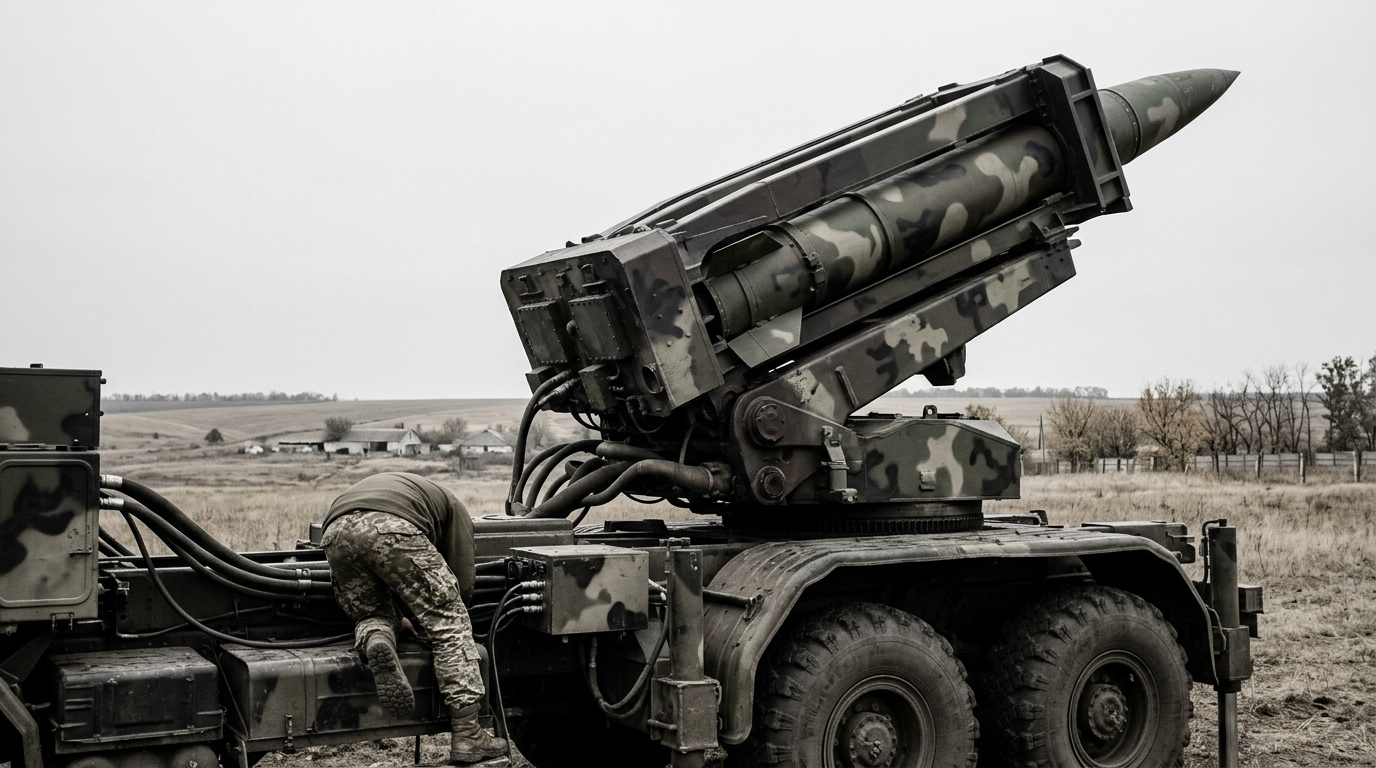
Ukraine is expected to achieve operational capability for domestically produced ballistic missiles within three to six months, according to a projection cited in the source material. The stated aim is to boost Kyiv’s capacity for accurate, long-range strikes against targets on Russian territory.
The account argues that ballistic missiles would be more difficult for Russian air defenses to intercept than Ukraine’s existing strike tools, which it lists as drones and cruise missiles. It frames the initiative as an accelerated move to field an indigenous ballistic option in the near term, rather than a long-running research effort.
June test launch cited as a key milestone
Kryvyi Rih The projected timeline is linked to a test launch conducted in June, the source material said. That launch was attributed to a domestic manufacturer and described as a step toward an operational, locally produced ballistic strike system. The material does not identify the missile type, and officials did not provide technical details. As a result, major questions remain unconfirmed in the account, including the missile’s range, payload, potential production scale, and how quickly systems could be manufactured or deployed once operational capability is reached. Drone exchanges and industrial sites remain central to strikes Alongside the missile program, the source material says the war continues to feature large-scale drone exchanges. Within that context, it reports that Ukrainian forces recently struck a missile fuel production facility in Russia’s Rostov region.
It cites impacts on major steel production facilities
The same account links such actions to broader pressure on industrial capacity. It cites impacts on major steel production facilities, while also describing continued targeting of industrial infrastructure inside Ukraine, including major steel production facilities in Kryvyi Rih.
The material presents these examples as an illustration of how industrial sites remain closely tied to the broader strike campaign it describes. It also portrays strike capabilities and air-defense challenges as evolving at the same time, with neither side insulated from disruption to production and logistics.
Drone interception over Romania raises regional uncertainty
The source also points to spillover risks through continued reports of drones entering NATO airspace. It cites a recent incident in which a Spanish fighter jet intercepted a drone over Romania, near the Ukrainian border.
The account does not attribute the drone to any actor, and it does not clarify whether the aircraft was hostile, off course, or connected to a specific operation. That lack of attribution leaves the immediate circumstances unresolved, even as the incident is presented as another sign of heightened regional security concerns.
Taken together, the material depicts a battlefield environment in which Ukraine’s near-term ballistic missile timeline, sustained drone activity, and incidents near NATO airspace are unfolding in parallel. The source emphasizes that key technical and operational details of the missile effort remain unknown, even as it describes the pace of change in strike technology and the widening geographic footprint of related incidents.