Iran drone strike hits KRG prime minister’s office
Iran drone strike targeted KRG PM Masrour Barzani’s office early Monday, officials said, with two Hadid-110 drones launched from Iran.
Atlas Newsdesk ·
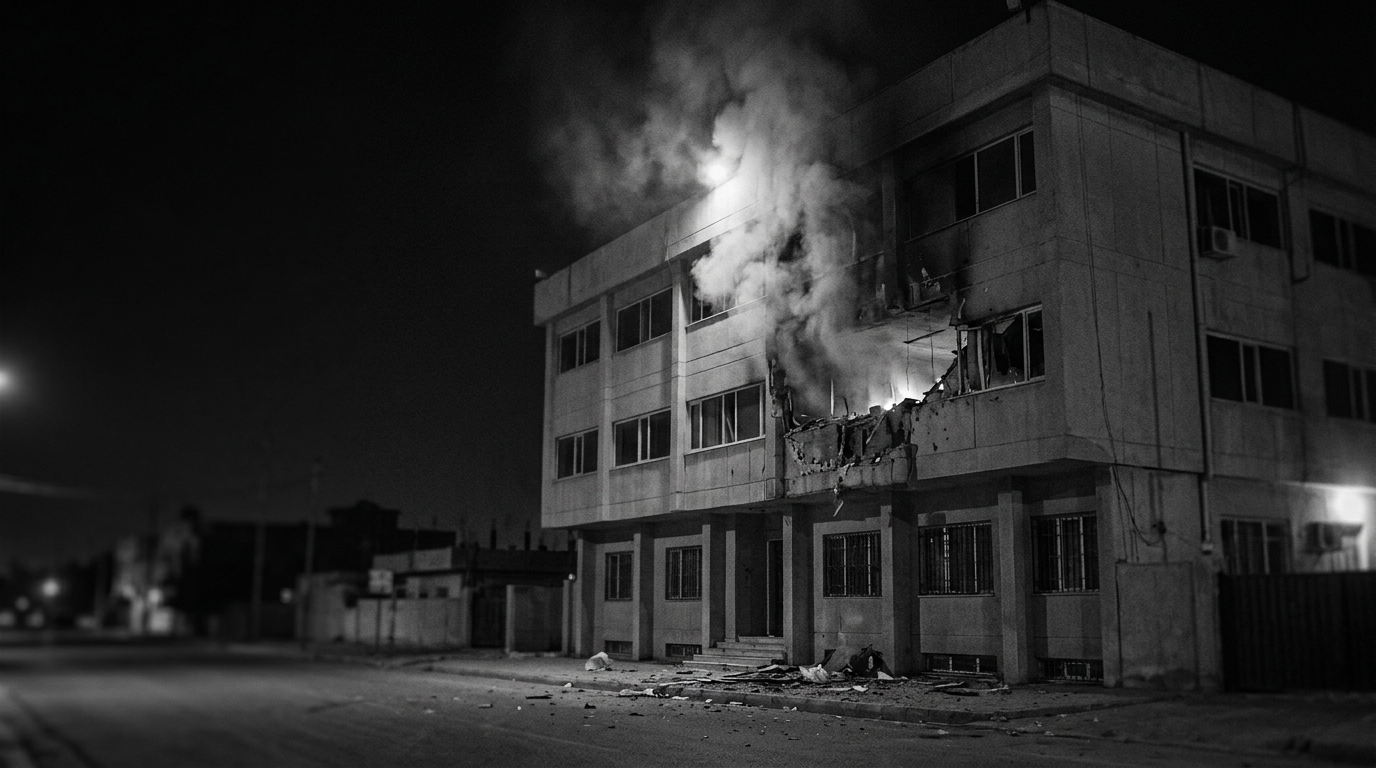
The office of Kurdistan Regional Government (KRG) Prime Minister Masrour Barzani and the residence of the region’s security chief were hit by drone strikes early Monday, officials said. The Kurdistan Counter-Terrorism Service confirmed that two Hadid-110 drones were launched from Iranian territory, and said the incident caused no casualties.
Officials described the strike as an escalation in already strained relations between Tehran and the semi-autonomous Iraqi region. The targets included senior political and security sites in Erbil, highlighting the sensitivity of the locations involved and the potential for wider repercussions if similar attacks recur.
Officials cite drones launched from Iranian territory Kurdistan Officials cite drones launched from Iranian territory Kurdistan Regional Government The Kurdistan Counter-Terrorism SerSources said the drones used were Hadid-110 models and that they originated from Iran. The mechanism, officials said, involved the use of Iranian-manufactured unmanned aerial vehicles against what they described as high-level infrastructure connected to governance and security. No group was cited in the provided account as claiming responsibility, and the information available focused on the assessment released by the regional counter-terrorism body. The absence of reported casualties reduced the immediate human toll, but did not lessen the political significance of the attack’s timing and targets. Tehran’s accusations and the KRG’s denials The incident came against a backdrop of repeated accusations from Iranian authorities that the KRG provides sanctuary to Iranian Kurdish opposition groups. The Erbil-based government has consistently denied those allegations, according to the account. Barzani described the strike as an illegitimate threat to regional stability. His characterization framed the incident as more than a security breach, placing it in the context of broader regional tensions and the risks of cross-border actions.
Security vulnerability and likely diplomatic friction
The attack also underscored the exposure of the Kurdistan Region to cross-border military operations, with regional security dynamics described as volatile. Strikes on prominent political and security sites can force governments to balance immediate protective measures with longer-term political messaging. Analysts said the breach of sovereign territory is Analysts said the breach of sovereign territory is expected to lead to tighter security protocols and could trigger diplomatic friction between Erbil and Tehran in the coming weeks. How officials choose to respond, and whether there are further incidents, remain key uncertainties.
For now, the confirmed details are limited to the assessment that two drones crossed from Iran and struck the specified locations without causing casualties. Any further clarification on intent, responsibility, or follow-on measures would depend on additional official statements.