Twelve killed as Russia extends Ukraine air assault
Russian attacks claimed 12 lives in Ukraine during a sixth consecutive day of air assaults, highlighting risks for infrastructure and regional stability.
Mateo Fernandez ·
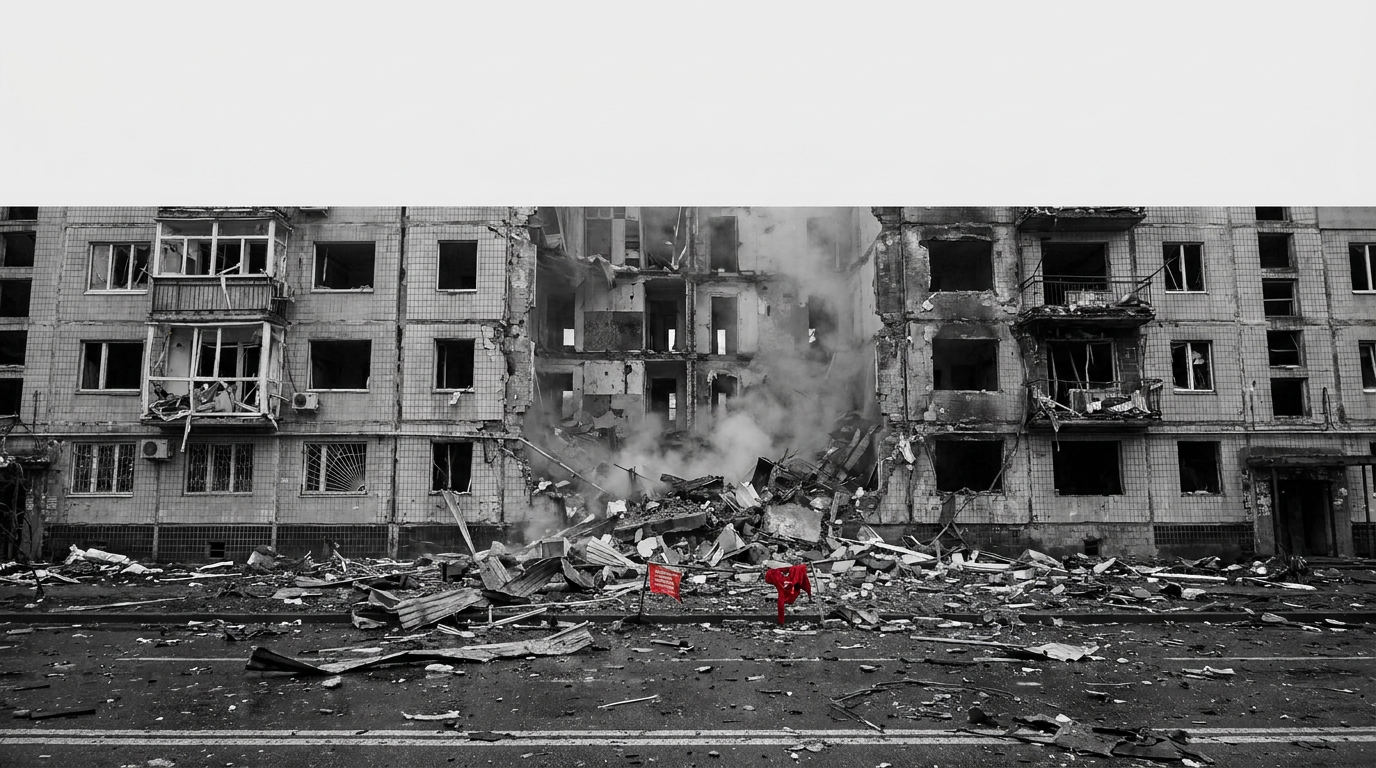
A recent wave of Russian aerial attacks on Ukraine has resulted in the deaths of 12 individuals, according to official reports. These strikes mark the sixth consecutive day of intensive air assaults, intensifying concerns among international governments and financial markets regarding the potential for further escalation in the conflict. Residential buildings and critical civilian infrastructure were among the targets hit during this period.
The reported casualty count places significant strain on Ukraine's air defense capabilities and its repair crews. The continuous nature of these attacks is testing the capacity of local authorities to maintain and restore essential services, including power supply, public transportation, and emergency response operations. The immediate market reaction to these specific developments was not detailed in initial assessments.
Sustained Pressure on Kyiv Infrastructure
Infrastructure within Kyiv has been subjected to repeated bombardments. The broader macroeconomic impact of the conflict primarily stems from geopolitical risk rather than fluctuations in individual commodity prices. Should these attacks persistently target urban infrastructure, European governments may face increasing pressure to allocate resources for Ukraine's air defense systems and grid support. Concurrently, energy traders are closely monitoring whether the conflict poses threats to cross-border power transmission, natural gas supplies, or vital shipping routes.
For Ukraine, the operational consequences are immediate and direct. Each additional strike necessitates the diversion of personnel and equipment from military operations to civilian rescue and recovery efforts. Officials have yet to release a verified estimate of the total physical damage incurred from this latest series of attacks.
Wider Sectoral Strain and Future Monitoring The defense and energy sectors are expected to experience heightened demand for crucial components such as interceptors for air defense, power generators, electrical transformers, and expanded logistics capacity.
If the intensity of these attacks diminishes, their impact might remain localized within Ukraine's borders. However, if the pattern of strikes expands geographically, the geopolitical risk premium could begin to influence European energy planning strategies and insurance costs across the continent.
As of September 2, a key indicator for observers will be whether Ukrainian authorities report additional overnight strikes. Furthermore, updates on casualties, grid stability, and transport disruptions will be crucial for assessing whether the damage extends beyond the capital city of Kyiv, providing a clearer picture of the conflict's evolving scope.