Turkey resorts cut prices up to 8% on Iran war fears
Turkey and Cyprus resorts are cutting room rates by up to 8% after the Iran war slowed last-minute bookings during the peak summer season.
Omar Farouk ·
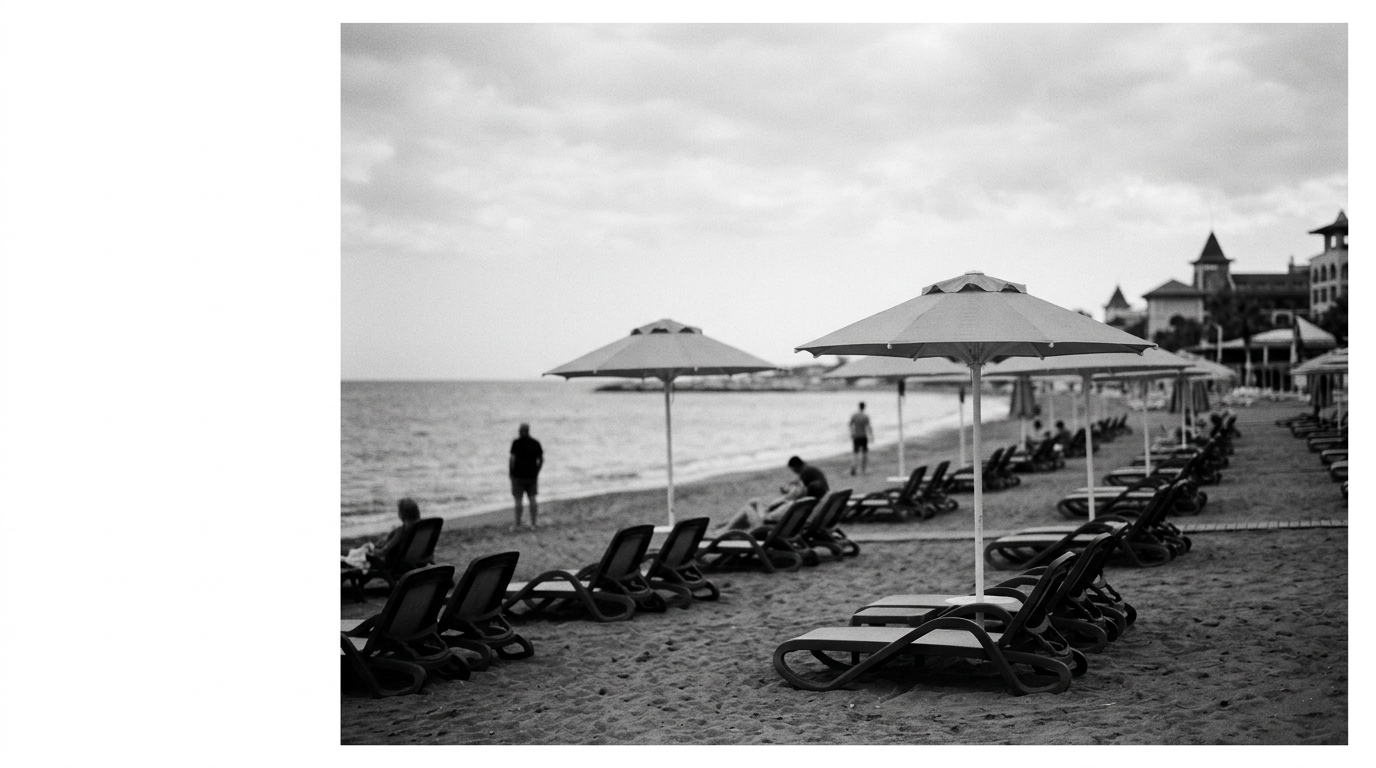
Holiday resorts in Turkey and Cyprus are cutting room prices by as much as 8% after the Iran war dampened late, short-notice bookings, officials and travel sellers said. The reductions are emerging during the peak summer period, when operators typically depend on high occupancy and a steady flow of last-minute demand.
Market participants said the discounting is spreading across parts of the eastern Mediterranean tourism market as travelers weigh security concerns and the chance of disruption to regional air routes. Resort groups and travel intermediaries are using lower rates to protect fill levels, particularly in destinations that rely heavily on fast-moving European demand.
Discounting spreads across the eastern Mediterranean
Officials and travel sellers said the current booking Officials and travel sellers said the current booking slowdown is linked to shifting perceptions of risk beyond countries directly involved in the fighting. They described the Iran war as amplifying broader regional concerns that can influence holiday decisions even when resorts are located far from conflict zones. Travel planners and insurers are also focusing on potential complications tied to air corridors in the region. Those considerations can affect both demand and the cost structure of package holidays, including how flights are routed and priced. Turkey’s coastal model leans on capacity and pricing Turkey has spent the past decade expanding large-scale coastal tourism around Antalya and the Aegean coast. That approach has been built on sizeable hotel capacity and competitive pricing aimed at attracting European package travelers.
Mediterranean Officials
In that segment, Turkey competes directly with established sun-and-sea rivals such as Spain and Greece. Market participants said the resort industry is now seeking to keep rooms occupied even if it means accepting lower average prices while the Iran war shapes travelers’ risk assessments.
Cyprus demand depends on airlift and confidence
Cyprus, split between the internationally recognized Republic of Cyprus and the Turkish Cypriot north, also relies heavily on seasonal beach tourism. Officials and market participants said demand is closely tied to airline capacity and consumer confidence in key source markets, leaving the island sensitive to shifts in traveler sentiment.
They added that the shock is not confined to areas directly touched by the fighting, as heightened regional risk perceptions can spill into booking decisions across the broader eastern Mediterranean.
Air routes, chokepoints, and cost pressure risks Travel sellers cited the possibility of airspace restrictions and disruption near strategic maritime chokepoints as issues that matter to planners and insurers. Market participants said any escalation that threatens shipping around the Strait of Hormuz, or raises security risks near the eastern Mediterranean, can lift energy prices and transportation costs.
They said higher costs can squeeze household travel budgets and may force airlines and tour operators to reprice routes. For Turkey, where tourism is a major services export, a weak peak season can quickly reduce foreign-currency inflows and strain cashflow across hotels and related businesses.
In Cyprus, officials and market participants said a softer summer can weigh on employment and tax receipts in coastal areas that depend on short, high-intensity tourism cycles. Looking ahead to 2026-08-31, the key uncertainty is whether discounts of up to 8% persist while late-summer occupancy remains stable, or whether deeper cuts coincide with weaker fill rates.