Trump Tariffs Face New Legal Challenge in Trade Court
Trump tariffs face new legal challenge from 24 states in federal trade court, questioning the use of the 1974 Trade Act.
Lauren Collins ·
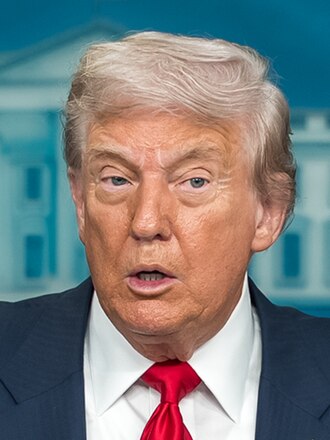
A coalition of 24 U.S. states and a libertarian advocacy group have initiated new legal proceedings to challenge tariffs implemented by former President Donald Trump. The legal briefs, filed on March 15, 2026, in a federal trade court, target the 10% tariffs applied to most U.S. trading partners. This action follows a prior Supreme Court decision that limited the executive branch's authority to impose tariffs under different legislation.
Legal Basis and Challenges
The current tariffs are based on Section 122 of the Trade Act of 1974. Former President Trump invoked this section, citing a "large and serious balance-of-payments deficit" as justification for the import duties. This legal strategy diverges from previous tariff actions, which relied on the International Emergency Economic Powers Act (IEEPA), a basis the Supreme Court found insufficient for tariff imposition.
Opponents, including Democratic attorneys general and governors, argue that a trade deficit, which measures the difference between a country's imports and exports of goods and services, is not synonymous with a balance-of-payments deficit as defined by the 1974 Act. They contend that the statute's original intent was to address a specific historical financial crisis, not general trade imbalances.
Interpretation of "Balance of Payments"
The central point of contention in the legal challenge revolves around the interpretation of the term "balance of payments" within the 1974 Trade Act. The legislation does not provide a precise definition for this term, leading to differing legal interpretations. Challengers assert that the term refers to a specific, severe financial condition, distinct from a persistent trade deficit.
Conversely, some legal and economic analysts suggest that the absence of a specific definition in the 1974 Act could imply a broader congressional intent. This interpretation might grant the President more latitude in determining the economic conditions under which Section 122 can be invoked. The judiciary's ultimate decision will likely hinge on the degree of deference it grants to the executive branch's interpretation of these economic indicators.
Historical Context and Precedent
The legal landscape for presidential tariff authority has been complex and evolving. Previous administrations have utilized various statutes, including Section 232 of the Trade Expansion Act of 1962 (national security grounds) and Section 301 of the Trade Act of 1974 (unfair trade practices), to impose tariffs. The current challenge under Section 122 introduces a new legal battleground, distinct from the national security or unfair trade arguments previously employed.
This legal dispute underscores the ongoing tension between executive power in trade policy and congressional authority. The outcome will set a significant precedent for future administrations seeking to use tariffs as a tool to address perceived economic imbalances. The court's ruling will clarify the scope of presidential authority under the 1974 Trade Act, potentially influencing global trade relations and domestic economic policy.
Potential Economic and Political Implications
Should the courts invalidate the tariffs, it could lead to refunds for importers and a reassessment of U.S. trade policy. Conversely, a ruling upholding the tariffs would strengthen the executive's ability to impose broad import duties based on balance-of-payments arguments. This legal battle highlights the intricate interplay between domestic law, international trade, and political objectives, with significant implications for businesses and consumers alike.
Implications
Country Impact: The legal outcome will significantly impact U.S. trade policy, potentially redefining the scope of presidential authority to impose tariffs. It could also influence domestic economic conditions by affecting import costs and consumer prices.
Industry Impact: Industries reliant on imports, particularly those subject to the 10% tariff, face continued uncertainty. A ruling against the tariffs could lead to cost reductions for these sectors, while an upholding would maintain current import expenses.
Market Impact: Global financial markets may react to the court's decision, particularly in currency and bond markets, as the ruling could signal shifts in U.S. trade protectionism. Trade-sensitive equities could also experience volatility based on the outcome.