Trump Wants Ford and GM Back in the War Business
Defense officials explore if GM & Ford can produce weapons amid strained inventories and limits in traditional defense production.
Atlas Newsdesk ·
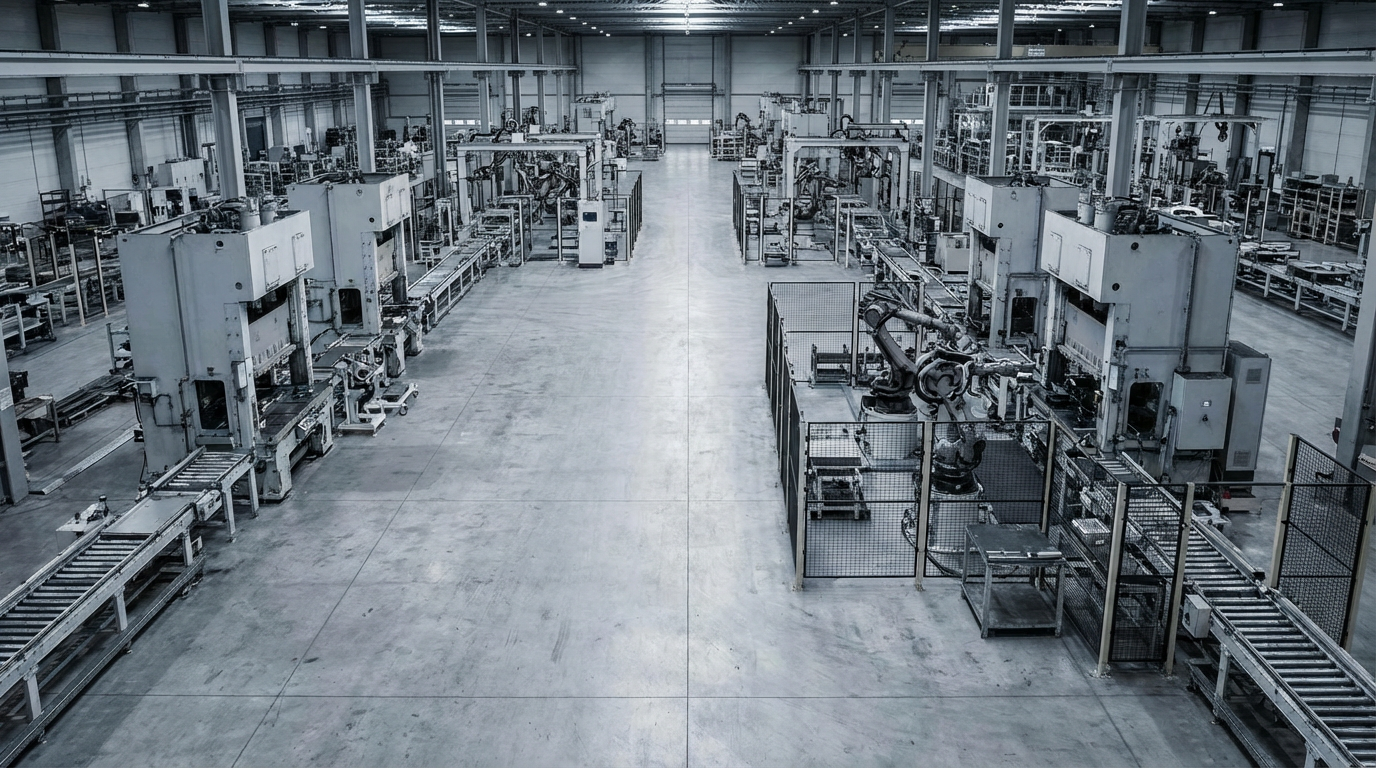
The Trump administration is pressing some of America’s largest manufacturers to consider a role in weapons production, opening discussions with executives from companies including General Motors and Ford. Defense officials are assessing whether commercial factories and workers could be redirected to help produce munitions and military equipment, as U.S. stockpiles face growing pressure.
The talks, still preliminary, come as wars in Ukraine and Iran increase demand for missiles, drones, and other tactical systems. Pentagon officials have asked companies how quickly they could pivot to defense work and what obstacles—ranging from contracting rules to production constraints—might stand in the way.
This outreach reflects a shift in urgency inside the Defense Department. Officials have begun to frame industrial capacity as a core element of national security, arguing that the current network of defense contractors may not be sufficient to sustain prolonged or simultaneous conflicts.
The idea is not new. During World War II, U.S. automakers halted civilian production to manufacture bombers, engines, and military vehicles, transforming Detroit into a critical supplier for the war effort. Today’s manufacturing base is more specialized, but the underlying challenge—scaling output quickly in response to conflict—has resurfaced.
The Pentagon’s effort extends beyond automakers. Companies such as GE Aerospace and Oshkosh have also been involved in discussions. Oshkosh already builds military transport vehicles, though most of its roughly $10.5 billion in annual revenue comes from commercial operations, highlighting how limited defense exposure remains for many large manufacturers.
For companies like GM and Ford, defense work represents a small but growing segment. GM operates a unit that produces infantry vehicles based on its pickup trucks and is expected to compete for future Army contracts. Still, these programs account for only a fraction of overall production, raising questions about how much capacity could realistically be redirected.
The push coincides with a proposed $1.5 trillion Pentagon budget that includes significant funding for munitions and drone manufacturing. Lawmakers have grown increasingly concerned about the ability of the U.S. and its allies to replenish weapons supplied to Ukraine since Russia’s 2022 invasion, a challenge compounded by new demands linked to tensions in the Middle East.
Even so, turning commercial manufacturers into reliable defense suppliers would take time. Retooling production lines, securing specialized components, and navigating procurement systems could slow any transition, particularly for companies not deeply embedded in military contracting.
In the near term, the initiative could help relieve pressure on overstretched defense contractors by adding incremental capacity from large industrial players. Automakers and other manufacturers bring scale, logistics expertise, and existing supply chains that could be adapted for certain categories of equipment, particularly vehicles and components.
More broadly, the effort signals a shift toward treating civilian industry as a strategic reserve for national defense. As modern conflicts consume equipment at a faster pace, the U.S. may need a more flexible industrial model—one that can expand beyond a narrow group of contractors when demand surges.