Trump Comments on Iran Leader's Condition
Former U.S. President Donald Trump stated Iran's new Supreme Leader, Mojtaba Khamenei, is alive but "damaged" amid ongoing regional conflict.
Lauren Collins ·
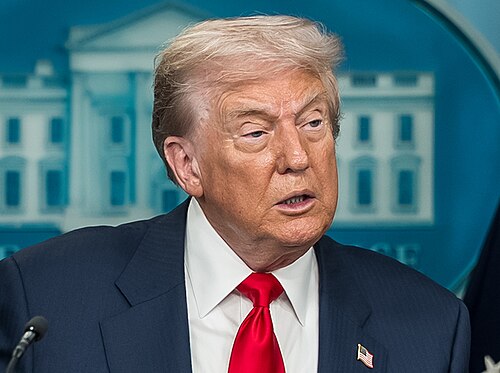
Former U.S. President Donald Trump recently commented on the status of Iran's newly appointed Supreme Leader, Mojtaba Khamenei. Speaking on Thursday, March 12, 2026, Trump indicated his belief that Khamenei is alive but has sustained injuries, describing him as "damaged." This statement emerges during an ongoing period of heightened tension between the U.S., Israel, and Iran, which commenced on February 28.
Mojtaba Khamenei's selection by a clerical assembly occurred on Sunday, yet he has not made any public appearances since his appointment. His initial pronouncements as the new leader were conveyed to the public via a television presenter on Thursday. An Iranian official, speaking to Reuters on Wednesday, confirmed that Khamenei suffered minor injuries but remains active, following earlier state television reports that characterized him as "war-wounded."
Khamenei's Initial Directives
In his first public messages, the new Supreme Leader issued strong directives concerning regional security and foreign military presence. He affirmed Iran's commitment to maintaining the closure of the Strait of Hormuz, a critical global oil transit chokepoint. Furthermore, Khamenei called upon neighboring nations to dismantle U.S. military installations within their borders, issuing a warning that non-compliance could lead to Iranian targeting of these sites.
Regional Conflict and Market Impact
The current conflict has led to significant human cost, with thousands of casualties reported. This geopolitical instability has also exerted considerable pressure on global financial markets. Leaders from all involved nations—Iran, Israel, and the United States—have publicly reiterated their determination to continue their respective courses of action, suggesting a prolonged period of confrontation.
The Strait of Hormuz, through which a substantial portion of the world's seaborne oil passes, remains a focal point of these tensions, with any disruption having potential global economic ramifications.
Historical Context of Leadership Transition
The transition of power within Iran's supreme leadership is a critical event, often shrouded in a degree of opacity. The Supreme Leader holds ultimate authority over religious, political, and military affairs. The selection process, typically conducted by the Assembly of Experts, is a highly sensitive matter, and the public's perception of the leader's health and capability can significantly influence domestic stability and international relations.
The current situation, marked by the new leader's non-appearance and conflicting reports on his health, adds an element of uncertainty to an already volatile regional landscape.
International Reactions and Future Outlook
International observers are closely monitoring developments, particularly the implications for global energy supplies and regional security. S. and its allies have consistently expressed concerns over Iran's regional activities and its nuclear program. S. military presence signals a continuation, if not an escalation, of existing tensions.
The coming weeks will likely reveal more about Mojtaba Khamenei's leadership style and the trajectory of Iran's foreign policy under his guidance, with potential ripple effects across global markets and geopolitical alliances.
💊 Kapsül Analysis
📌 What Happened?
- Former U.S. President Donald Trump stated on March 12, 2026, that Iran's new Supreme Leader, Mojtaba Khamenei, is alive but "damaged."
- Khamenei, selected on Sunday, has not appeared publicly; his initial statements were read by a TV presenter.
- An Iranian official reported Khamenei sustained minor injuries but remains active, following state TV's "war-wounded" description.
🔍 Why It Matters
- Uncertainty regarding the new Supreme Leader's health could impact Iran's domestic stability and international posture.
- Khamenei's directives to close the Strait of Hormuz and target U.S. bases signal potential escalation in regional conflicts.
- The ongoing U.S.-Israeli-Iranian conflict has already caused significant casualties and market disruption.
📈 Market & Political Impact
- **Market:** Continued geopolitical instability could lead to increased oil price volatility due to threats to the Strait of Hormuz.
- **Macroeconomic:** Escalation of conflict could disrupt global supply chains and negatively impact investor confidence.
- **Geopolitics:** Khamenei's strong stance suggests a hardening of Iran's foreign policy, potentially increasing regional tensions and challenging existing alliances.
👁️ What to Watch
- Any public appearances by Mojtaba Khamenei and further details on his health status.
- Reactions from regional powers and the international community to Khamenei's initial directives.
- Developments in the ongoing conflict, particularly concerning the Strait of Hormuz and U.S. military presence.
📋 Source Status
Multi-source
📊 Confidence
Level: High — Information is corroborated by multiple reports from official statements and news agencies.
Implications
Country Impact: Iran's new leadership faces immediate challenges, with the Supreme Leader's health and initial directives potentially shaping domestic stability and foreign policy. Neighboring countries face pressure regarding U.S. military presence.
Industry Impact: The global energy sector, particularly oil and gas, could experience significant volatility due to threats to the Strait of Hormuz. Defense industries may see increased demand in the region.
Market Impact: Global financial markets are likely to remain sensitive to geopolitical developments, with potential impacts on equity indices, bond yields, and commodity prices, especially crude oil.