Trump orders DOJ to scrutinize gasoline prices at pump
Gasoline prices are under renewed scrutiny after President Donald Trump said he directed the DOJ to examine whether oil companies are keeping pump prices…
Raj Patel ·
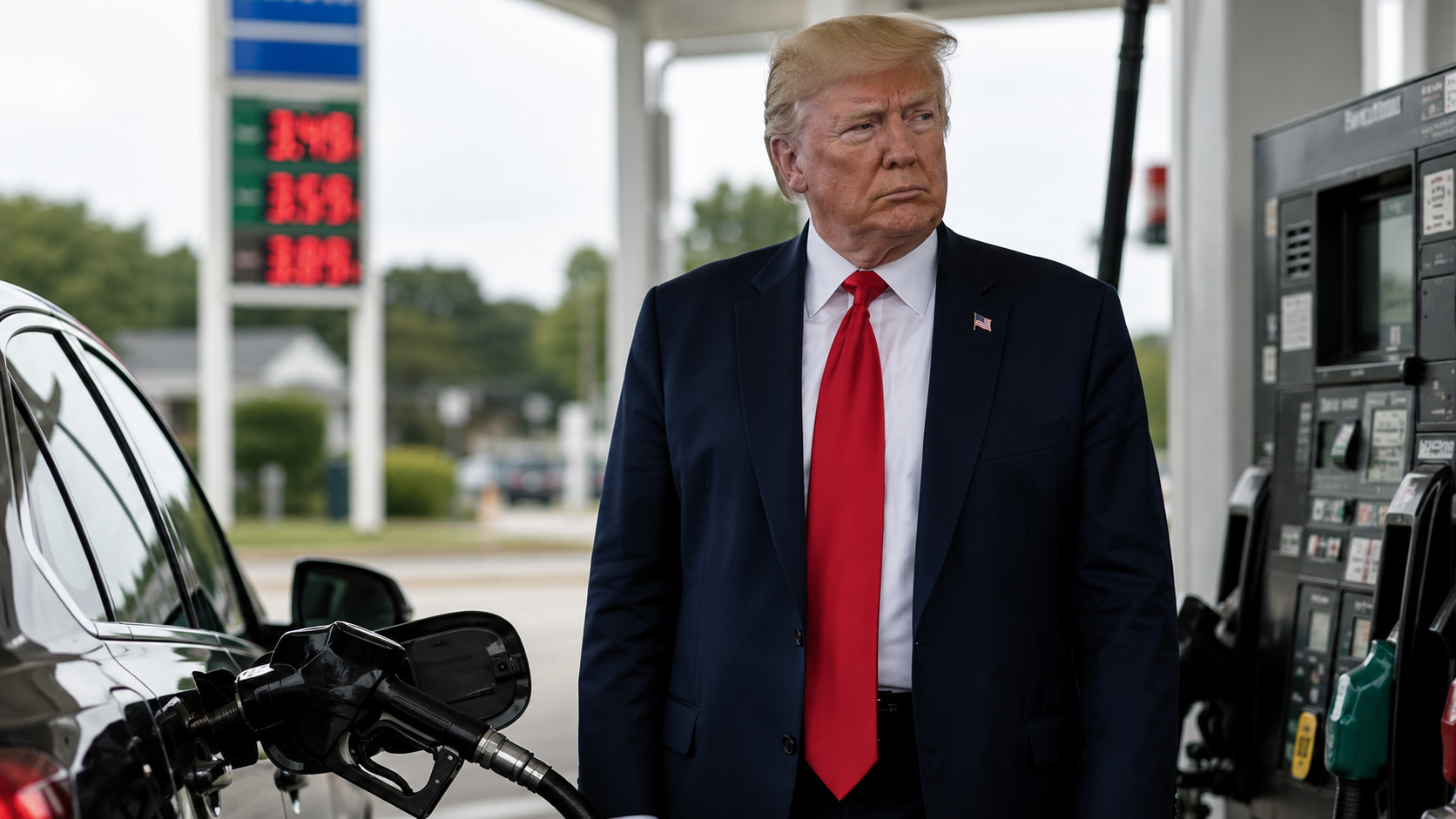
Gasoline prices are under fresh federal scrutiny after President Donald Trump said he directed the Justice Department to examine whether oil companies failed to pass along lower crude costs to drivers.
In a late-night social media message posted after midnight on Wednesday, Trump accused the industry of “gouging” consumers but did not identify specific companies. The White House and the Department of Justice did not provide additional details outside normal business hours.
Trump alleges pump prices are not tracking crude declines
The president’s comments follow several weeks of easing prices at U.S. gas stations. Data released earlier this week showed retail gasoline costs falling for a sixth consecutive week, after diplomatic developments involving the U.S. and Iran helped calm oil markets.
Even so, Trump argued the drop has not matched the pace of declines in crude. “Gasoline prices better start going down a lot faster than what I’m seeing!” he wrote, pairing the warning with an allegation that pump prices are staying elevated relative to the cost of oil.
According to GasBuddy, the national average early Wednesday was $3.906 per gallon. That level is more than 14% below the May high, but still far above the $2.764 per gallon recorded in January, before the Iran conflict began.
Market context: oil down sharply after Strait of Hormuz reopens
Crude has fallen faster than the retail price of gasoline over the same period, reflecting shifting risk perceptions and supply-route stability. Oil prices dropped 23% from their recent peak, data in the report showed, while U.S. crude is down about 40% from its peak in March.
The declines followed an interim peace deal between the U.S. and Iran and the reopening of the Strait of Hormuz. Before the war began, roughly one-fifth of global oil supply moved through the strait, making the corridor a key pressure point for prices when disruptions occur.
Retail gasoline prices often lag crude movements because station prices incorporate refining costs, distribution, taxes, and inventory purchased at earlier prices. Still, the gap between oil’s swift retreat and the slower pullback at the pump has become a recurring political flashpoint when consumers remain sensitive to fuel costs.
Political pressure builds ahead of midterm elections
Trump’s call for a DOJ review arrives as fuel costs remain a pocketbook issue for voters. The post also comes during a period when Republicans are working to defend narrow majorities in Congress ahead of November’s midterm elections.
By framing the issue as potential misconduct rather than market friction, the president signaled a more aggressive posture toward the industry. His statement did not outline what legal authority the DOJ would use, what conduct might be under review, or whether other agencies could be involved.
Any federal action could hinge on whether investigators see evidence of collusion, anti-competitive behavior, or deceptive practices, rather than ordinary price-setting in a volatile supply chain. Absent names or a formal announcement, the scope and timeline of any inquiry remain unclear.
Next steps will likely depend on whether the DOJ confirms an investigation and whether gasoline prices continue falling in coming weeks. Investors and consumers will also watch crude market stability tied to Middle East diplomacy and the flow of oil through the Strait of Hormuz.