Trump Locks In Iran Blockade Strategy as Hormuz Transits Hit Wartime Low
Trump plans prolonged Iran blockade to pressure nuclear program. Learn about the strategy and its potential impact on oil exports and the Strait of Hormuz.
Lauren Collins ·
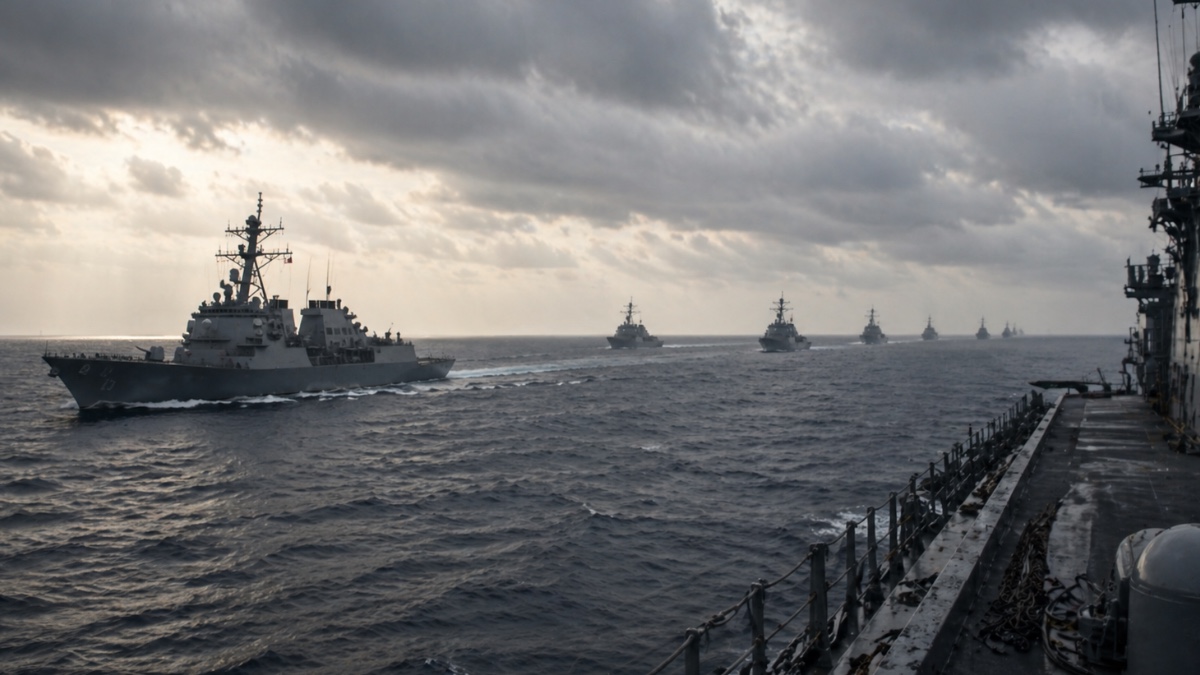
President Donald Trump has told his national security team to plan for an extended blockade of Iran, US officials said, choosing economic suffocation over renewed bombing or a quiet exit from the conflict. The decision was finalized in a Situation Room meeting on Monday, where Trump weighed the three available paths and concluded that continuing to choke off shipping to Iranian ports carried less risk than the alternatives. The objective remains unchanged: pressuring Tehran into abandoning its nuclear program entirely.
Why the moment forced a choice
Trump's deliberations followed a three-step Iranian proposal that would have reopened the Strait of Hormuz first and pushed nuclear talks into a final, separate phase. He told aides the sequencing proved Tehran was not negotiating in good faith, according to The Wall Street Journal. The president has also stepped back from his earlier rhetoric threatening to destroy Iranian civilization, holding the door open to diplomacy while keeping the financial vise in place.
From bombing campaign to economic siege
The blockade is the surviving instrument of a campaign that began with US and Israeli airstrikes and shifted after the April 7 ceasefire ended major kinetic operations. Since then, Washington has used naval power to prevent ships from reaching or leaving Iranian ports, aiming to cut off the oil revenue that funds the regime. Tehran has refused to dismantle its nuclear work for years, and Trump's calculation is that an economy starved of export income will finally do what years of negotiation could not.
The cost to consumers and the president
The strategy has direct consequences at home and across allied economies. Gasoline prices have risen, transits through the Strait of Hormuz have fallen to their lowest level since the war began, and Trump's polling has weakened as a result. Republican nerves are also fraying ahead of the midterm elections, with the prolonged conflict adding a difficult variable to a campaign environment the party had hoped to control.
Energy markets price in a long siege
For the global energy industry, an open-ended blockade reshapes the supply outlook well beyond Iranian barrels. Roughly a fifth of the world's oil and liquefied natural gas moved through Hormuz before the war, and reduced flows have already tightened crude markets and pushed up shipping and insurance costs. Refiners and importers in Asia and Europe are now planning around the possibility that the choke point stays semi-closed for months rather than weeks.
Allies, adversaries, and the credibility question
The geopolitical stakes go beyond oil. A blockade designed to extract a maximalist concession — full dismantlement of Iran's nuclear infrastructure — sets a high bar that Tehran has historically refused to clear, even under severe pressure. If Iran absorbs the economic damage and holds out, Washington will face questions from allies about whether American coercion can still produce strategic outcomes. If Iran capitulates, the precedent will reshape how future administrations approach nonproliferation standoffs.
The off-ramps Trump has not chosen
The risks running in the other direction are equally live. A prolonged blockade raises the probability of a maritime incident, a miscalculation by Iranian or US forces, or a fracture inside the Iranian leadership that produces an unpredictable response rather than a negotiated one. Trump has rejected both bombing and walking away for now, but those options remain on the table if oil markets seize up further or if the political cost at home outpaces the leverage gained abroad. The next signal will come from whether Tehran returns with a revised offer — and whether the White House treats it as a real opening or another stall.