Ticket resale fight pits D.C. venues against big platforms
D.C. ticket resale legislation would cap markups at 10%, mandate price disclosures, and restrict bots, despite platform warnings of riskier informal sales.
Sophie McAlister ·
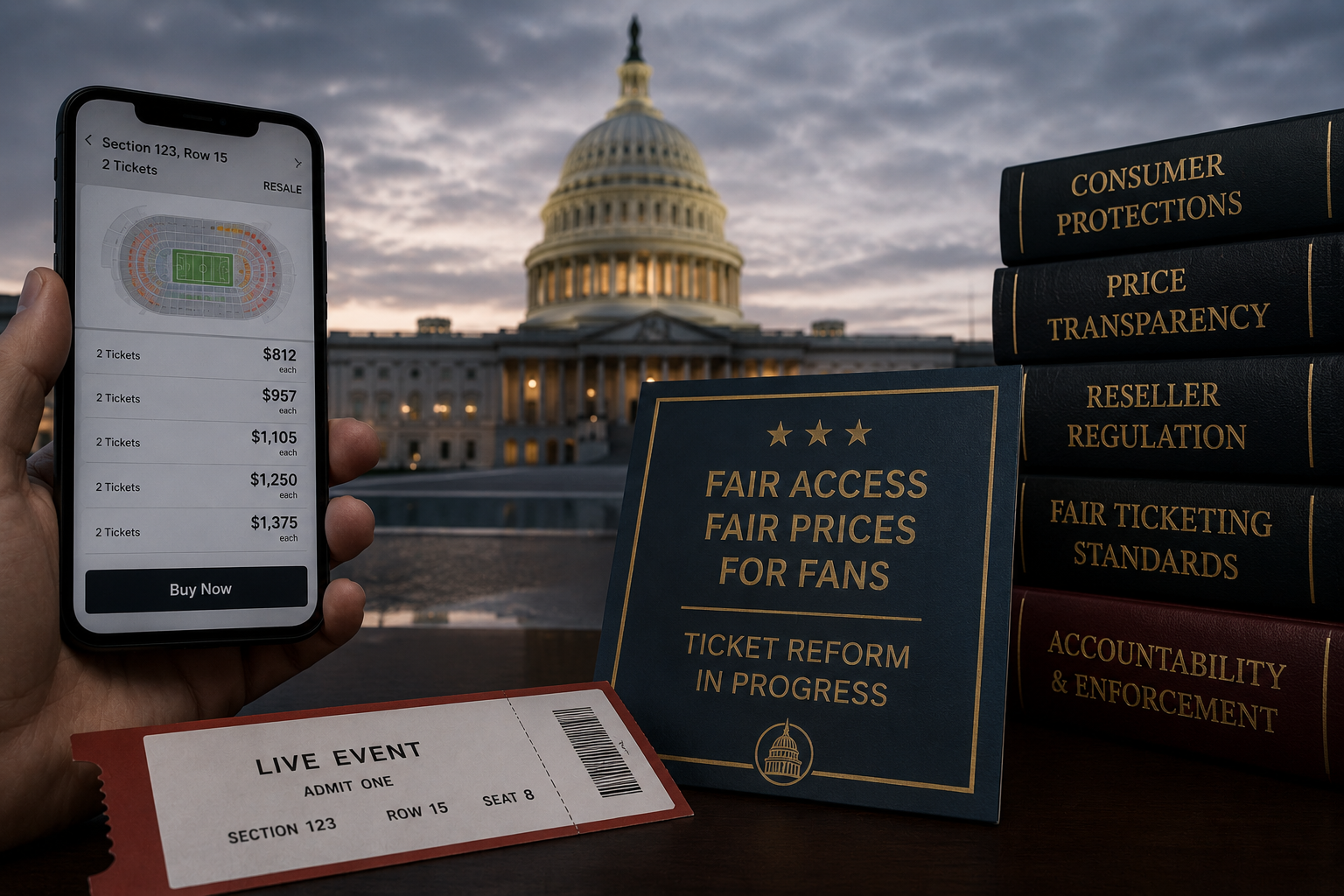
D.C. ticket resale legislation would cap concert markups at 10%, expose face prices and target bots in online sales.
The D.C. Council approved the RESALE Act in a vote aimed at changing how concert tickets are resold across the District. The measure would limit resellers to a 10% premium over the ticket’s face value and require buyers to see the original price before paying.
The bill applies to concerts and live entertainment, but not to sporting events. Lawmakers framed the proposal as a consumer protection measure at a time when the cost of a night out in Washington has become harder for many residents to predict.
Council sets a 10% ceiling
The central change is a hard cap on resale markups, tied to the amount first printed or assigned to the ticket. Sellers would no longer be able to list a ticket at multiples of its original price on covered transactions.
The transparency rule is designed to make the resale spread visible. A buyer looking at a secondary listing would be able to compare the asking price with the initial ticket value, rather than discovering the size of the markup only after fees and checkout steps.
The RESALE Act also addresses automated buying software. Bots can sweep up large numbers of tickets shortly after sales open, reducing supply for ordinary fans and giving resellers inventory they can list at higher prices.
Venues cite fake tickets
Local venue operators have backed the legislation, saying disorder in the resale market has created problems at the door. Their concern is not only price, but also the growth of questionable sellers and tickets that do not scan when customers arrive.
Audrey Fix Schaefer, spokesperson for 9:30 Club, The Anthem and other I.M.P. venues, recently told the Council: "When fans come to our box offices with fake tickets, it's us at the venue that are faced with an understandably angry customer that thinks it's our fault." The comment captures why venues see resale fraud as a service problem even when they did not make the resale.
For concert halls, the bill could reduce confrontations at entrances if fake listings decline and buyers have clearer price information. It could also shift more customer questions back to official box offices, where staff can explain face prices and authorized sales channels.
Platforms warn of side markets
StubHub and SeatGeek oppose the 10% cap, arguing that strict limits would not eliminate demand for sold-out shows. Their position is that sellers could move to social media or private channels, where buyers may have fewer protections if a ticket is invalid.
The companies also say the measure could strengthen Ticketmaster’s position. Ticketmaster sells primary tickets and runs its own resale platform, while independent marketplaces depend on the ability to host resale listings at prices set by sellers.
Brian Berry of Ticket Policy Forum, a group opposed to the bill, said: "While the RESALE Act does provide some important consumer protections, it is otherwise laden with Ticketmaster's wish list." That argument puts competition policy alongside consumer protection in the Council’s debate.
The legislation also takes aim at surveillance pricing. That practice uses personal data to offer different users different prices for the same product, a concern that reaches beyond concerts into the wider digital marketplace.
If the cap takes effect and sellers comply, D.C. concertgoers would see smaller resale markups and a clearer benchmark for what a ticket originally cost. Venues could face fewer disputes over fake tickets, while resale platforms would have to compete on service, inventory quality and buyer protection rather than high-price listings.
If sellers instead migrate to informal channels, the consumer risk identified by StubHub and SeatGeek could become the Council’s next enforcement problem. The next test is whether the rules can curb bots and deceptive pricing without pushing high-demand tickets into spaces where refunds, verification and accountability are weaker.