Oil Prices Resist Supply Shock
Global oil prices remain unexpectedly stable at $110 per barrel despite a 14 million bpd supply disruption from Iran's Strait of Hormuz closure.
Atlas Newsdesk ·
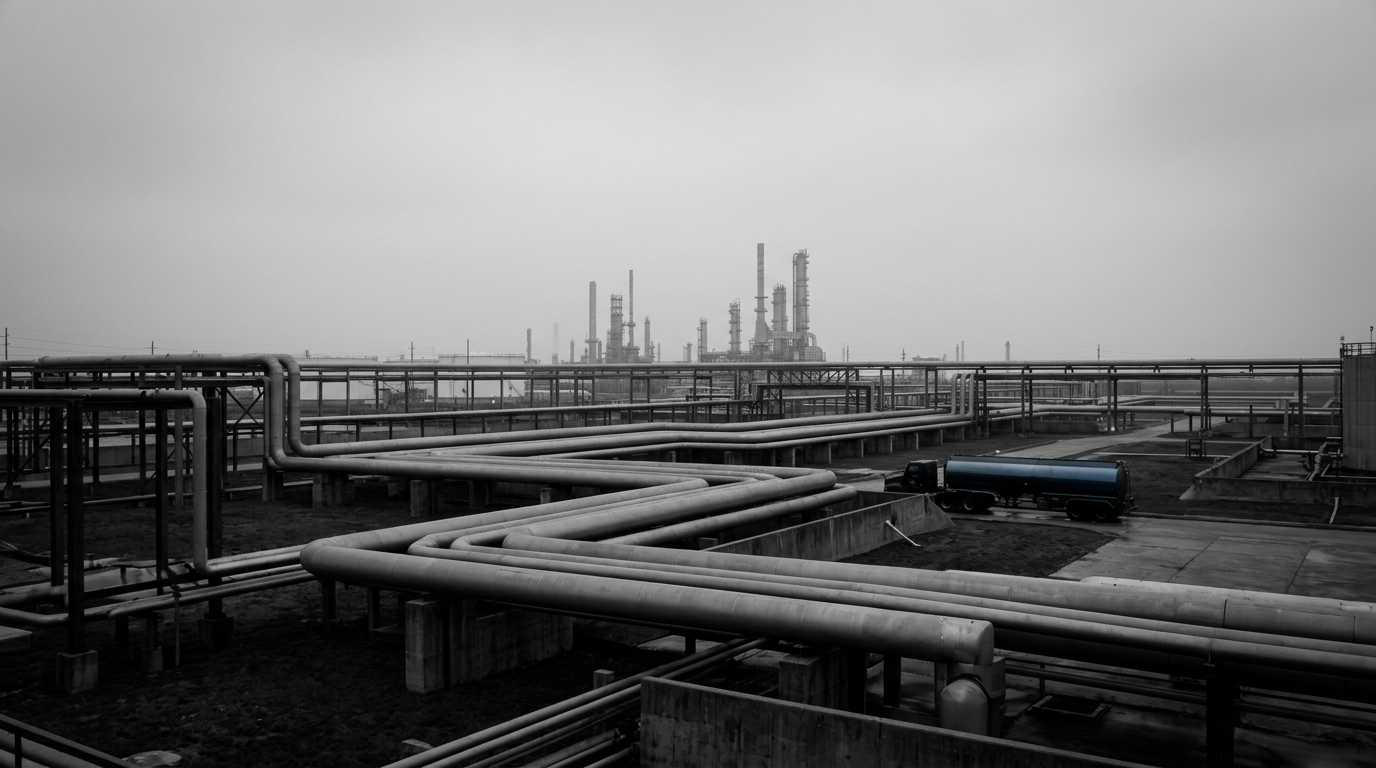
Oil Prices Defy Supply Shock Global oil markets are exhibiting unexpected stability despite a significant supply disruption caused by Iran's closure of the Strait of Hormuz on May 1, 2026. This action immediately removed 14 million barrels per day (bpd) from the global supply, representing the largest single disruption in history. However, crude oil prices are trading around $110 per barrel, with gasoline at $4.39 per gallon, significantly below initial analyst forecasts of $150 or even $200 per barrel.
This divergence from expected price surges, which saw oil exceed $120 per barrel and gasoline reach $5 per gallon during the 2022 Russia-Ukraine conflict (which threatened 3 million bpd), is attributed to several factors. Global crude output from regions outside the Persian Gulf, particularly the United States and Latin America, has increased, though not sufficiently to offset the 14 million bpd deficit.
Furthermore, a substantial pre-war inventory of 580 million barrels stored on tankers and in onshore facilities, combined with releases from strategic reserves and the de-sanctioning of Russian and Iranian oil, has provided an additional 8 million bpd buffer.
A significant contributing factor is a concurrent reduction in global oil demand, which has fallen by at least 4.3 million bpd. This demand destruction surpasses the 2.5 million bpd observed during the 2009 global financial crisis, despite current prices being lower than the $140 per barrel peak seen then. The combination of existing inventories and reduced demand has mitigated the impact of the supply shock, preventing a more substantial price increase.