US designates Brazil’s PCC and CV as terrorist groups
US designates Brazil’s PCC and CV as terrorist groups in August 2026, expanding tools to freeze assets, sanction networks and target linked individuals.
Atlas Newsdesk ·
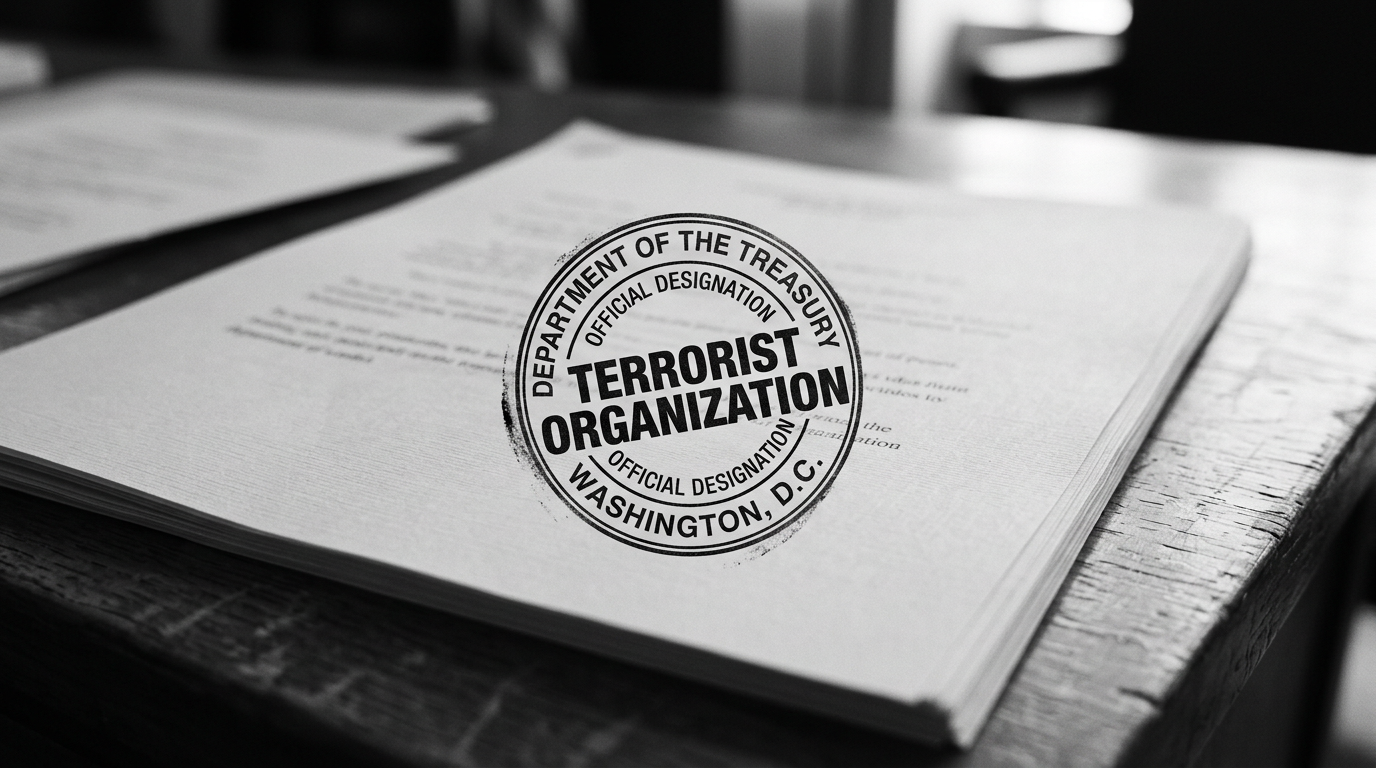
The United States in August 2026 formally designated Brazil’s two largest criminal organizations—the Primeiro Comando da Capital (PCC) and the Comando Vermelho (CV)—as terrorist entities, officials said. The move shifts how Washington categorizes the groups, taking them out of a purely criminal-law framework and placing them under a national-security label.
Officials said the reclassification broadens the legal mechanisms available to US authorities. Those tools include freezing assets, applying international sanctions, and pursuing individuals connected to the two networks.
The United States
Expanded US tools: assets, sanctions, and linked individuals
Under the new designation, US authorities gain wider latitude to target finances and support structures tied to PCC and CV, according to officials. The stated measures include asset freezes and sanctions that can be applied internationally. Officials also said the policy enables actions aimed at people connected to the groups. In practice, the designation changes how the organizations are framed in official terms, elevating the issue from transnational organized crime into a category typically associated with national security. The source material did not specify which statutes would be used, whether additional agencies would be involved, or how enforcement would be prioritized. It also did not detail any immediate actions taken beyond describing the expanded toolbox available to US authorities.
In that political context Brazil’s election backdrop and opposition messaging In that political context The announcement comes after sustained lobbying by members of the Bolsonaro family, the source said. In that political context, the designation is described as reinforcing a narrative that President Luiz Inacio Lula da Silva’s administration has been ineffective in confronting organized crime. As Brazil approaches an October election, the designation is portrayed as providing additional political leverage for the opposition. Polling cited in the source shows Flavio Bolsonaro at 28.7 percent compared with President Lula’s 42.4 percent ahead of the October vote. Analysts cited by the source noted that PCC and CV have operated for decades, while also highlighting the timing of the US decision. The analysts described the timing as suggestive of alignment with domestic political objectives in Brazil, though the source did not present evidence of operational coordination beyond the stated lobbying and political messaging. National-security framing and remaining uncertainties The source said the terrorism label could be read as a rationale for broader US involvement in Brazilian internal affairs. At the same time, it remains unclear how far US actions will extend in practice beyond the stated measures of asset freezes, sanctions, and pursuing individuals linked to the organizations.
Analysts also described the designation as fitting a wider regional pattern in which security classifications are used to shape political narratives and justify extraordinary state measures. The source did not provide examples from other countries, and it did not indicate whether similar US steps are under consideration elsewhere.