India Venice Biennale Pavilion Signals Diplomacy Shift
India Venice Biennale pavilion draws scrutiny as cultural diplomacy, with Ministry of Culture and conglomerate-linked foundations shaping its framing.
Atlas Newsdesk ·
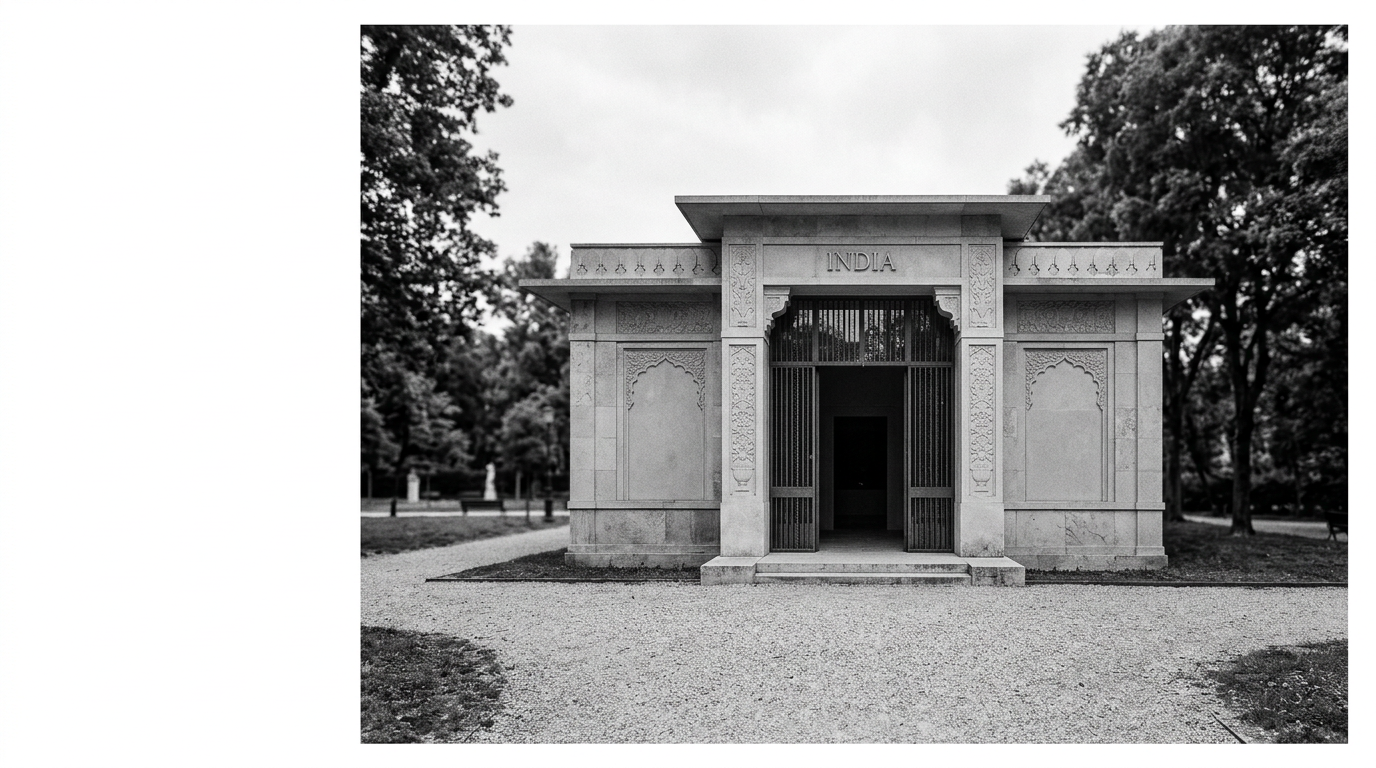
India’s national presentation at the 61st Venice Biennale is being framed as a deliberate act of cultural diplomacy as well as an art exhibition, according to the source material. The account argues that the pavilion’s commissioning model and curatorial choices place it in a strategic space where international visibility, national representation, and patronage intersect.
The Indian Pavilion is jointly commissioned by the Ministry of Culture and private foundations linked to major industrial conglomerates. In the source’s telling, that arrangement positions the project between state representation and corporate-backed patronage, with the pavilion functioning as a form of cultural branding on a high-profile global platform.
Commissioning ties state representation to corporate patronage
Venice Biennale
The source describes officials’ involvement through the Ministry of Culture, alongside those private foundations, as creating an explicitly strategic framework. It characterizes the model as aligning state patronage with corporate interests rather than presenting the pavilion as a fully independent cultural production.
The account emphasizes why commissioning matters in this context: national pavilions at major international biennales are often interpreted as signals of how a country wants to be perceived abroad. In that reading, the pavilion becomes less a neutral exhibition space and more a curated statement about national image in an international forum.
Within this framework, the pavilion is presented as consolidating a particular image of national belonging. The source describes that image as coherent and sanitized, and says it avoids centering internal dispute, disagreement, or contestation.
“Geographies of Distance” and a curated narrative of
“Geographies of Distance” and a curated narrative of continuity Venice Biennale The exhibition is titled Geographies of Distance: remembering home. The source says it draws on traditional materials to convey a curated account of national identity and to signal what it calls a narrative of civilizational continuity for international audiences. According to the account, the pavilion’s material language is used to communicate endurance and continuity while remaining legible to a global art public. It frames this as a communicative strategy: employing familiar material references to carry a national story across borders without requiring extensive contextual explanation. Universal themes, and issues the source says are not addressed The source analysis says the exhibition prioritizes aestheticized depictions of fragility and endurance. Displacement and precarity are presented as universal, sensory experiences, an approach that can travel across contexts without being anchored to specific domestic conditions.
At the same time, the account argues that the pavilion does not engage particular socio-political drivers of instability within India. It lists religious majoritarianism, caste-based exclusion, and state-sanctioned redevelopment projects as examples of issues it says are not directly addressed, despite their relevance to displacement and insecurity.
Governance, reputation management, and a key uncertainty The source presents these omissions as consequential rather than accidental. It suggests that avoiding contemporary political tensions around land rights and community displacement reflects a governance approach that keeps international cultural branding separate from domestic policy controversy.
In that framing, the separation is described as carrying reputational benefits by reducing the likelihood that cultural diplomacy platforms become venues for scrutiny of politically sensitive issues. The account argues that thematic universalism, combined with state and corporate patronage, helps manage how the nation is represented in international diplomatic environments.
What remains uncertain in the source material is how this approach will be received among audiences and stakeholders who see international cultural forums as places where contemporary political realities should be confronted directly, rather than bracketed out.