Oil Surges as US-Iran Ceasefire Talks Begin
Global markets weighed a fragile US-Iran ceasefire on April 9, 2026, as U.S. futures steadied and oil rose on Hormuz concerns.
Atlas Newsdesk ·
Global financial markets showed mixed moves on Friday, April 9, 2026, as investors evaluated a fragile two-week ceasefire between the United States and Iran. Early signals from the United States were subdued, with stock index futures indicating little change after a week in which the initial ceasefire agreement helped lift risk appetite.
In premarket trading, S&P 500 futures were largely unchanged, Nasdaq 100 futures were up about 0.15%, and Dow futures were flat. The muted tone followed gains on Thursday, when the S&P 500 rose 0.62%, the Nasdaq Composite advanced 0.83%, and the Dow Jones Industrial Average climbed 0.58%, or 275.88 points. The Dow’s move left it in positive territory for 2026.
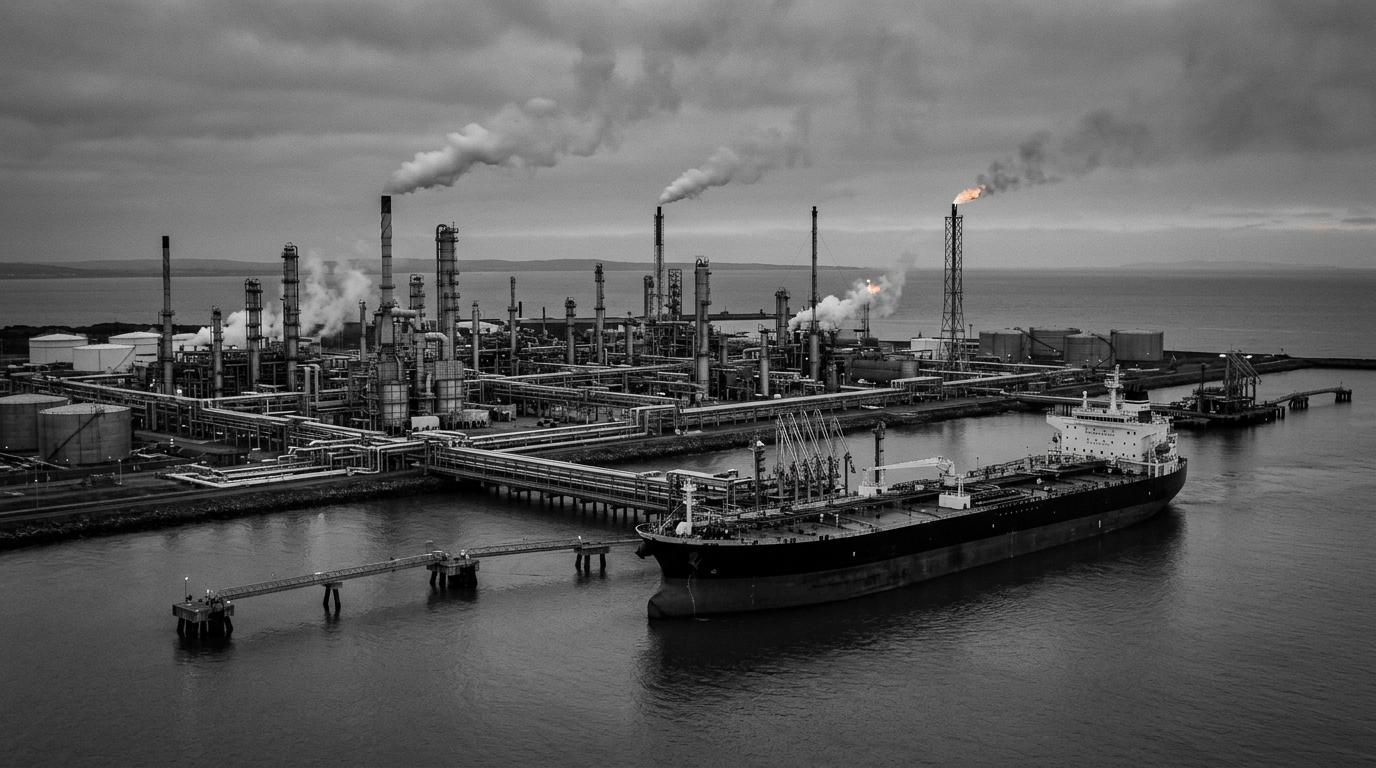
Energy markets, however, pointed to lingering concern despite the ceasefire. West Texas Intermediate rose 0.79% to $98.66 per barrel and Brent crude gained 0.43% to $96.33 per barrel on Friday. The increases were linked to worries about minimal traffic through the Strait of Hormuz even after the ceasefire, underscoring how quickly supply and shipping expectations can shift when a key chokepoint remains under strain.
Across Asia-Pacific, equities mostly advanced. Japan’s Nikkei 225 gained 1.75%, China’s CSI 300 rose 0.6%, and South Korea’s Kospi added 1.68%. Australia was an exception, with the S&P/ASX 200 down 0.31%.
The broader backdrop remained the Middle East conflict, which has lasted five weeks and previously led to the closure of the Strait of Hormuz. That history continued to shape market positioning, as traders balanced the relief of a ceasefire against the operational reality of constrained movement through a route central to global energy flows.
What remains unclear is how quickly shipping activity normalizes and whether the ceasefire holds through its two-week window. With equities showing only modest follow-through in U.S. futures while crude prices moved higher, markets reflected a split view: some investors treated the agreement as a stabilizing step, while others focused on the ongoing disruption signaled by limited passage through Hormuz.