SpaceX valuation slips as global chipmakers trigger rout
SpaceX shares fell about 3% pre-market to around $150 as a tech-stock rout and concerns over AI spending weighed on the newly public company.
Atlas Newsdesk ·
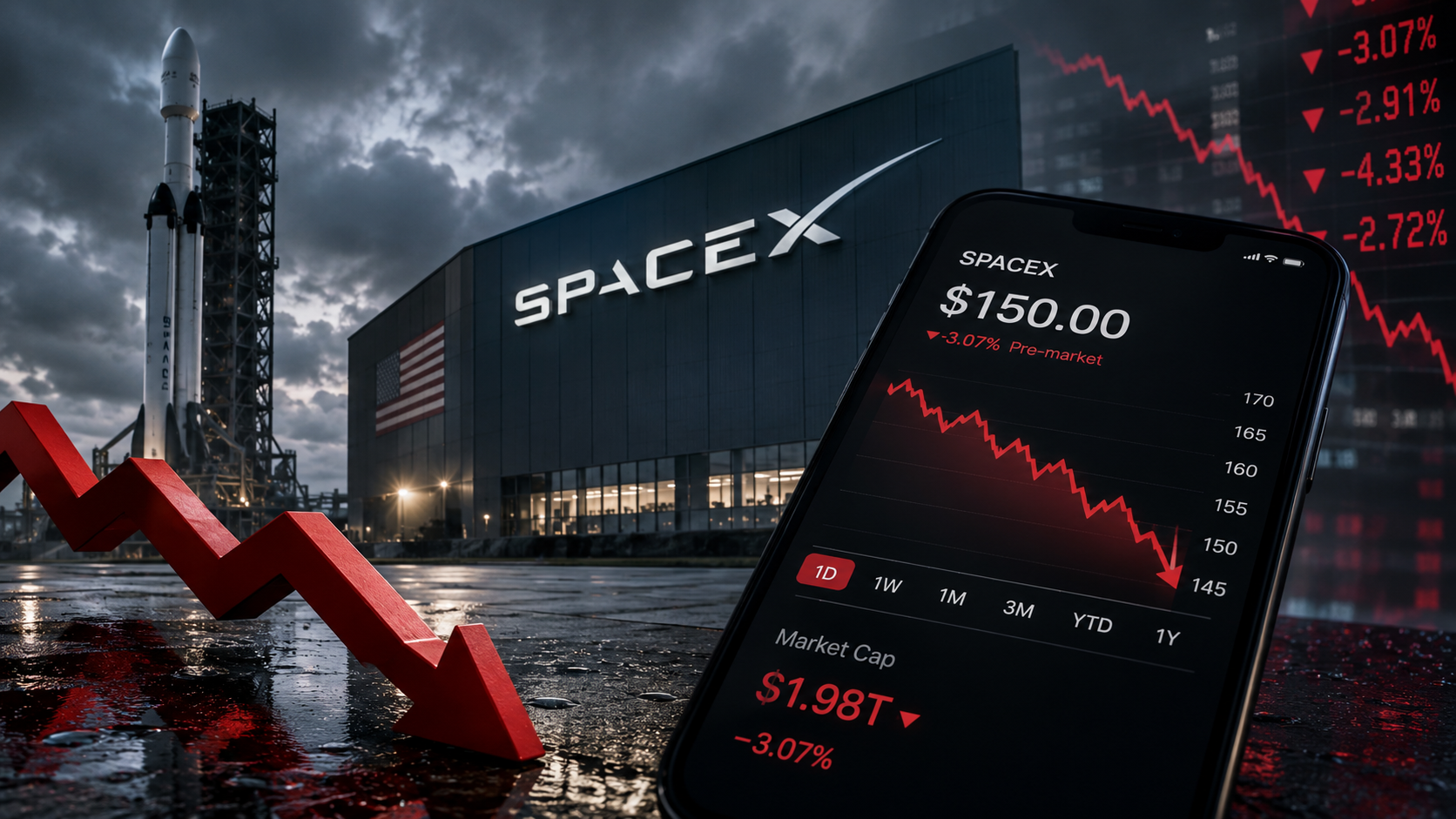
SpaceX shares extended their post-IPO pullback on Tuesday, falling about 3% in pre-market trading to roughly $150 as a broad technology selloff hit riskier corners of the market.
The decline put the stock on pace for a fourth straight session of losses and left it close to dipping below a $2 trillion market value, a key psychological threshold for large-cap investors.
Tech rout pressures SpaceX after blockbuster debut
SpaceX’s retreat follows a record-setting $75 billion initial public offering last week, which initially sparked a sharp run-up and heavy attention from retail traders focused on space and artificial intelligence themes.
That early momentum has cooled as investors reassess valuations across high-growth technology names. The reversal comes amid rising concern on Wall Street that AI-linked trades have moved too far, too fast.
Market stress has been visible globally, including a sharp drop in South Korean equities on Tuesday. Shares there fell 10% in a selloff led by chipmakers, underscoring how sensitive AI-adjacent stocks can be to shifts in sentiment.
First investment-grade bond sale targets AI funding
Adding to the pressure, SpaceX is preparing to sell investment-grade bonds for the first time, according to the information provided. The offering is intended to support a major borrowing program tied to the company’s AI ambitions.
For equity investors, the move signals a new phase for the company: shifting from an IPO-funded balance-sheet boost toward more traditional capital markets financing. While investment-grade status can widen the buyer base and potentially lower borrowing costs, it also spotlights how large the planned spending cycle may be.
The prospect of sizable debt issuance can weigh on shares when markets are already punishing leveraged growth strategies. In periods of risk-off trading, investors often demand clearer visibility into cash flows and near-term returns, especially when funding is directed toward long-horizon projects.
Retail frenzy cools as valuation focus returns
SpaceX has been a center of speculative activity since the IPO, benefiting from enthusiasm around both commercial space and AI. The current pullback suggests those trades are becoming more selective as investors rotate away from momentum and toward balance-sheet discipline.
Even a modest price move carries outsized narrative impact at SpaceX’s scale. A slip below $2 trillion would not change operations, but it can influence index-linked flows, options positioning, and investor psychology around whether the stock is trading on fundamentals or sentiment.
With chipmakers helping drive the latest global drawdown, the broader AI supply chain remains a key barometer for how markets will treat capital-intensive AI strategies. SpaceX’s near-term trading may therefore be shaped as much by macro tech risk appetite as by company-specific developments.
Next steps for investors will center on details of the bond sale—timing, size, pricing, and use of proceeds—as well as whether the wider technology selloff stabilizes. Until then, the stock’s post-IPO narrative is shifting from debut-day excitement to scrutiny over how ambitious expansion plans will be financed.