SpaceX investment-grade bonds debut as shares slide
SpaceX investment-grade bonds are set to debut as the newly public company targets at least $20 billion in debt while shares extend a three-day slide.
Jason Kwon ·
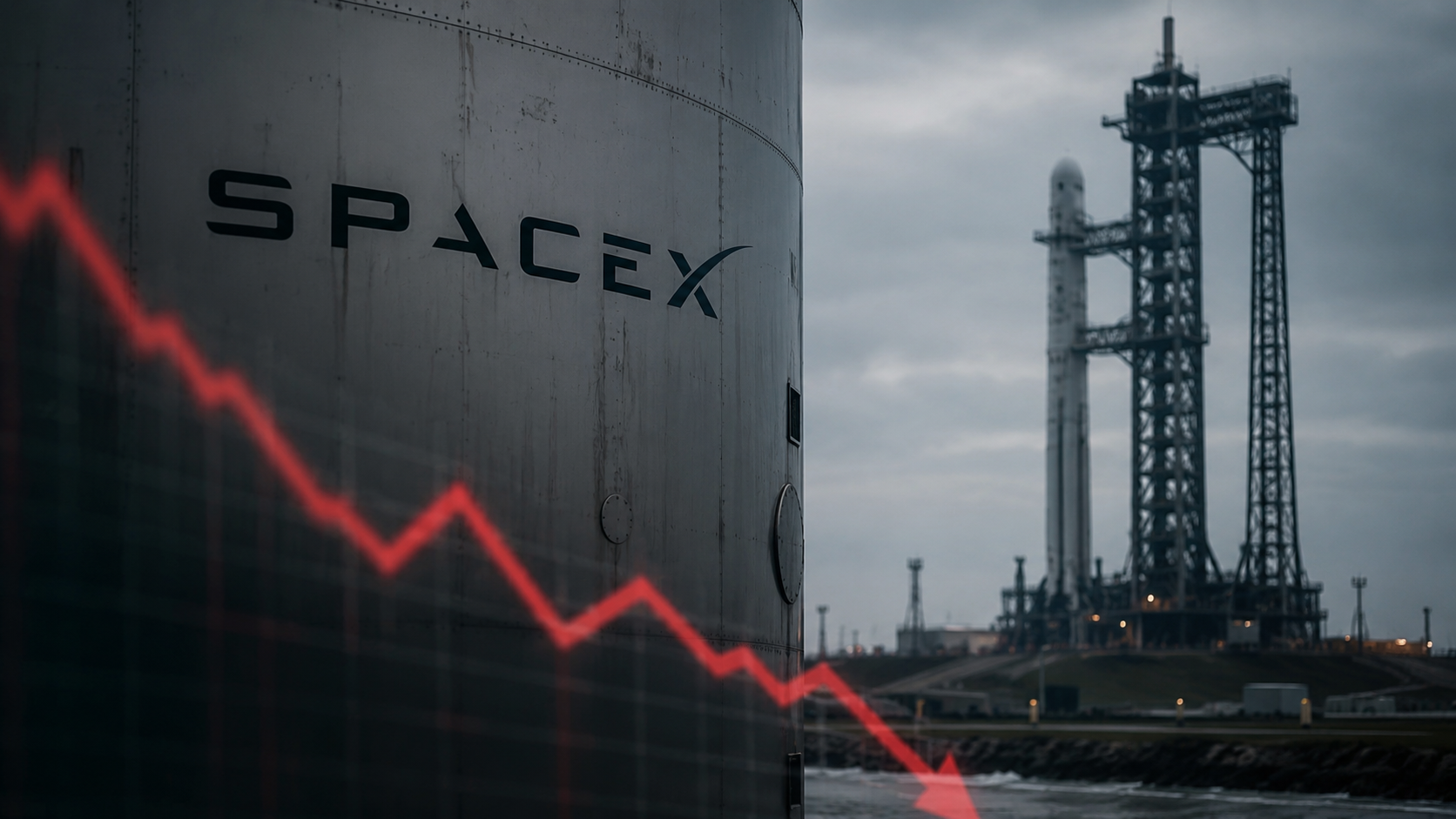
SpaceX investment-grade bonds are coming to market for the first time, and investors are reacting by selling the stock for a third straight session.
Shares fell as much as 10% Monday morning in New York, extending a pullback that began midweek. The decline follows drops of more than 8% across Wednesday and Thursday, with U.S. markets closed Friday for the Juneteenth federal holiday.
Debt financing arrives as post-IPO trading stays choppy
The bond deal marks a new funding tool for the Elon Musk-led company, which has historically relied on private capital. This time, SpaceX is offering investment-grade bonds—signaling an attempt to borrow at rates typically reserved for higher-quality issuers.
Bloomberg reported last week that SpaceX is seeking to raise at least $20 billion in the debut offering. The move is described as the start of what investors expect to be a large borrowing campaign tied to SpaceX’s expanding artificial-intelligence ambitions.
The equity selloff is landing on top of classic early-IPO volatility. SpaceX’s first days of trading have looked like a low-float listing with heavy retail interest, where price moves can overshoot in both directions.
On day one, only 4.2% of total shares outstanding were available to trade. That limited supply can amplify swings when demand shifts, because relatively small flows can move the price materially.
Big numbers: $75B IPO, $2.4T market cap, $135 offer price
Even with the latest dip, SpaceX is still well above its offer price. Shares were 37% higher than the $135 IPO price at Thursday’s close, valuing the company at $2.4 trillion.
The listing followed a record $75 billion initial public offering, which immediately made SpaceX one of the largest publicly traded companies by market value. That scale raises the stakes for any shift in capital structure, because even modest percentage moves translate into large dollar swings.
Monday’s drop also shows how quickly sentiment can reset when leverage enters the conversation. Equity investors typically treat large new debt plans as a tradeoff: more near-term capital, but also more fixed obligations that sit ahead of common shareholders.
AI strategy pulls SpaceX into a $1T IPO race
SpaceX’s AI story has been a central driver of attention around the stock. The company’s acquisition of Musk’s xAI in February increased investor focus on how aggressively SpaceX intends to compete in large-scale model development and deployment.
The IPO has also become a reference point for other AI-heavy companies planning their own public debuts. Investors have been watching SpaceX’s tape ahead of the anticipated listings of Anthropic PBC and OpenAI, both of which are expected to pursue IPOs as soon as this year.
Those competitors are cited as targeting valuations around $1 trillion, a level that has made public-market appetite for AI exposure a live question. SpaceX’s ability to borrow at investment-grade terms—while still dealing with sharp day-to-day equity moves—will be read as a signal about how credit markets are pricing the AI buildout.
The next milestones are straightforward: final terms and reception for the bond sale, and whether the stock’s post-IPO volatility calms as the market digests both the low float and the new leverage plan. For now, the message from price action is that investors are treating “first-time debt” as a material change, not a routine financing update.