SpaceX stock slide puts $135 IPO price back in focus again
SpaceX stock is hovering near its $135 IPO price, testing bullish analyst calls as valuation concerns and lock-up releases weigh on sentiment.
Atlas Newsdesk ·
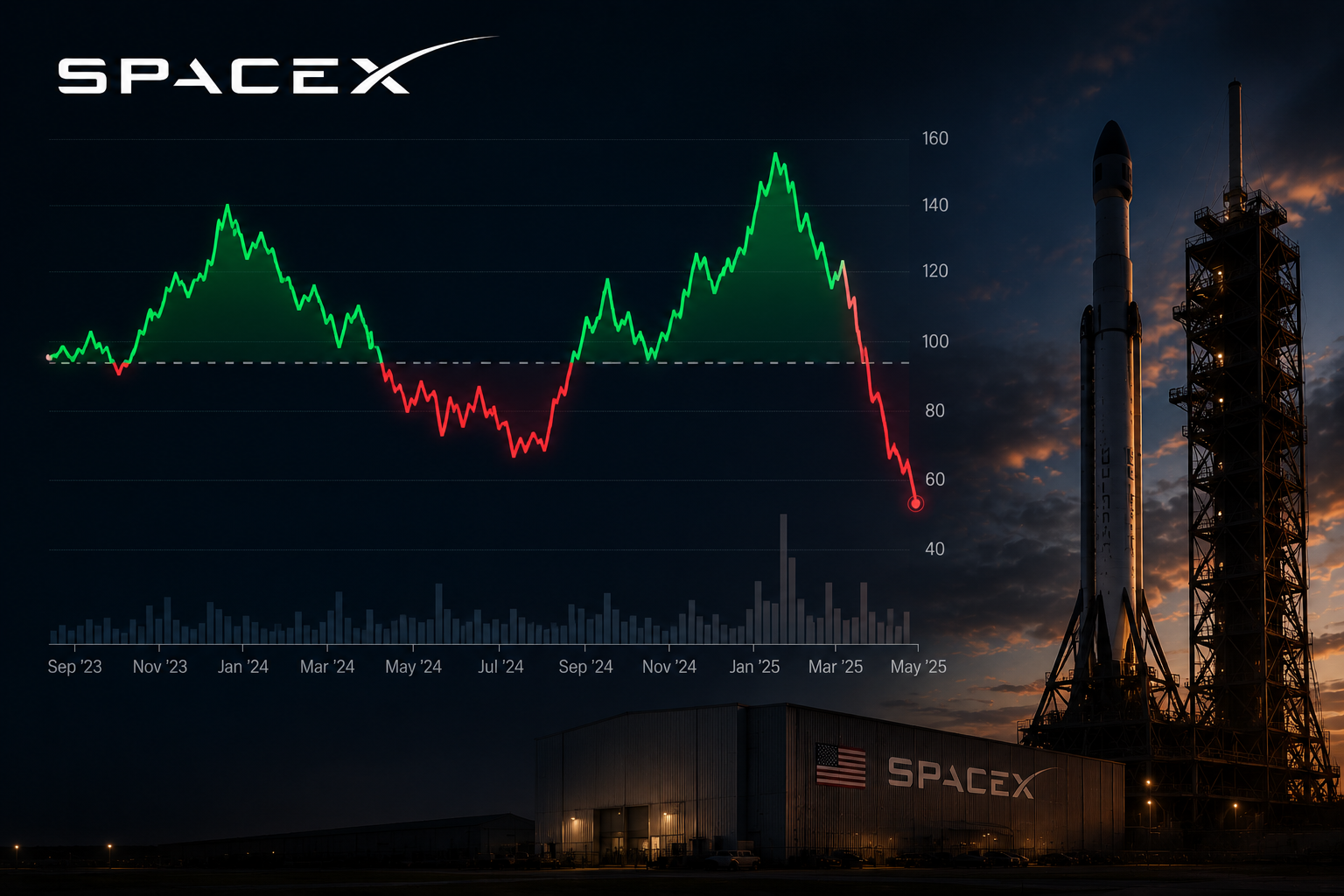
SpaceX stock is sliding toward its $135 IPO price, testing bullish bank calls as valuation doubts and lock-up supply hang over the shares.
The $135 line returns
The shares have moved lower through the month and are now described as about $1 above the level paid by buyers in last month’s initial public offering. The provided account described that sale as the largest debut share offering on record, which makes the quick retreat harder for early public-market investors to ignore.
The damage is deeper for buyers who entered after the listing began trading. SpaceX shares were said to have climbed above $200 in mid-June, leaving those investors exposed to a much sharper drawdown than the headline move back toward the IPO price suggests.
Banks stay constructive
The decline has come despite a favorable start from major banks. More than a dozen firms, including Morgan Stanley, JPMorgan Chase and Goldman Sachs, initiated coverage with ratings equivalent to buy, according to the supplied account.
That support has not settled the main argument around the stock. Skeptics point to a valuation of more than 30 times estimated sales, placing SpaceX among the most expensive names in the Nasdaq-100 on that measure, according to the same account.
The other pressure point is supply. SpaceX faces an extended lock-up structure that is expected to allow insiders to release shares into the market at intervals over the coming months, creating the risk that new selling arrives before demand has fully stabilized.
Lock-up supply clouds trading
Ken Mahoney of Mahoney Asset Management framed the near-term risk bluntly. “We still don’t think SpaceX has found its low,” he said.
The bull case leans on the history of volatile technology listings as well as investor interest in the company’s broader mission. A Truist Wealth analysis of 30 major technology IPOs over the past 15 years found that those stocks averaged a maximum first-year decline of 55%, according to the provided account.
Talley Leger, chief market strategist at the Wealth Consulting Group, said further weakness could make the stock more attractive to him. “I might actually consider, if this downdraft continues much more, picking up some shares of the individual company because I like the inspirational message and goal of the company,” he said.
Three paths for SpaceX
If SpaceX stock holds above the $135 IPO price, the immediate market signal would be that long-only demand can absorb both valuation concerns and staged insider supply. For SpaceX, that would protect the credibility of its public-market debut; for the wider space and growth-equity sector, it could keep the IPO window more welcoming for expensive technology issuers.
If the shares break below the offering price, the mechanism changes. A failed IPO-price defense could pressure SpaceX’s market narrative, weaken appetite for other high-valuation listings and reinforce a broader risk-off mood in growth stocks, even if the direct global macro effect remains limited without a wider equity selloff.
A third path is a choppy range while investors wait for the lock-up releases to pass. In that case, the company’s share performance would depend less on broad enthusiasm and more on whether fresh buyers can match insider selling, while the sector would take SpaceX as a live test of how much premium investors will still pay for ambitious private-market leaders entering public markets.
The open questions are specific: how much stock insiders sell, whether analyst support turns into sustained institutional buying, and whether valuation discipline becomes stronger across newly listed technology names. Until those answers arrive, the $135 level is less a technical marker than a referendum on how much patience investors have after a heavily watched debut.