Russia and Belarus Hold Joint Nuclear Drills, Launch Yars Missile
Russia and Belarus conducted joint nuclear drills this week, overseen by Presidents Putin and Lukashenko, involving strategic and tactical nuclear assets.
Lauren Collins ·
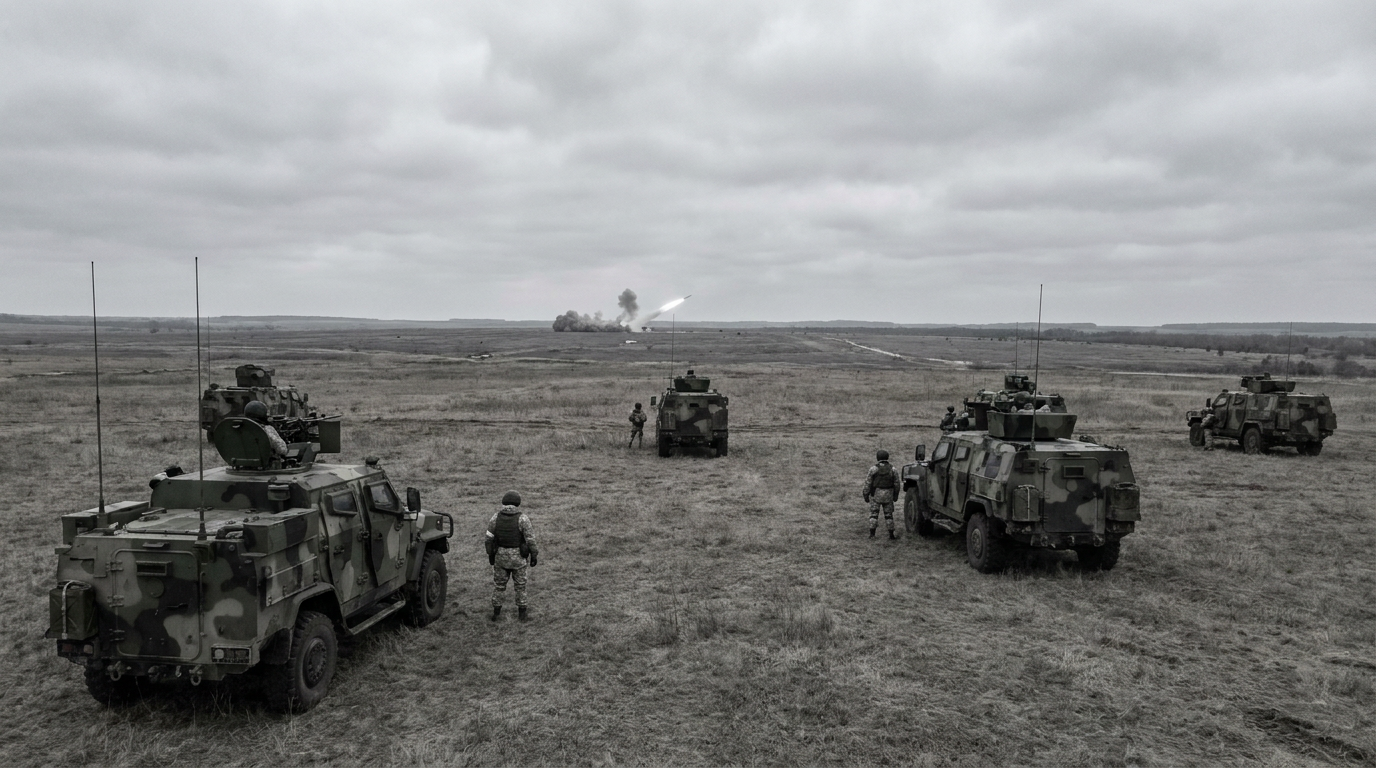
Russian and Belarusian forces conducted joint nuclear weapons drills this week, with Belarusian President Alexander Lukashenko taking part for the first time as Russian President Vladimir Putin monitored the exercises, according to officials. The drills ran from Tuesday through Thursday and were described as involving tactical and strategic nuclear forces across a wide area, from Eastern Europe to the Pacific. Officials said the exercises concluded on Thursday, May 22, 2026.
As part of the drills, an intercontinental Yars missile described as hypersonic was launched from the Plesetsk Cosmodrome to Russia’s Kamchatka Peninsula, a flight of 5,750 km (3,573 miles) that officials said took less than 20 minutes. The report said the broader exercises involved hundreds of missile launchers, warplanes, warships and nuclear submarines.
Putin said the drills were meant to raise the readiness of strategic and tactical nuclear forces and to reflect experience from what he called the “special military operation,” referring to the war in Ukraine. Lukashenko said Belarus and Russia “threaten absolutely no one” and described the drills as defensive.
Belarus role follows 2022 constitutional change
The exercises follow Russia’s deployment of tactical nuclear weapons to Belarus in June 2023. The move was enabled by a 2022 amendment to the Belarusian constitution that allowed nuclear weapons to be stationed on its territory.
Russia has supplied Belarus with modified Su-25 fighter jets and Iskander-M ballistic missiles, the report said. It also cited reports that nuclear weapons are stored at the Asipovichi military range, less than 200 km (124 miles) north of the Ukrainian border.
The report noted that tactical nuclear weapons are not regulated by treaties between the United States and Russia and can be difficult to monitor because of their size.
Ukraine and NATO react as diplomacy continues
Ukrainian President Volodymyr Zelenskyy said on May 15 that Russia was drawing Belarus into “new acts of aggression,” and later suggested the drills could be a precursor to a new Russian offensive from the north. Analysts cited in the report said the current concentration of Russian forces in Belarus would be insufficient for such an operation.
NATO Secretary-General Mark Rutte said that if Russia were to use nuclear weapons against Ukraine, the alliance’s response would be “devastating.” The drills coincided with a NATO foreign ministers’ summit in Helsingborg, Sweden, which the report described as symbolically significant after Sweden joined the alliance following Russia’s full-scale invasion of Ukraine in February 2022.
Officials in Moscow and Minsk said the drills were triggered by an unspecified “threat of aggression.” Further statements from the governments and NATO officials are expected as the summit continues.