Smith & Wesson Swings to Profit, Testing Turnaround Thesis
The firearms maker's 32.3% sales jump and swing to a $0.06 EPS profit challenge the narrative of a sector-wide slump, putting short-sellers on notice.
Jurgen Goldmeier ·
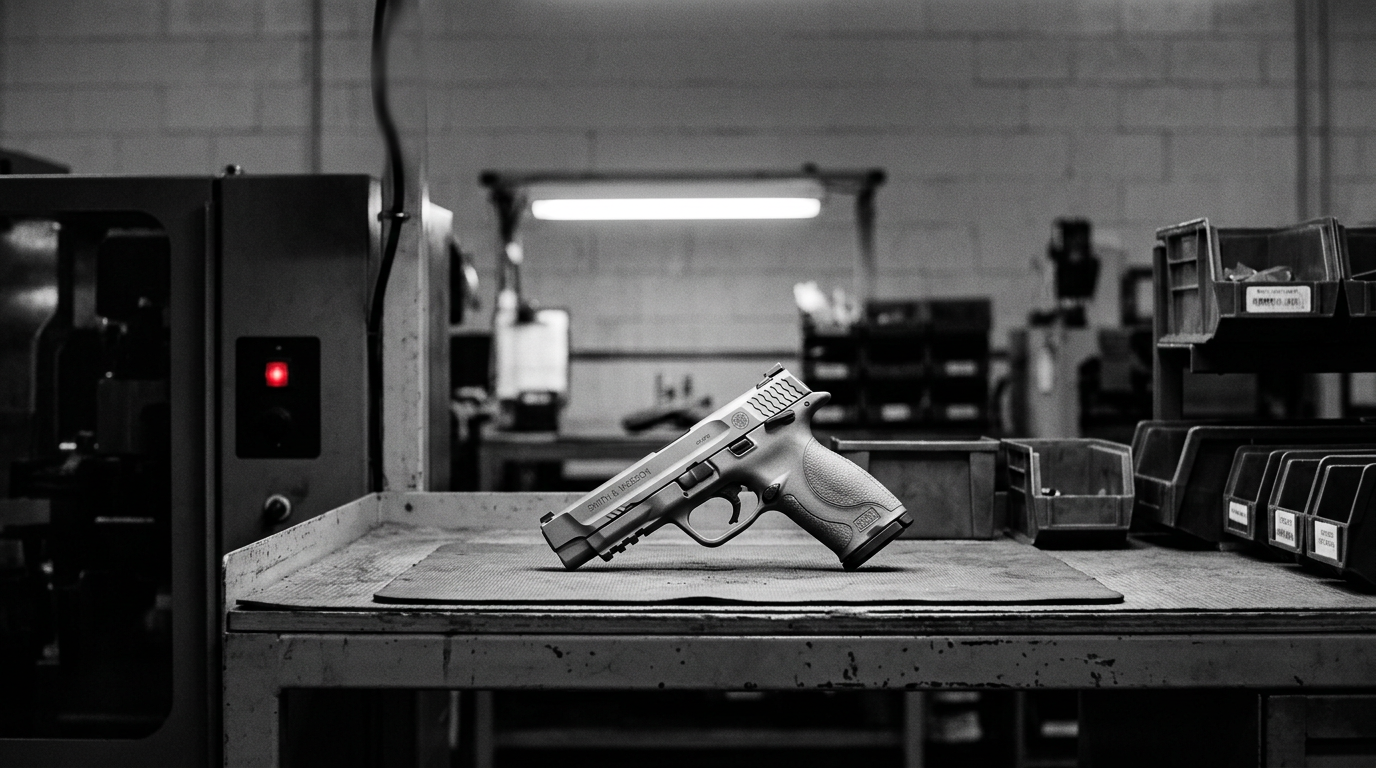
Smith & Wesson Swings to Profit, Testing Turnaround Thesis Smith & Wesson Brands reported a 32.3% year-over-year jump in net sales to $112.6 million for its first fiscal quarter. The sales growth drove a swing from a loss of $0.08 per share in the year-ago period to GAAP earnings of $0.06 per share. This positive print challenges the market narrative of a sustained firearms industry slump. ## Background The firearms sector saw unprecedented demand through 2020 and 2021, followed by a sharp normalization as consumer spending patterns shifted and stimulus effects faded. The consensus going into this report centered on continued soft demand and inventory destocking across the industry. Smith & Wesson's print, showing a return to top-line growth, cuts directly against that bearish positioning. This quarter's results reverse the trend seen in the company's own year-ago filing, which posted a net loss. The key metric of earnings per share (EPS)—a company's profit allocated to each share of stock—flipped positive, forcing a reassessment of the demand cycle's trough. The market will now scrutinize company guidance, which is management's projection for future performance, to determine if this marks a sustainable recovery or a one-off event driven by product mix or channel fill. ## Why it matters The positive result from a major manufacturer has a direct read-through for the entire firearms and accessories sector. A return to growth and profitability for a bellwether name like SWBI challenges the thesis that the industry faces a prolonged downturn and that consumer discretionary spending remains under severe pressure. It provides a data point suggesting demand may be stabilizing at a level higher than pre-pandemic norms. This report puts pressure on short sellers who were positioned for another weak quarter. If this signals a recovery in firearm demand, those positions face mark-to-market losses. The print also forces analysts to reconsider their models, potentially increasing earnings estimates and the valuation multiple—the ratio of a company's stock price to its earnings—if they believe this quarter marks an inflection point rather than a temporary anomaly. ## What to watch The key test for the turnaround thesis will be Smith & Wesson's second-quarter fiscal 2024 earnings report. The market will look for evidence that the sales momentum from the first quarter is sustainable and not a one-time event. Observers will also monitor monthly background check data from the National Instant Criminal Background Check System (NICS) as a high-frequency proxy for underlying consumer demand. If the company can deliver another quarter of top-line growth and profitability, it would validate the view that the industry has found a new floor. A reversion to sales declines would suggest the first quarter's strength was an outlier.