Middle East news brief blocked by missing verifiable hook
Middle East news brief could not be filed because the source is a US opinion item with no dated regional event, documents, or attributable officials.
Omar Farouk ·
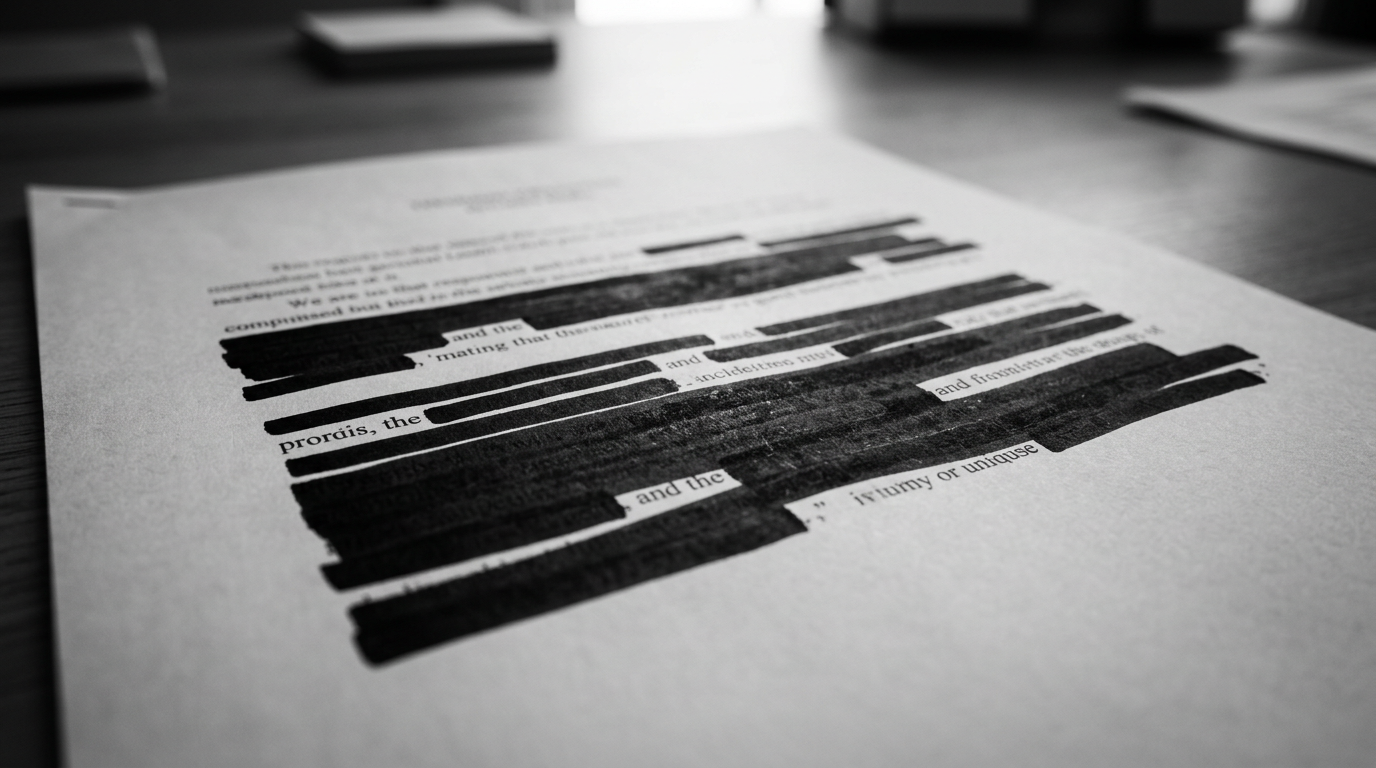
A Middle East news brief could not be produced from the submitted material because it does not contain a verifiable, dated development tied to a primary regional actor, according to the platform’s verification requirements described in the source text.
The item presented is characterized as a US commentary focused on domestic politics and President Trump, rather than a report built around a new event in the Middle East involving a regional government, military, energy institution, or a multilateral body active in the region.
Why the submission does not meet verification standards Why the submission does not meet verification standards Middle East The source text says the submission provides no primary-source facts, documents, or named regional officials that could be cited. It also says the full article text was not included, leaving no quotable, attributable statements available for use under the stated rules. Under the standards described, contested or high-stakes claims must be supported by primary materials or be clearly attributed to named officials or institutions contained within the source material. The text argues that repackaging another publisher’s commentary as a news brief is not permitted under those rules. What qualifies as a Middle East “regional hook” in this template The source text lists examples of acceptable anchors that would enable a Middle East file: an Iranian government statement, an Israeli defense update, a Gulf energy decision, a UN report, or a verified shipping incident. It also notes that a Middle East brief is expected to follow a structure that starts with a lead paragraph anchored to a regional actor, followed by regional context, and then a forward-looking, falsifiable element tied to an observable event by a specific date.
What additional inputs are required to proceed
If the intended angle is US policy as it relates to the Middle East, the source text sets a minimum viable input: a new, dated action or statement from a primary institution such as the White House, Pentagon, State Department, Iran’s Foreign Ministry, Israel’s Defense Ministry, the UN, or an energy ministry. Middle East In addition, it calls for the exact text or a usable excerpt that can be quoted and attributed. Without those elements, the source text warns that producing a brief would risk carrying unverified assertions about motives, military dynamics, or regional actors.
Examples of verifiable forward calls the template expects
The source text gives examples of forward-looking elements that would be considered falsifiable if supported by a verifiable hook. These include whether a named ministry issues a statement, whether a specific vote is scheduled, whether shipping advisories change, or whether an OPEC+ committee meeting produces an output decision, by a stated date.
Absent those inputs, the material remains an opinion-driven argument without the documentary or attributable foundation needed for a news-format Middle East briefing under the rules described in the submission.