French Hospital Death Linked to Extreme Heat Wave Conditions
Officials in France are investigating a patient death potentially caused by excessive heat within a hospital room during a record-breaking heat wave.
Atlas Newsdesk ·
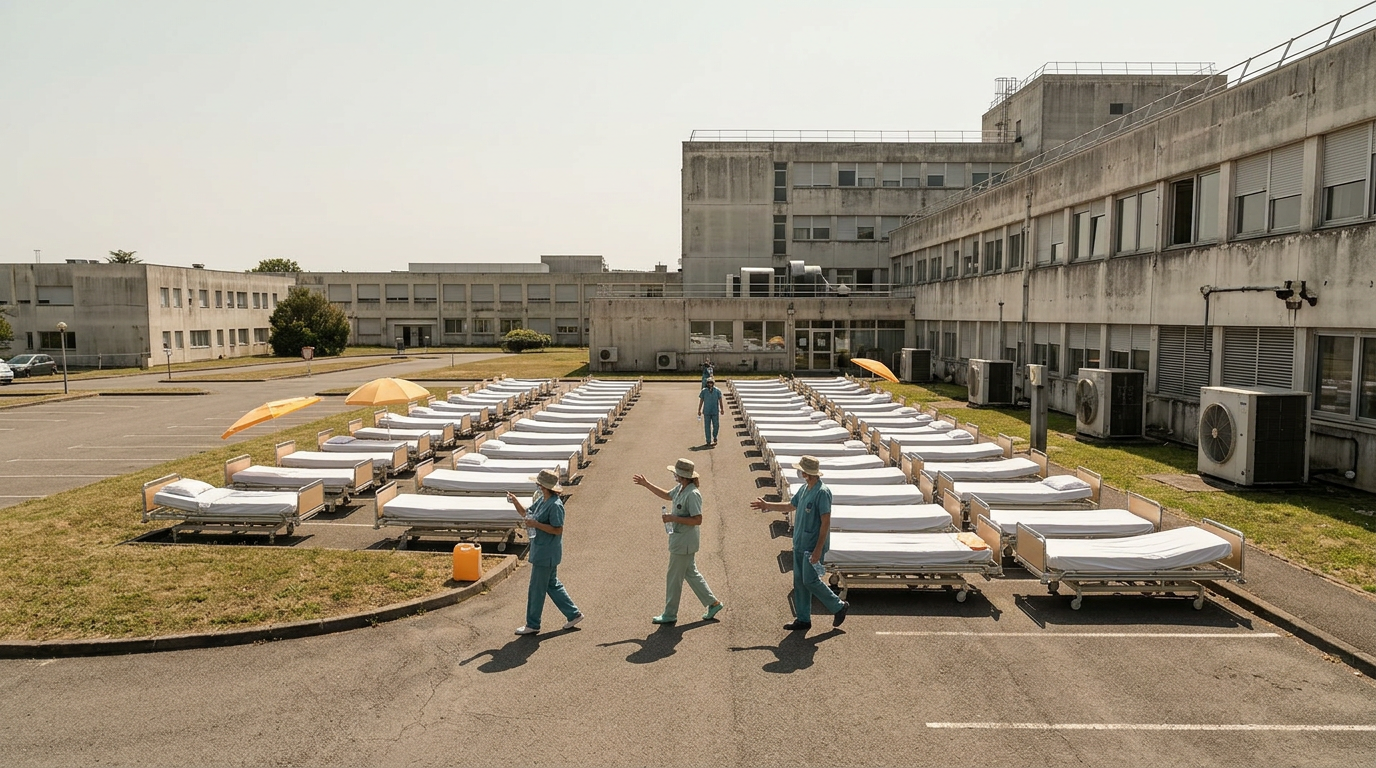
Heat-Related Mortality Investigation
Authorities in France are currently examining a fatality involving a patient who passed away while hospitalized during a period of intense heat. Jean-François Cibien, representing the national emergency services, stated that while preliminary assessments suggest a link to elevated room temperatures, definitive conclusions await further medical and forensic analysis.
This incident marks a significant development in how health officials categorize risks during extreme weather events. While the connection remains under investigation, the case has prompted a broader review of patient safety protocols within clinical environments during periods of record-breaking temperatures.
Infrastructure and Climate Control Challenges
The situation has reignited concerns regarding the adequacy of cooling systems in medical facilities. Although reports suggest that a majority of French hospitals possess some form of air conditioning, the distribution of these systems often excludes specific patient wards or individual rooms.
Experts note that the presence of cooling technology does not guarantee uniform temperature regulation across all areas of a facility. The challenge lies in ensuring that climate control remains functional and effective in confined spaces, particularly during nighttime hours when heat accumulation can become hazardous for vulnerable individuals.
Rising Demand for Emergency Care
Public health agencies have reported a sharp increase in emergency room visits directly tied to the ongoing heat wave. Clinical staff are observing a surge in cases involving severe dehydration and hyperthermia, conditions that pose heightened risks to those already suffering from chronic illnesses or limited mobility.
The current crisis serves as a stress test for the resilience of the national healthcare infrastructure. Beyond immediate patient care, the situation highlights the necessity for robust, room-specific temperature monitoring and updated protocols designed to protect patients who cannot regulate their own body temperatures.
Future Implications for Healthcare Standards
As the investigation into the recent death continues, health authorities are expected to evaluate the necessity of upgrading cooling infrastructure across the country. The focus remains on whether current standards are sufficient to mitigate the risks posed by increasingly frequent and severe heat events.
Uncertainty persists regarding the exact role environmental factors played in this specific case, as well as the broader capacity of the system to handle similar future events. Future policy decisions will likely center on balancing energy efficiency with the critical requirement for climate-controlled patient environments.