Security veterans warn midterm elections count may be tested
Former federal officials warn the midterm elections count could face legal and political challenges as states prepare voters for delayed results.
Sophie McAlister ·
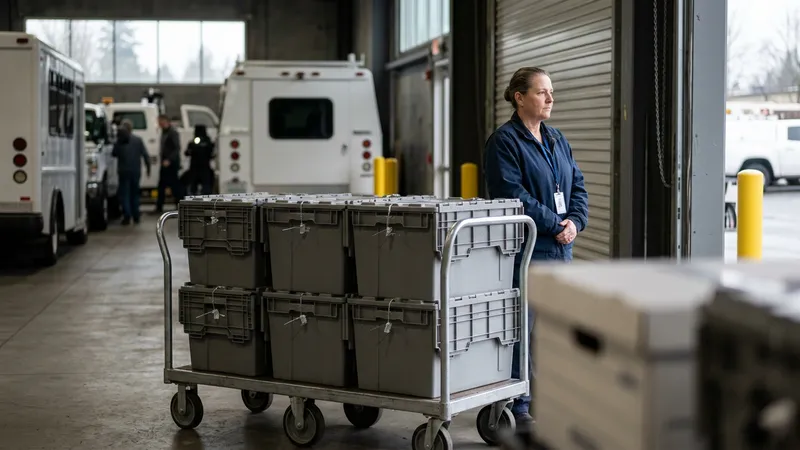
Officials overseeing midterm elections are bracing for a post-vote counting period that former federal officials warn could become a target for challenges.
With less than six weeks before polls close in November, control of the House of Representatives and Senate may turn on races that are not resolved on election night. Election specialists at a Washington briefing said the hours and days after voting ends could become the main pressure point after President Trump’s administration lost several voting-related fights in court.
Counting window draws concern
Caitlin Durkovich, a former deputy homeland security adviser for resilience and response on the national security council, said the administration may rely on allegations of foreign interference once voting ends. She said such claims could be used to try to "seize equipment or to seize ballots," whether or not the legal basis is clear.
Several states routinely need days to finish counting ballots, and California can take weeks, according to the election officials and specialists cited at the briefing. Durkovich said that waiting period can become a channel for doubt when claims are repeated by foreign actors and domestic political figures.
Larry Norden, vice president of the elections and government program at the Brennan Center for Justice, said state election offices are trying to explain vote counting before disputes emerge. He said voters may assume election rules have narrowed because of repeated headlines, even though many voting methods remain available for November.
Mail-ballot ruling limits vetting
The Supreme Court this month left in place a lower-court order blocking the Trump administration from using the US Postal Service and the Department of Homeland Security to review mail-in ballot deliveries. The ruling curbed one federal effort aimed at ballots that arrive through the mail, a voting method often counted after in-person ballots.
Voting-rights organizations, including the NAACP and the National Urban League, remain concerned about the administration’s broader message that the 2026 elections require federal intervention. Speakers at the briefing described that argument as unsupported by evidence and said it could be used to question results before official counts are complete.
The Department of Justice and FBI usually observe a pre-election "quiet period" intended to avoid actions that could affect voters or campaigns. This year, the Department of Homeland Security has continued seeking voter-roll data from states, while the federal government has asked states to preserve 2024 election records for future inquiries.
DHS is also pursuing an "unlawful voter initiative" focused on non-citizens listed on state rolls. An anonymous whistleblower told Congress last week that the work relies on "highly questionable data" and may be unlawful, a claim that remains attributed to that person’s account.
CISA cuts meet audit defenses
Ben Hovland, former chair of the Election Assistance Commission, said every state now has live ballots in circulation. He said courts should account for that status when considering election-related rulings close to voting, because late changes can affect procedures already underway.
Beth Sanner, a former deputy director of national intelligence who is now director for geopolitics and strategy at International Capital Strategies, drew a line between foreign influence and foreign interference. She said propaganda efforts differ from the technical manipulation of vote counts, and added that there were no examples of a country interfering in that technical process in 2020.
Geoff Hales, former chief of joint cyber defense collaborative partnerships at the Cybersecurity and Infrastructure Security Agency, said election offices have strengthened cybersecurity and that every state audits results. He also said federal support through CISA has been cut, reducing cyber services, information-sharing funds and briefings on nation-state threats.
If official counts proceed without federal intervention, the immediate effect would be a slower but familiar certification process for states and Congress. If seizure efforts or emergency claims interrupt counting instead, the pressure would fall first on election offices, then on courts, campaigns and public confidence in the administration of US elections.
In the immediate aftermath of close contests, prolonged vote tabulation is likely to trigger a surge in legal challenges and coordinated public messaging campaigns questioning official results. Such sustained disputes could destabilize political institutions, temporarily rattle financial markets sensitive to governance uncertainty, and deepen societal polarization over democratic legitimacy.
The primary risk lies in potential federal interventions or emergency filings seeking to pause counting or seize records, which might push statutory certification deadlines into unprecedented constitutional litigation. Conversely, strong state-level auditing protocols and proactive election communication may bolster public trust and effectively mitigate foreign or domestic disinformation.
As seen in previous election cycles, the ultimate trajectory will depend on judicial firmness in requiring credible evidence before altering established voting procedures. Ultimately, while post-election friction and high-profile court battles are probable during the certification window, the decentralized framework of local administration provides a sturdy safeguard against systemic failure.