Data center bills follow Senate fight over ratepayer costs
Data center bills from Sens. John Curtis and Lisa Blunt Rochester would expand local review and environmental reporting for large facilities.
Sophie McAlister ·
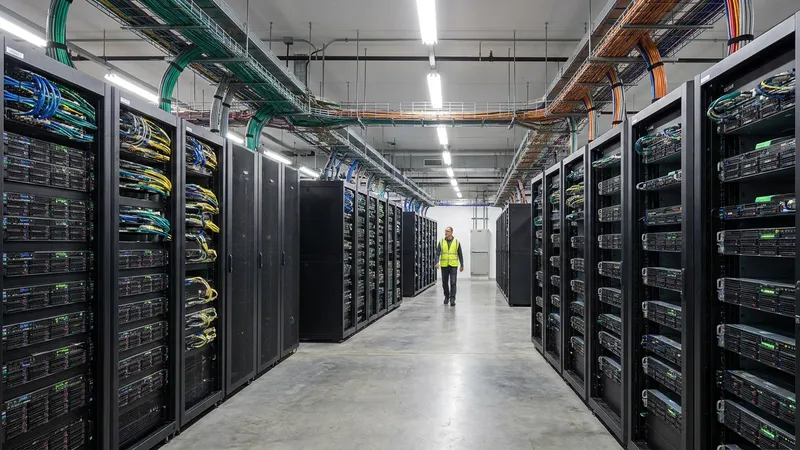
Data center bills from Sens. John Curtis and Lisa Blunt Rochester would expand local review and environmental reporting for large facilities. The bipartisan package arrives one day after Democrats resisted a House-passed ratepayer measure.
The Utah Republican and Delaware Democrat are proposing two measures aimed at communities confronting data center projects tied to the artificial intelligence build-out. One would create a Department of Energy program to provide technical expertise to local residents and officials weighing proposed developments.
Curtis and Blunt Rochester bill
The second bill would require federal reporting on the environmental effects of large data centers that use at least 50 megawatts of power each day. The reporting requirement is aimed at facilities large enough to draw sustained attention from utilities, local governments and nearby residents.
Curtis said in a statement that public confidence is weak when companies ask communities to accept new infrastructure without clearer evidence. “Americans are rightly skeptical when a large company tells them not to worry about the impacts of a new data center in their community,” Curtis said. “The answer to that distrust is transparency.”
Blunt Rochester said in a separate statement that residents have “legitimate concerns” about how data centers affect energy and water use. She said the measures would “ensure communities have a say in how these projects affect their quality of life.”
Energy costs drive Senate split
The bills land after most Senate Democrats on Wednesday blocked the Ratepayer Protection Act from advancing to President Trump. That legislation had passed the House earlier in September and was promoted in the Senate by Sen. Jon Husted, an Ohio Republican facing a competitive political environment.
Democrats said the House-passed measure did not go far enough because it encouraged technology companies to pay for data center infrastructure but did not require stronger protection for consumers. Their criticism centered on whether utilities could still pass some costs from new data center connections to households and smaller businesses.
The Curtis-Blunt Rochester package takes a different route. Rather than setting direct cost controls, it focuses on information: technical support for communities through the Energy Department and federal disclosure on the environmental footprint of the largest facilities.
That distinction may shape its path on Capitol Hill. Bipartisan sponsorship can make a bill easier to discuss in committee, but the current package does not include the ratepayer enforcement tools that many Democrats have placed at the center of the debate.
AI facilities test local grids
Curtis and Blunt Rochester both sit on the Senate Commerce Committee, where data infrastructure, artificial intelligence and consumer concerns are increasingly linked. They recently sent a letter to Chair Ted Cruz requesting hearings and forums on risks tied to fast-moving AI technology, but they have not received a response.
The 50-megawatt threshold gives the environmental reporting bill a defined target. Facilities at that level can become major local electricity customers, putting data center approvals into the same civic conversation as utility planning, land use and water availability.
For communities, the practical question is whether federal technical help arrives early enough to inform local decisions before permits and power agreements are set. For technology companies, more reporting could lengthen project reviews or make negotiations with utilities and local officials more visible.
If the bills move through committee, the immediate effect would be to pull data center siting deeper into public hearings rather than leaving the debate mainly to companies, utilities and local permitting offices. If they stall, the ratepayer fight is likely to remain the sharper legislative dividing line, with Democrats pressing for stronger cost limits and Republicans emphasizing private-sector payment commitments.
The next step is procedural: whether Cruz schedules the AI hearings requested by Curtis and Blunt Rochester, and whether either data center bill receives committee consideration. Until then, the Senate debate remains split between transparency for communities and mandatory safeguards for electricity customers.