Bilderberg meeting ends in Washington amid NATO strain
Bilderberg meeting in Washington D.C. ended after drawing about 130 leaders as NATO uncertainty and Iran-related tensions shaped the agenda.
Lauren Collins ·
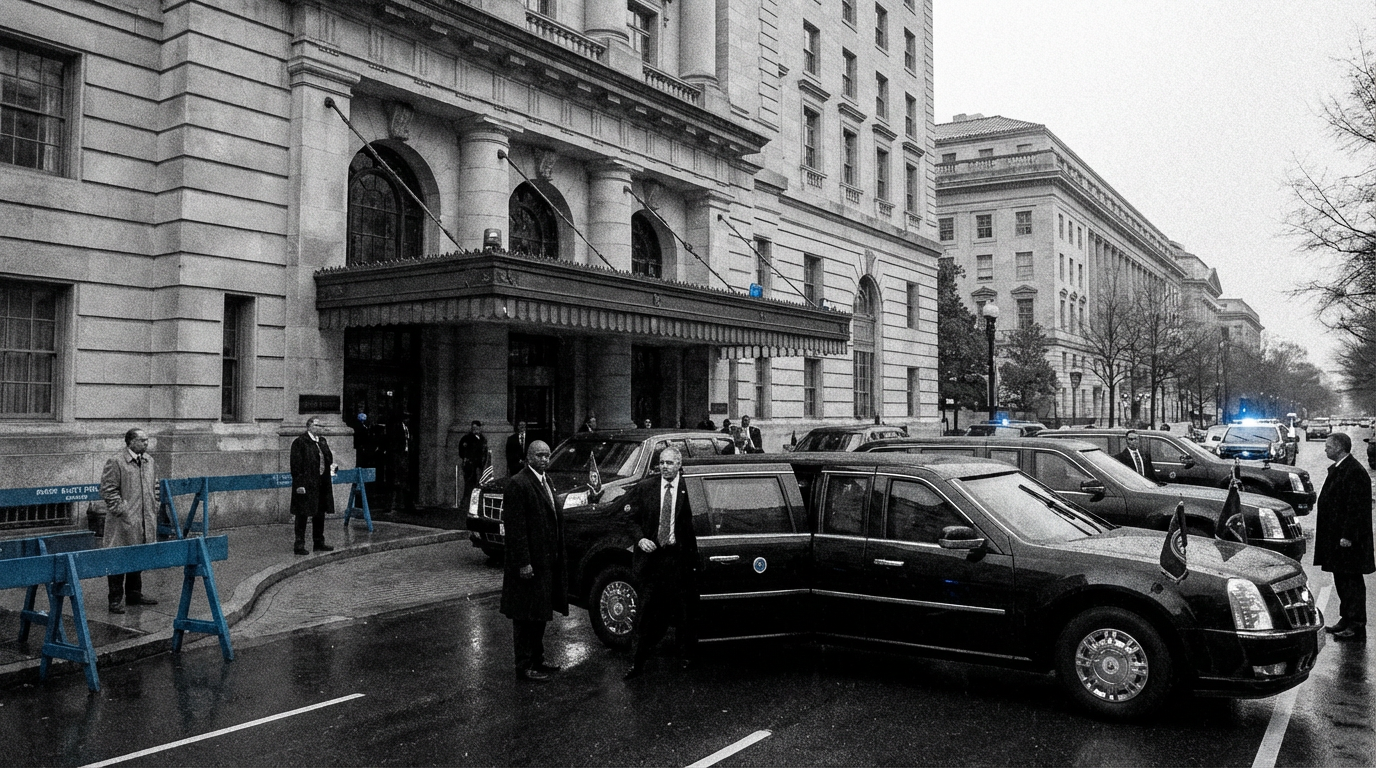
hosted the 72nd Bilderberg Group meeting, a private policy conference that has now concluded, drawing roughly 130 participants from politics, the military, technology, and finance. The gathering took place as officials and executives faced heightened uncertainty around the NATO alliance and broader global tensions, with the conflict in Iran cited as a key area of concern.
Organizers and attendees did not present the event as a public forum, and the meeting’s closed-door format kept detailed deliberations out of view.
Several senior U.S. political figures were listed among the participants. Those included Doug Burgum, the Secretary of the Interior; Robert Lighthizer, the former U.S. Trade Representative; and Jason Smith, Chair of the House Ways and Means Committee. Their presence placed U.S. domestic policy and international economic issues alongside security discussions, reflecting the mix of political and market-facing stakeholders that typically attend the conference.
Corporate leadership from major firms also attended, including chief executives from investment groups KKR and Lazard, as well as pharmaceutical company Pfizer. The participation of large financial and healthcare players highlighted the conference’s overlap with global markets, where geopolitical risk and policy direction can influence capital allocation, cross-border investment decisions, and corporate strategy.
The meeting’s attendee list also pointed to continued interest from sectors that are sensitive to government policy and international stability.
Topics on the agenda included the “Future of Warfare” and “Arctic Security” , aligning the discussions with current strategic debates. Defense-related participants included Admiral Samuel Paparo, head of the U.S. Indo-Pacific Command. Executives from military contractors and drone manufacturers were also present, including Brian Schimpf of Anduril Industries and Alex Karp of Palantir, underscoring the role of emerging defense technologies in contemporary security planning.
The conference included three intelligence directors, among them MI6 chief Blaise Metreweli, a detail that reinforced the group’s longstanding connections to intelligence communities. S. leadership even as political rhetoric in the United States has raised questions about the alliance. The combination of NATO leadership, intelligence representation, and defense-sector executives placed alliance cohesion and strategic coordination at the center of attention.
One notable uncertainty around the meeting was the absence of Peter Thiel, described as a long-standing steering committee member and significant financial contributor who typically plays a central role in the organization’s activities. The reasons for his absence were not provided in the available details. With the conference held privately, the specific outcomes, points of agreement, or areas of dispute among participants remain unclear.
Implications
Country Impact: For the United States, the presence of senior officials alongside NATO and intelligence leadership linked domestic policy voices with alliance and security discussions held in Washington D.C. The meeting’s timing, amid uncertainty for NATO and tensions tied to Iran, kept U.S. strategic priorities and alliance management in focus.
Industry Impact: Defense technology and contracting were prominently represented through senior military leadership and executives from firms such as Anduril Industries and Palantir, alongside agenda items on the “Future of Warfare.” Finance and healthcare participation, including KKR, Lazard, and Pfizer, reflected how geopolitical and security debates intersect with investment and corporate planning.
Market Impact: The mix of policymakers, NATO leadership, intelligence officials, and major investors underscored how geopolitical risk can shape market sentiment and strategic decision-making across borders. However, because the conference was private and outcomes were not disclosed, markets have limited visibility into any consensus or policy direction that may have emerged.