AI Developers Spark Massive Buying Spree for Secondhand Books
AI firms are linked to bulk secondhand book orders as sellers report shelves clearing unusually fast, amid legal shifts and digitisation pipelines.
Atlas Newsdesk ·
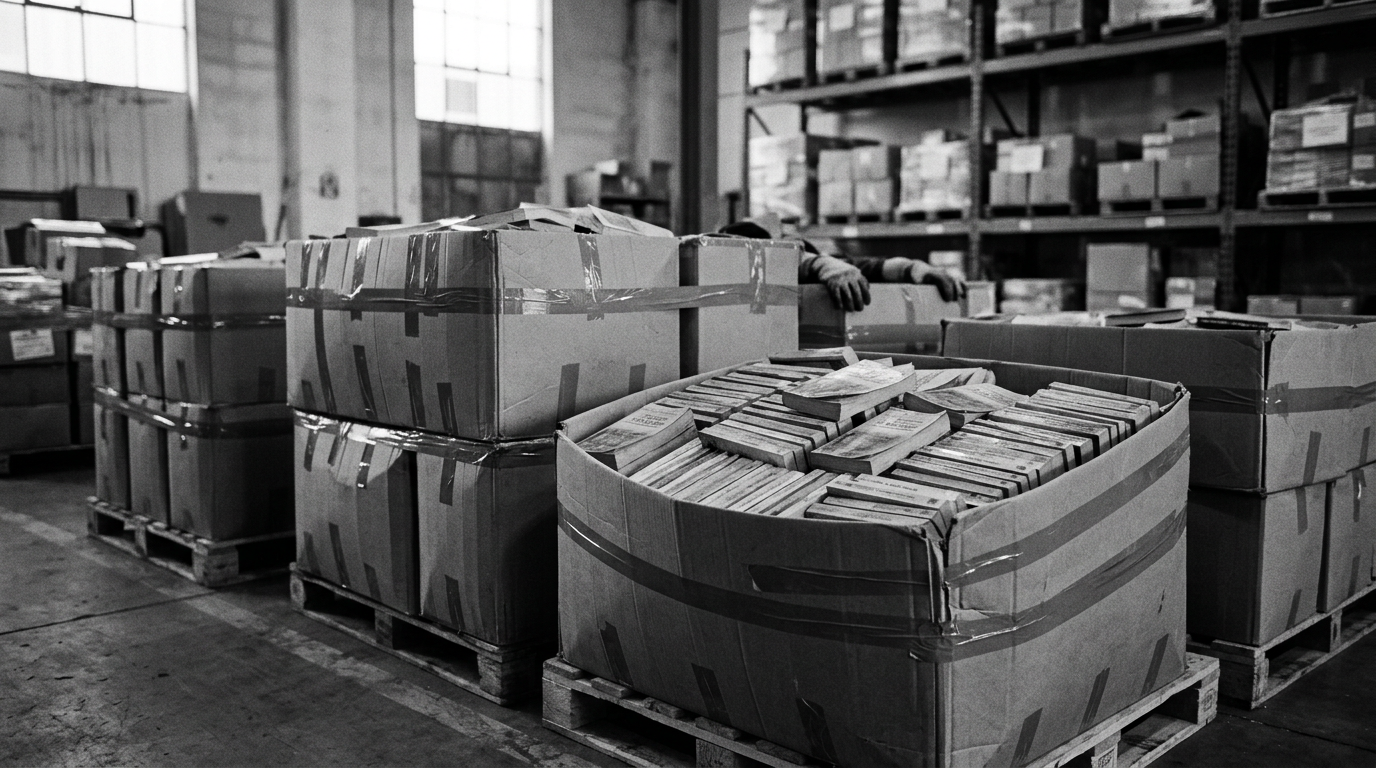
Independent secondhand booksellers in several countries say they are facing an unusual wave of large, rapid purchases that strip shelves much faster than normal. Retailers and industry observers link the pattern to growing demand for text used to build artificial intelligence systems, especially large language models that require very large volumes of written material.
Booksellers describe baskets that look unlike typical customer shopping. Instead of a focused set of titles in one area, buyers are reported to be seeking breadth across genres, time periods, and levels of obscurity—ranging from Latin works to mass-market fiction—prioritising volume and variety over any single book.
Booksellers cited Barter Books in the United Kingdom Secondhand shops report week’s worth of sales in one order Retailers say the defining feature is throughput Retailers say the defining feature is throughput: stock that would ordinarily move over days is being cleared in a single transaction. For shops with deep catalogues, that alters the daily rhythm of trading and the way inventory is replenished. Booksellers cited Barter Books in the United Kingdom as one example where a single order resembled what would typically amount to a full week of sales. Accounts from other shops describe similarly wide-ranging selections across eras and subjects, a pattern sellers say does not match normal consumer preferences. Observers and analysts associate the behaviour with acquisition at scale. In that view, the value lies in assembling a broad reservoir of text that can later be processed, rather than in curating specific titles for reading.
Why physical books are being targeted for AI training text Industry observers point to a practical constraint Industry observers point to a practical constraint: building large language models requires extremely large quantities of text. While substantial digital sources exist, physical books are described as a major pool of material that can be converted into machine-readable form through digitisation. Retail accounts characterise the buying as oriented toward speed of conversion. The emphasis on variety across subjects and eras aligns with an approach intended to maximise coverage during ingestion, rather than extracting value from any one work. Legal signals and unsealed Anthropic documents The surge follows a 2025 court ruling in the United States finding that using copyrighted books to train AI models can qualify as transformative and therefore be legally permissible under US law. Legal specialists said the decision has influenced how companies assess exposure when sourcing training material, even as disputes over permission and compensation continue. More detail surfaced in internal documents from AI company Anthropic that were unsealed last month. The documents describe “Project Panama,” presented as an effort involving industrial-scale digitisation of physical texts, pointing to a structured pipeline rather than ad hoc collection. According to the unsealed material According to the unsealed material, digitisation can include destructive scanning, where spines are removed to speed page scanning for ingestion. The documents and descriptions say that after scanning, remaining physical material is recycled.
Cash-flow gains for sellers, preservation concerns for critics Booksellers and observers said the demand can improve liquidity by converting slow-moving inventory into cash quickly, particularly for stores with extensive back catalogues. For some businesses, a single bulk order can turn long-held stock into immediate revenue.
Critics warn, however, that buying and recycling at scale could permanently reduce the number of copies in circulation, especially if rare, antiquarian, or culturally significant editions are included. Legal experts also highlight jurisdictional differences: while the 2025 ruling affects legal positioning in the United States, experts described the United Kingdom’s permission requirements as stricter, shaping how cross-border sourcing and scanning may be handled.