New Dinosaur Species Discovered in Thailand
A new dinosaur species, Nagatitan chaiyaphumensis , has been identified in Thailand, representing the largest sauropod found in Southeast Asia.
Ayla Demirhan ·
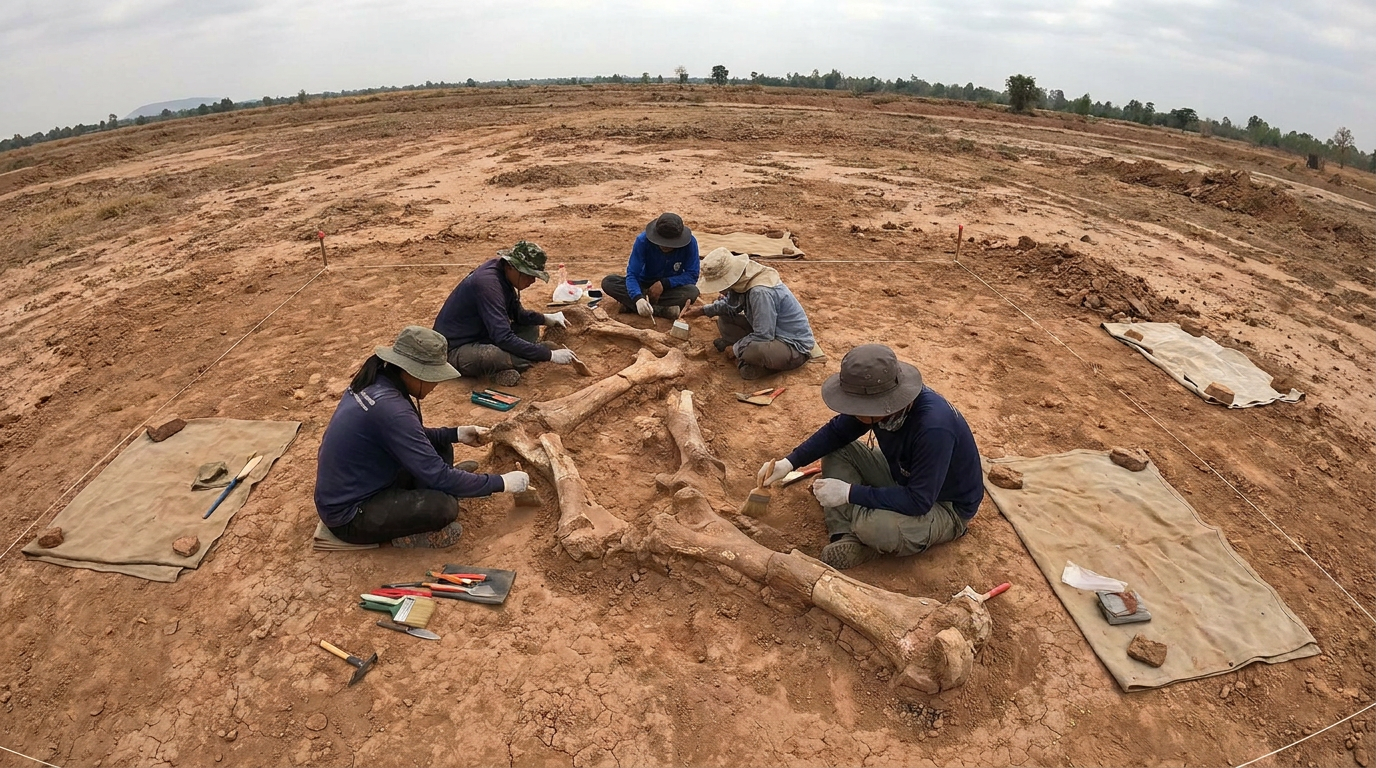
Scientists in Thailand have identified a new species of dinosaur, Nagatitan chaiyaphumensis , from fossil remains, marking the largest known dinosaur from Southeast Asia. The discovery, detailed in the journal Scientific Reports on Thursday, May 15, 2026, indicates a sauropod that roamed the region approximately 100 to 120 million years ago.
The herbivorous dinosaur is estimated to have measured 27 meters (89 feet) in length and weighed around 27 tonnes, equivalent to nine adult elephants. This makes Nagatitan chaiyaphumensis one of the largest land animals in Earth's history. Its diet likely consisted of high volumes of vegetation such as conifers and seed ferns, requiring minimal chewing.
Fossil excavation, initiated a decade ago by local residents in northeast Thailand, concluded in 2024. While sharing characteristics with previously identified sauropods, the recovered remains presented sufficient unique features to classify it as a distinct species. The name Nagatitan references Naga, a serpent-like figure in Asian religious traditions. A life-size reconstruction of the dinosaur is currently exhibited at Bangkok's Thainosaur Museum.