Kyiv Faces Deadly Missile Attack Amid Government Shakeup
Kyiv endured a missile attack killing three and injuring 20, as Ukraine's parliament confirmed a new defense minister this week.
Lauren Collins ·
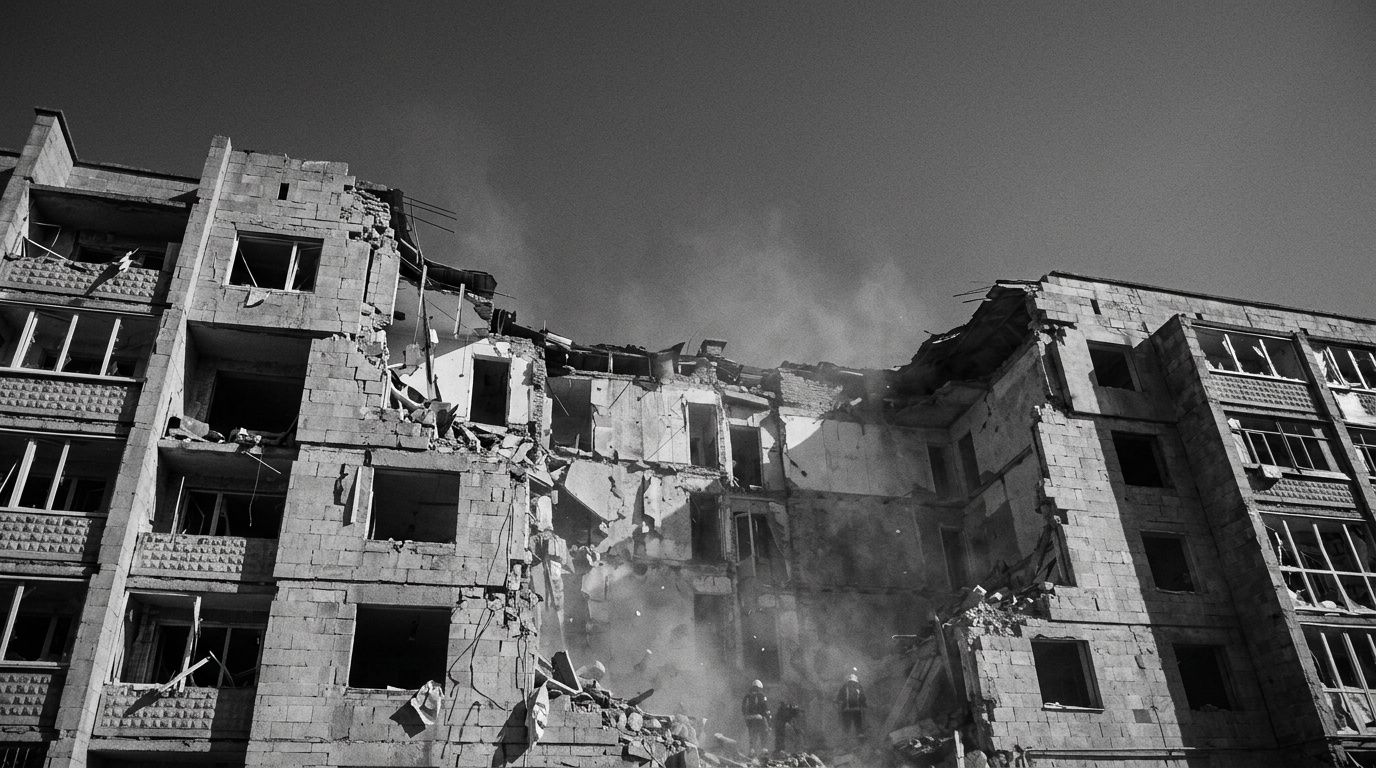
A recent missile assault on Ukraine's capital, Kyiv, tragically claimed three lives and left 20 individuals wounded. The attacks, which transpired on Wednesday, struck residential districts and a children's medical facility, unfolding concurrently with significant shifts in the Ukrainian government's leadership structure. Reports indicate the assault involved Zircon missiles, believed to have been launched from Russia's Kursk region.
Officials confirmed extensive damage to residential buildings across the Sviatoshynskyi, Solomianskyi, and Shevchenkivskyi districts. A nine-story residential structure in the Solomianskyi district suffered a collapse and subsequently caught fire. Kyiv Mayor Vitali Klitschko reported power disruptions in sections of Sviatoshynskyi and Solomianskyi following the strikes. Emergency response teams are actively engaged in rescue operations, searching for individuals potentially trapped under debris.
Key Cabinet Changes
This incident occurred shortly after the Ukrainian parliament, the Verkhovna Rada, approved Yevhenii Khmara as the country's new defense minister on Tuesday. Khmara, previously an intelligence official, secured 312 votes, well above the 226 votes necessary for confirmation. He succeeds Mykhailo Fedorov, who was dismissed from his role in July after public disagreements with military authorities. President Volodymyr Zelenskyy characterized these cabinet alterations as a strategic initiative aimed at bolstering national defense capabilities during ongoing hostilities.
However, some opposition figures have expressed reservations regarding the efficacy and strategic implications of reassigning experienced intelligence personnel to ministerial positions while the conflict persists. The appointment of a former intelligence chief to such a critical defense role underscores Ukraine's focus on national security and operational effectiveness amid sustained external pressures.
Internal Political Dynamics
The leadership transition unfolds amidst heightened political tensions within Ukraine. Former minister Fedorov has openly contested the current suspension of national elections, attributing it to what he described as a systemic governance crisis. This stance has sparked public demonstrations, with protestors advocating for enhanced dialogue between the government and its citizens regarding the nation's future direction.
While martial law currently prohibits elections, discussions concerning governmental continuity and future leadership have intensified as the conflict with Russia continues. This internal political friction adds another layer of complexity to Ukraine's wartime challenges, even as the government underscores its commitment to reinforcing national security and stability.
Ongoing Civilian Impact
Ukraine's Air Force had issued warnings about incoming ballistic missiles, specifically identifying Russian Zircon missiles originating from the Kursk region, as the attacks began. Of the 20 individuals injured in the attacks, 14 required hospitalization. The broader consequences of such strikes continue to strain civilian infrastructure and emergency services across the capital.
Damage to critical facilities, including medical institutions like the children's hospital, highlights the persistent threat to non-combatants and essential services in conflict zones. These repeated assaults not only cause immediate casualties and destruction but also exert significant psychological and logistical pressure on the civilian population and the nation's wartime resilience efforts.