Russia Faces Drone Attacks on Capital; War Impact Grows
Ukraine launched major drone strikes on Moscow, impacting civilians and highlighting escalating conflict closer to Russia's core.
Lauren Collins ·
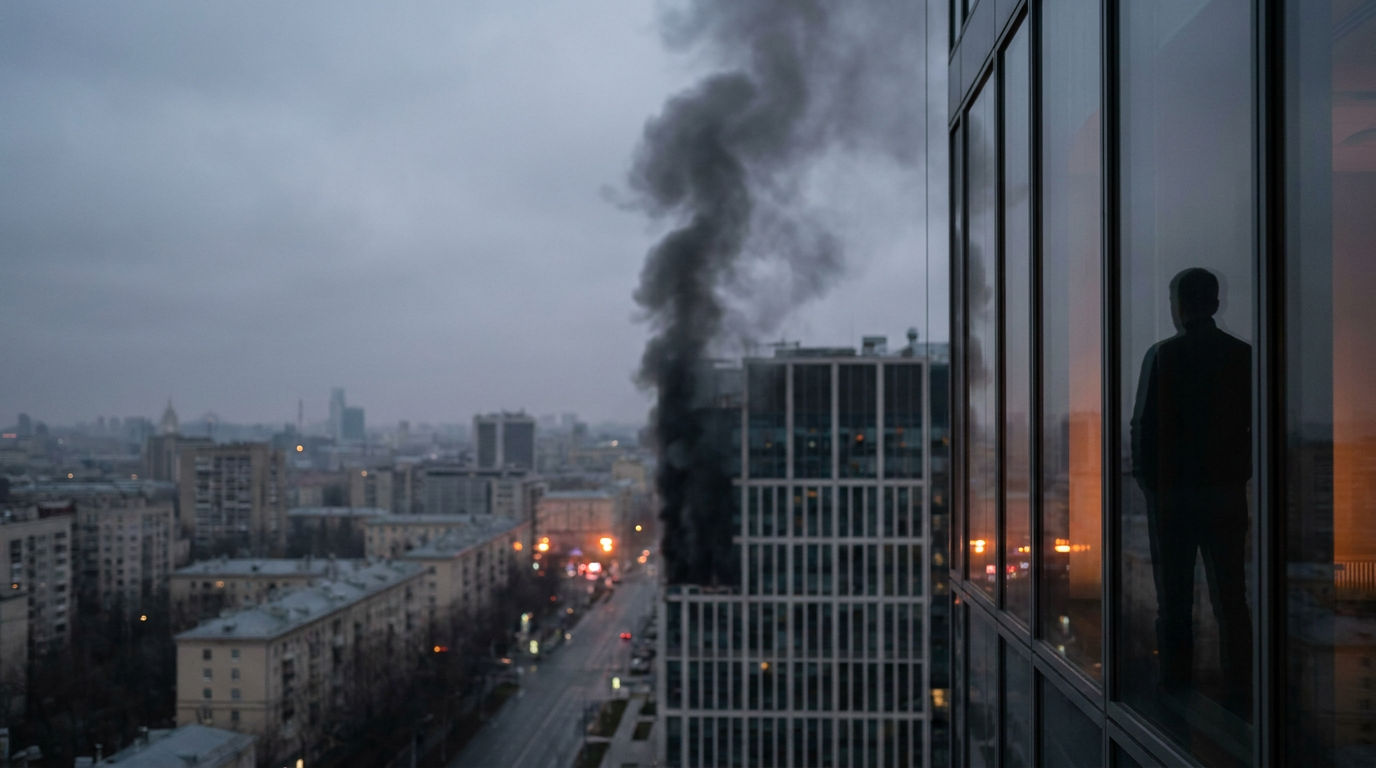
Russia's full-scale invasion of Ukraine, now well into its fifth year, is increasingly impinging on the daily lives of its citizens, moving beyond distant news reports. Recent events, including internet disruptions and scaled-down public events, underscore this shift in proximity. The most recent significant escalation involved a large-scale weekend aerial attack on the Moscow region, resulting in civilian casualties and damage.
Escalating Aerial Assaults on Russian Territory
The Russian Defense Ministry reported intercepting an unprecedented number of Ukrainian drones over a 24-hour period, with Moscow's air defenses alone downing 81 unmanned aerial vehicles. This intense barrage, which began late Saturday and continued into Sunday, caused fatalities and injuries near the Russian capital. Multiple apartment buildings sustained damage, and several private residences were destroyed.
An oil refinery in the Moscow region experienced a drone impact that did not halt production, while another strike ignited a fuel storage tank, creating a large plume of smoke. The aerial activity led to temporary suspensions at several Moscow airports, causing widespread flight delays and diversions. Authorities confirmed one drone crashed on Sheremetyevo airport grounds without causing damage.
Ukraine Demonstrates Growing Drone Capabilities
The success of these widespread drone attacks against Moscow's heavily defended airspace signifies a notable evolution in Ukraine's offensive capabilities. Kyiv has systematically enhanced its drone arsenal and operational tactics, previously targeting energy infrastructure and defense manufacturing sites. The capital, however, has remained a more challenging objective due to its dense air defense network.
Ukrainian President Volodymyr Zelenskyy framed the attacks as a direct consequence of Russia's sustained missile and drone barrages on Ukrainian cities. He emphasized that Ukraine's expanding long-range capabilities are fundamentally altering the perception of Russia's military dominance and the conflict's trajectory. Zelenskyy stated that these actions convey a clear message to Russia: the war must cease.
Domestic Impact and Shifting Perceptions
These recent escalations occur against a backdrop of rising domestic discontent within Russia regarding the war's mounting costs and increasingly stringent government controls. Public frustration has been amplified by disruptions to daily life, including internet restrictions and the blocking of popular communication applications, attributed by authorities to mitigating Ukrainian drone threats. This has sparked significant public outcry and led to petitions and thwarted protest attempts.
The shift is also evident in public discourse, with some previously pro-Kremlin military commentators openly questioning governmental strategies. Meanwhile, state media has largely downplayed the Moscow drone attacks, focusing instead on military tests and strategic messaging. This narrative control contrasts with the reality of escalating conflict reaching deeper into Russian territory, potentially increasing pressure on President Vladimir Putin's administration.