Russia claims full control of Ukraine’s Luhansk region
Russia claims full control of Luhansk on April 1, 2026, as drone attacks intensify and Ust-Luga is hit again, raising energy risks.
Lauren Collins ·
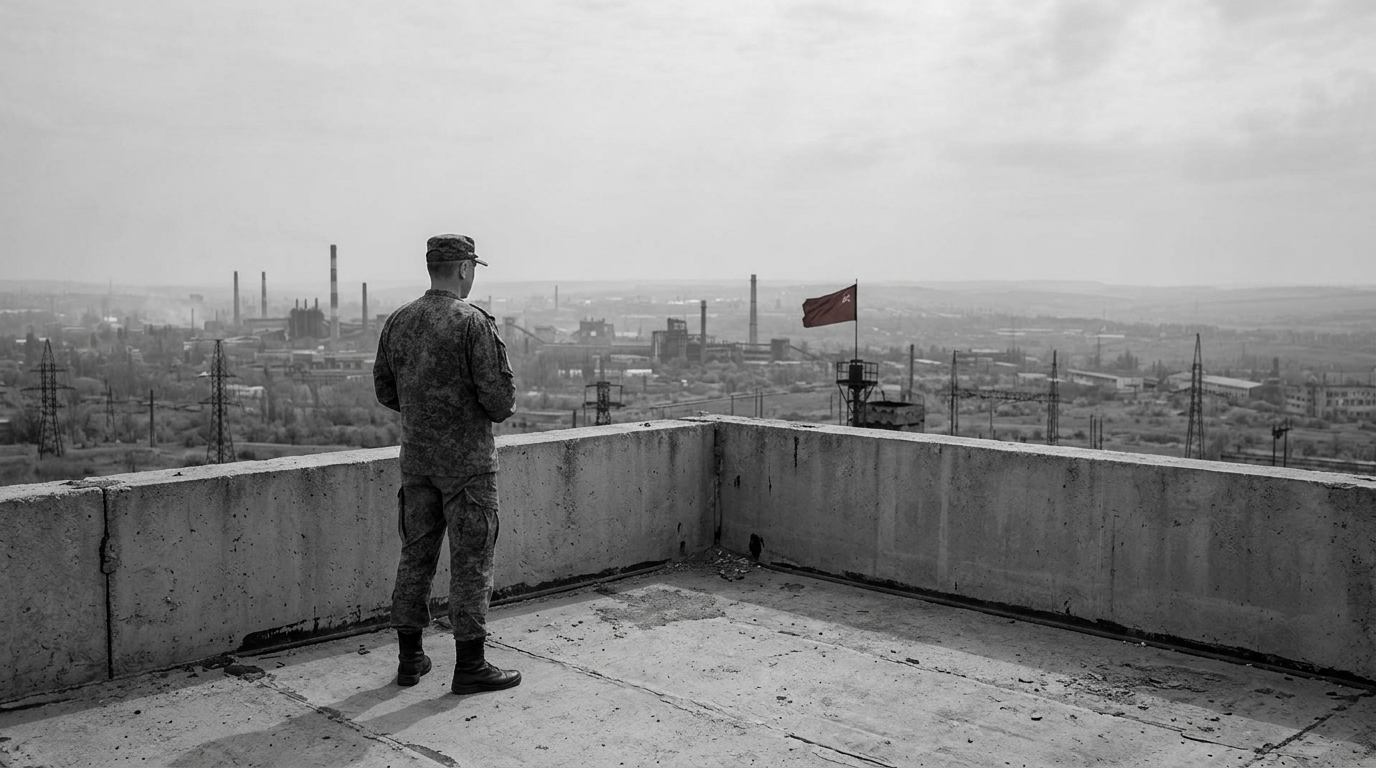
Russian forces said on April 1, 2026, that they had taken full control of the Luhansk region in eastern Ukraine, an area that has been heavily contested since the 2022 invasion. The Russian Ministry of Defence said units from the “West” military grouping had completed what it described as the “liberation” of territory Moscow calls the Luhansk People’s Republic. Ukraine did not immediately confirm the claim.
The announcement, if verified, would mark a notable shift in the battlefield map in the Donbas, the broader eastern Ukrainian industrial region that includes Luhansk and Donetsk. Officials said more than 99 percent of Luhansk was already under Russian control before the latest statement, underscoring that the remaining areas had been among the last pockets outside Moscow’s asserted authority.
Luhansk and Donetsk have been central to Russia’s stated war aims and to Ukraine’s efforts to defend and regain territory.
Alongside the Luhansk claim, Russia’s Defence Ministry reported additional advances in other parts of Ukraine. It said Russian forces had taken control of Verkhnya Pysarivka in Ukraine’s Kharkiv region and Boikove in the Zaporizhia region. Ukraine has not immediately confirmed those reported captures either, leaving the operational picture dependent on further verification.
Politically, the Kremlin repeated its demand that Ukrainian forces withdraw from all of Donetsk. Kyiv has consistently rejected that demand, maintaining that it will not cede territory. The renewed call highlights that, even as Russia claims progress in Luhansk, the status of Donetsk remains a central point of contention and a key factor shaping diplomatic positions.
Separately, Ukraine reported a new wave of overnight drone attacks. President Volodymyr Zelenskyy said Russia used 339 drones. In the Kherson region, two women were killed in an attack on a civilian car, according to the information provided.
Ukraine also carried out drone strikes targeting Russia’s Ust-Luga Baltic Sea port, described as the fifth attack in 10 days. The strikes were reported as potentially affecting Russian crude oil exports, linking the conflict to energy logistics that matter for global markets. In a related development, drones described as of Ukrainian origin were reported in the airspace of Estonia, Finland, and Latvia, and Finnish police said an explosive-laden drone was confirmed.
Ukraine’s Foreign Minister Andrii Sybiha denied that Ukraine intentionally targeted those countries. The cross-border drone reports add uncertainty around escalation risks and airspace security in the Baltic region, even as the main fighting continues in eastern and southern Ukraine.