Russia and North Korea Construct First Direct Road Border Crossing
Russia and North Korea are finalizing a road bridge over the Tumen River, creating their first direct vehicle crossing with major border facilities.
Atlas Newsdesk ·
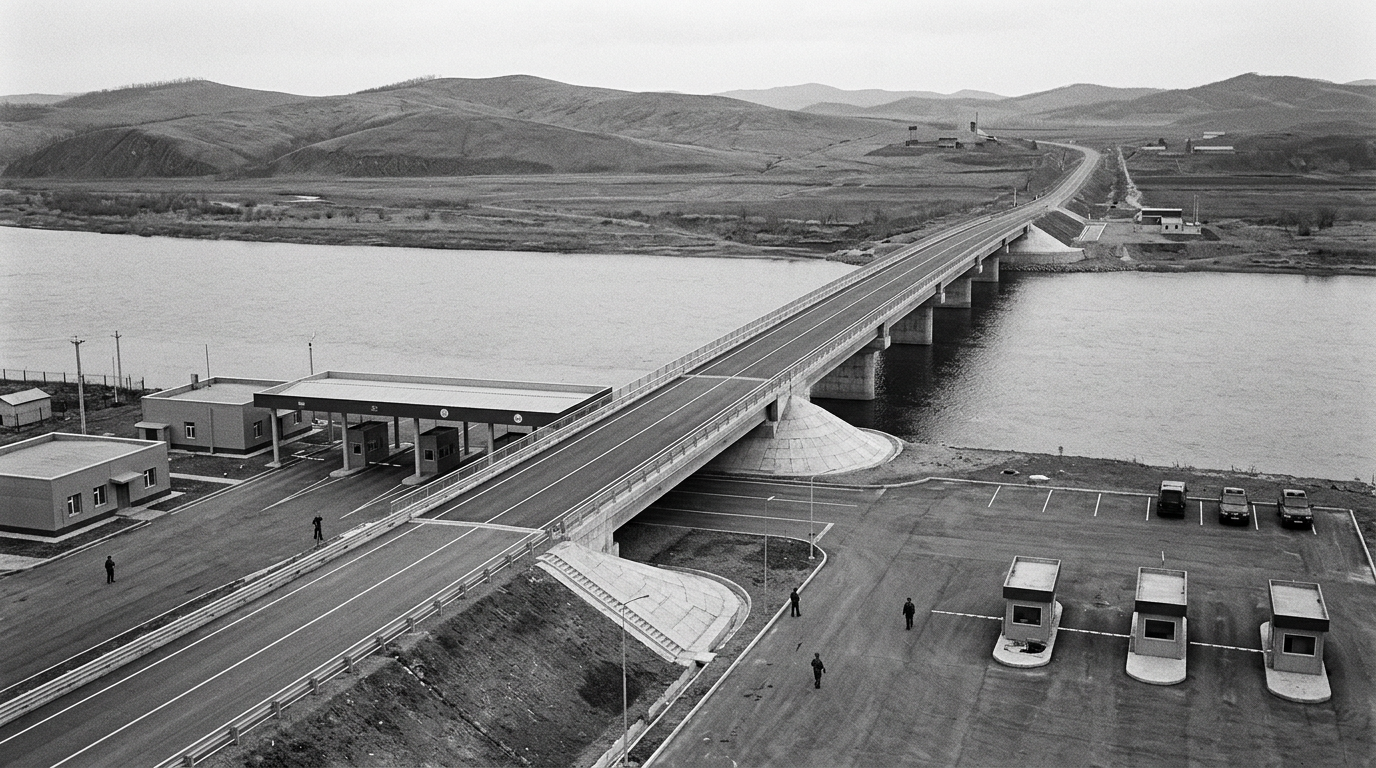
Russia and North Korea are in the final stage of building a road bridge over the Tumen River that will create the first direct vehicular border crossing between the two countries, according to official statements. Authorities have described the project as intended to support trade and tourism, but the border infrastructure being built alongside the bridge points to a wider operational role.
The crossing includes sizable customs and quarantine facilities, and plans also feature a ten-lane checkpoint on the Russian side. These elements indicate an intention to handle higher-throughput vehicle movements and tighter processing controls than would be expected from a limited local link.
Border facilities include customs, quarantine, and a ten-lane checkpoint
Officials have framed the bridge as a practical
Officials have framed the bridge as a practical measure to ease cross-border movement for commercial and visitor traffic. At the same time, the scale of the supporting facilities suggests the route is designed for sustained, managed flows of vehicles and cargo. The bridge will supplement the existing rail-only Friendship Bridge, which has been the primary fixed border connection cited in assessments. A road crossing differs materially from a rail link in how it can be used, expanding the types of vehicles and loads that can move between the two states. Assessments cite logistics advantages over the rail-only Friendship Bridge Analytical assessments described in the source material argue the road bridge functions as a strategic logistics corridor that could strengthen military cooperation. The assessments point to the increased operational flexibility of road transport compared with rail, including the ability to adjust schedules and movements more quickly.
North Korea
The same assessments suggest the road crossing could reduce visibility to satellite surveillance relative to predictable rail movements, potentially making monitoring more difficult. They also highlight that the road route can bypass rail-gauge limitations, removing a constraint associated with moving equipment across systems that may not align.
High build costs versus trade volumes raise questions on primary purpose The source material notes that the project’s capital cost appears high when compared with current bilateral trade volumes, and argues this gap weakens the case that economic development is the central driver. The presence of major processing facilities is presented as consistent with a design aimed at controlled and repeatable movements.
Further features referenced include a helicopter landing pad, which assessments cite as supportive of rapid movement needs. Taken together, the assessments conclude the infrastructure may be intended to facilitate faster, more discreet transfers of personnel and equipment in support of ongoing military objectives.
Officials have continued to present the bridge as serving trade and tourism, while assessments emphasize its potential security and logistics value. The difference between these accounts leaves uncertainty over how the crossing will be used in practice once it becomes operational.
Implications
Country Impact: For Russia and North Korea, the bridge adds a new land route that changes how border movements can be organized compared with rail-only connections. The stated is to facilitate trade and tourism, but assessments cited in the source highlight potential military logistics uses.
Industry Impact: Border services and logistics operators could see changes in throughput and processing needs due to large customs and quarantine facilities. If use expands beyond civilian traffic, compliance and monitoring requirements could become more complex for stakeholders involved in cross-border transport.
Market Impact: The project could affect how observers assess the practical capacity for cross-border movement between the two countries, given the move from rail-only to road access. Monitoring and enforcement efforts may face added challenges if movements become less predictable than rail-based transfers.