

Lucescu Departs Romanian National Team Coaching Role
Mircea Lucescu, 80, has officially stepped down as head coach of the Romanian national football team, with health concerns cited as the primary reason for…
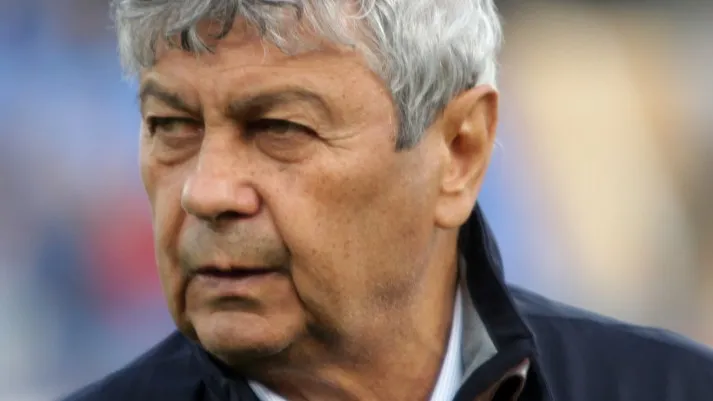
The Romanian Football Federation has confirmed the departure of veteran coach Mircea Lucescu, aged 80, from his position leading the national team. Notably, the federation has offered Lucescu an administrative role, indicating a desire to retain his extensive experience and knowledge within the organization.
This move suggests that individuals of Lucescu's caliber might contribute more significantly to institutional development and strategic guidance than to direct pitch-side coaching. Such a transition could serve as a model for other footballing nations, including Turkey, where Lucescu also had a coaching tenure, to leverage the expertise of seasoned figures in non-coaching capacities.
Health Concerns Prompt Departure
Reports indicate that health issues, rather than on-field performance, were the main factor in Lucescu's decision to step down. He was hospitalized with a heart condition during training, just three days after Romania's World Cup play-off defeat to Turkey. This incident underscored the unsustainable demands of the national team coaching role given his health.
Federation President Razvan Burleanu visited Lucescu in the hospital and later commented on the seriousness of the situation. Burleanu refrained from disclosing specific health details, stating that such information was personal to Lucescu and his family, but expressed confidence in Lucescu's resilience.
Performance and Team Morale
Regarding the match against Turkey, Burleanu acknowledged that Romania's tactical plan was effective, but individual player quality ultimately determined the outcome. This observation highlights a broader challenge for Romanian football: a lack of top-tier individual talent despite established systems.
The players were reportedly deeply affected by the events, even requesting the cancellation of an upcoming match against Slovakia. This reveals the significant psychological impact on the squad, particularly for a young team, where such crises can lead to fragility.
Lucescu's Illustrious Career
Lucescu's career provides crucial context for understanding his current departure. As a player, he was a key figure for Dinamo Bucharest and captained the Romanian national team in the 1970 World Cup, a significant achievement for the nation at the time. This history demonstrates his deep connection to Romanian football beyond his coaching roles.
His coaching career has been even more impactful. After winning a championship with Dinamo Bucharest, he led the national team to the 1984 European Championship, enhancing Romania's international football profile. His brief stint at Inter Milan further exposed him to elite European football.
Impact in Turkey and Ukraine
In Turkey, Lucescu achieved significant success, including winning the 2000 UEFA Super Cup with Galatasaray and the 2003 league title with Beşiktaş. He also managed the Turkish national team. His influence extended beyond trophies, instilling discipline, organization, and a modern European playing style.
Lucescu's most notable achievements came in Ukraine with Shakhtar Donetsk, where he built a sustainable model for success. He secured numerous league titles and the 2009 UEFA Cup, but more importantly, he established a system for identifying, developing, and selling young Brazilian talents, creating both sporting success and financial returns. He later won a league title with Zenit, demonstrating his adaptability across different leagues.
A Final Mission Unfulfilled
Lucescu has managed the national teams of Turkey, Ukraine, and Romania. His return to the Romanian national team after 38 years was seen as a "final mission" to guide them to the World Cup in North America. However, both on-field results and his health prevented this goal from being realized.
His career underscores that true value lies not just in trophies but in establishing enduring systems. The Shakhtar model exemplifies this: a cycle of finding, developing, selling, and regenerating players for sustained success. However, the intense demands of modern football are increasingly challenging for an 80-year-old coach. The federation's decision to transition him to an administrative role reflects a pragmatic understanding of these realities, prioritizing structural needs over emotional attachments.
Ultimately, this departure marks a natural conclusion rather than a failure. Lucescu was a skilled player, became a great coach, but his lasting legacy is as a system builder. This legacy will continue to influence football long after his direct involvement on the sidelines ends.
More stories
- Ronaldo Ranks Third in Football's 1,000-Game Club
- Chelsea's Chavarria Impresses in 5-1 Bournemouth Victory
- Dar Derby: Simba, Yanga Vie for League Lead
- USWNT Coach Hayes Undeterred by 2-0 Loss to Spain
- Manipur Tennis Association to Host 44th State Open Championships
- CRPF Battalions Host Football Tournaments Across Manipur
- Galatasaray Updates Player Health Status for Sara, Çakır, Osimhen
- 2026 FIFA World Cup schedule set as final teams qualify
- Mahomes Returns to Practice After Knee Surgery
- U.S. investors buy IPL teams in $1.6B–$1.8B deals
Latest news
- US disables cargo ship in Iran blockade breach
- IRGC says tanker explodes near Hormuz mine route
- Republicans Prepare Bill to Curb Trump Russia Deal
- Nollywood Star Urges Investment in Ghanaian Actor LilWin
- Marvels' Box Office Flop Still Pivotal for MCU's Future
- Hefner's Ex-Wife Defends Legacy Amid Film Controversy
- Fatal shooting incident reported in Istanbul's Bagcilar district
- Hanuman Ansh Film Earns ₹2.45 Crore on Day 65