RadNet Signals AI Shift in Imaging Economics at Morgan Stanley
At a healthcare conference this week, RadNet management detailed its push into AI-driven diagnostics, signaling a potential change in the unit economics for…
Jurgen Goldmeier ·
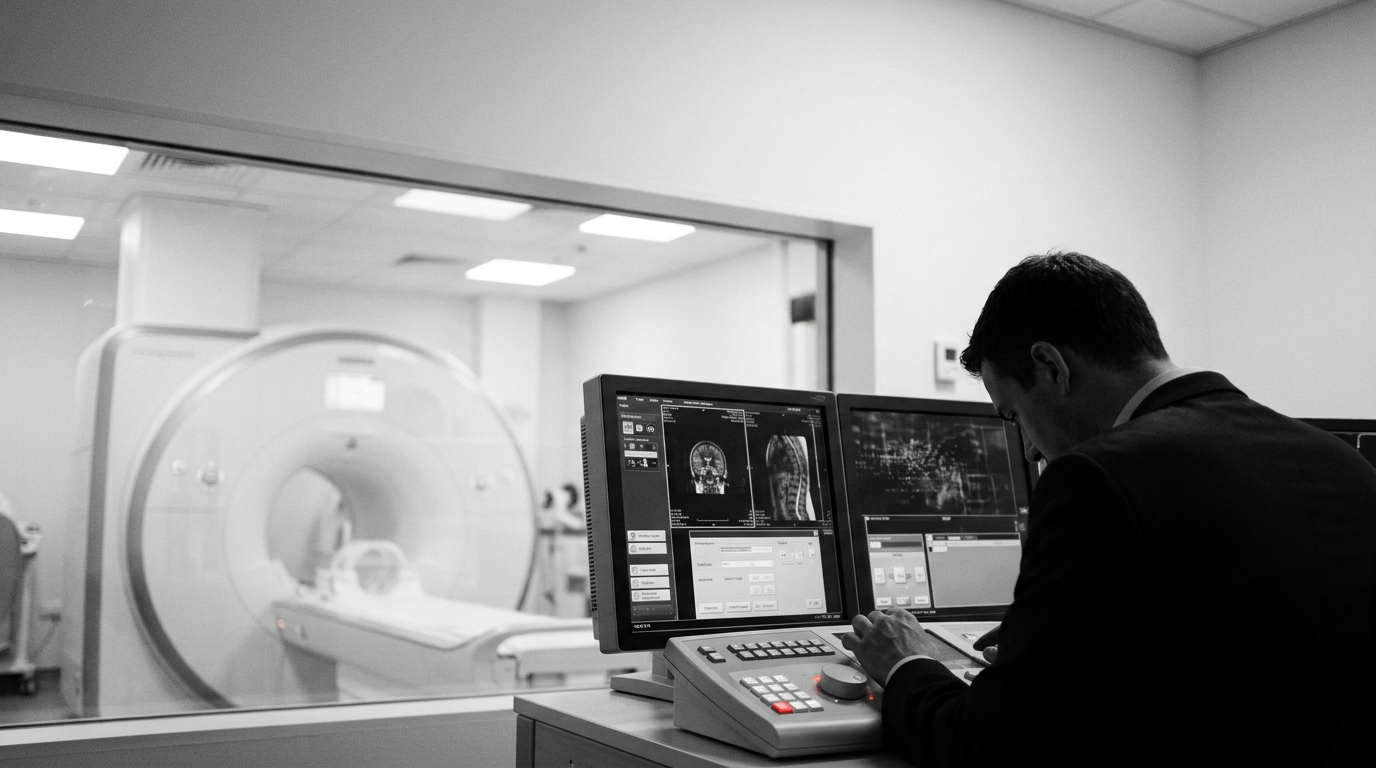
RadNet Signals AI Shift in Imaging Economics at Morgan Stanley RadNet's presentation at the Morgan Stanley Global Healthcare Conference on September 16 framed the company's strategy around two core drivers: the integration of artificial intelligence into its diagnostic workflows and navigating a shifting reimbursement landscape. Executive VP Mark Stolper's commentary laid out a vision where technology investment creates a competitive moat, putting pressure on the broader outpatient imaging industry. ## Background The diagnostic imaging market has been defined by high fixed costs and persistent reimbursement pressure from both government payors like Medicare and large commercial insurers. Going into the conference, investor positioning reflected this reality, with questions focused on RadNet's ability to defend margins. The tape for the broader healthcare services sector has been choppy, sensitive to any commentary on labor costs or payor negotiations. Comparable prints from other providers have shown a tight correlation between scale and profitability, making RadNet's position as a large national operator a key focus. Stolper's remarks centered on leveraging that scale to deploy AI tools that promise to enhance radiologist productivity and diagnostic accuracy. This is not a new theme, but the emphasis suggests the company sees a near-term path to monetizing these investments. This differs from prior industry discussions that often treated AI as a longer-term research project. The key question for the market is whether these efficiencies will translate into higher earnings per share (EPS), a measure of profit per share, or if they will simply be competed away or captured by payors demanding lower prices. ## Why it matters RadNet's strategic pivot has a direct read-through for the entire imaging sector. If the company can demonstrate a tangible return on its AI investments—either through higher patient volumes, better pricing, or lower costs—it effectively reprices the barrier to entry. Smaller, less capitalized independent imaging centers could find themselves on the wrong side of this trend, unable to afford the technology stack required to compete on both quality and efficiency. The presentation puts them on notice. This also matters for valuation. Historically, imaging centers have traded at a relatively low valuation multiple—a ratio comparing the company's stock price to a metric like earnings or revenue—due to the sector's capital intensity and reimbursement risk. If RadNet proves out a scalable, tech-enabled model, it could argue for a higher multiple, pulling valuations for other tech-forward providers up with it. Those on the wrong side of the trade are funds shorting the sector based on a thesis of secular margin compression and those long smaller operators who lack RadNet's scale and balance sheet. ## What to watch The market will now look for proof in the company's financial results. The next critical data point will be RadNet’s third-quarter 2026 earnings report. Management's forward-looking guidance, which provides a forecast for future performance, will be scrutinized for any data validating the AI strategy. A positive signal would be concrete metrics linking AI implementation to margin expansion or market share gains. A negative signal would be commentary about higher-than-expected integration costs, slower adoption, or an inability to secure favorable terms from payors for tech-enabled services.