OpenAI’s $20B Cerebras deal claims 750MW, but may hard-lock data centers
Cerebras reports a $20B+ commitment from OpenAI for 750MW of compute. This massive wafer-scale hardware deal signals a shift toward long-term contracts.
Edward Mullen ·
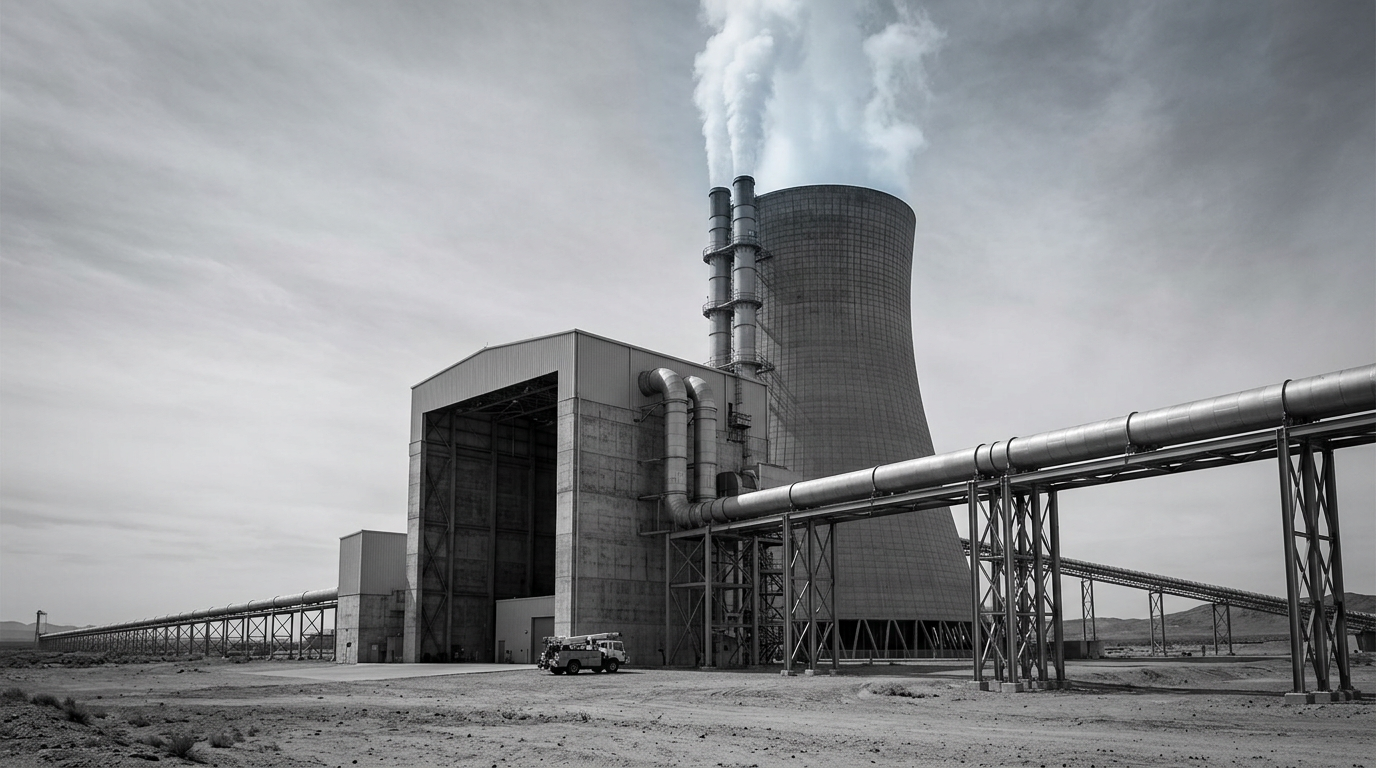
The prevailing consensus views massive wafer-scale hardware commitments as a flexible portfolio hedge against Nvidia. That view mistakes an elastic software lease for rigid facility engineering. Within twelve months, these mega-scale deployments will result in physical facility lock-in, as their custom liquid-cooling and power demands make the buildings entirely incompatible with standard PCIe and SXM GPU architectures.
750MW on wafer-scale is a mechanical plant commitment, not a cloud knob Cerebras’ investor note frames the OpenAI agreement as a compute commitment, but wafer-scale hardware changes the unit of decision from racks to rooms. Wafer-scale engines concentrate heat and power in a way that typically forces custom high-density liquid-cooling loops, non-standard manifolds, and atypical floor loading—all of which must be engineered into the facility itself.
If the 750MW figure reflects planned capacity built
If the 750MW figure reflects planned capacity built around wafer-scale systems, the supporting mechanical, electrical, and plumbing becomes specialized inventory that standard GPU racks can’t simply drop into later. The lock-in is physical: once you pour the concrete and weld the piping to support wafer-scale envelopes, a pivot back to commodity PCIe/SXM GPU rows is not a software migration—it’s demolition.
Why the “easy Nvidia hedge” story misses ## Why the “easy Nvidia hedge” story misses the facility physics The dominant read now is portfolio hedging: OpenAI diversifies beyond a single accelerator vendor and can scale this capacity up or down across clouds. That confuses hardware procurement with plant design.
Standard cloud regions are optimized for broadly repeatable rack power densities and airflow or rear-door cooling patterns; wafer-scale flips that assumption by dictating its own thermal and electrical profile at the appliance level. Even if the control plane is elastic, the underlying plant is not.
Without tearing out manifolds, changing supply and return temperatures, and rebalancing electrical distribution, you cannot repurpose a wafer-scale bay to house standard GPU sleds at short notice. A 750MW footprint built to wafer-scale constraints therefore behaves like fixed-use infrastructure, not fungible cloud capacity.
The numbers are big; the omissions are bigger Cerebras reports “record core revenue of $191.3 million, a 92% year-over-year increase,” and ties the OpenAI relationship to “over $20 billion” and “750MW of compute.” The release does not say where this capacity will sit, on what build timeline, what portion is greenfield versus retrofit, or which party funds the specialized MEP required to support wafer-scale appliances at that magnitude. Those omissions matter more than the topline because they determine who carries the non-repurposable asset on their balance sheet and what termination, decommissioning, and retrofit costs are embedded in the compute price.
Without those details, the financial headline conceals a facility bet that can outlast any model generation.
This is a procurement problem disguised as an AI milestone Treat 750MW as a facilities RFP, not a cluster badge If OpenAI’s commitment proceeds as described, someone—OpenAI, Cerebras, a hyperscaler partner, or a colocation developer—must finance, permit, and commission specialized plants at scale.
The experience of hyperscale build programs suggests that once a site’s manifolds, pumps, and electrical distribution are tuned to a given thermal envelope, subsequent flexibility is limited without deep reconstruction. That path implies take‑or‑pay style contracts, longer amortization horizons, and vendor-servicing agreements tied to the physical plant, not just the boxes.
It also shifts switching costs from software workloads to water, piping, and pad-mounted gear—costs that rarely show up in model-comparison slides but do define whether a buyer can exit a vendor relationship in under a renewal cycle.
If Cerebras delivers appliances that interface cleanly with The skeptic’s case: phased buildouts and standardization could blunt lock-in A reasonable counter is that the 750MW may be phased, spread across multiple sites, and integrated with increasingly standardized data-center modules. If Cerebras delivers appliances that interface cleanly with common high-density liquid-cooling skids and standard rack footprints, some repurposability could be recovered.
Another skeptic angle is that OpenAI could isolate these facilities from its broader GPU estate, limiting cross-contamination of standards and keeping its Nvidia-aligned regions fungible. These scenarios would weaken the lock-in argument—but the investor note provides no technical integration detail to evaluate them today.
What changes for buyers over the next year If you are a buyer or partner adjacent to this deal, the near-term change is in the RFP and contract exhibit stack. Expect mechanical schedules to specify supply/return temperatures, manifold diameters, and water-quality regimes aligned to the wafer-scale appliance, not generic high-density rows.
Watch whether hosting partners request tenant-funded improvements and decommissioning escrows—an indicator that they, too, see low repurpose value. Also watch for any public case study of a 50MW-plus wafer-scale hall being flipped to standard GPU racks in under a quarter; if that happens without ripping out the cooling backbone, the lock-in risk is overstated.
In parallel, a Cerebras move toward a PCIe/SXM‑compatible form factor would signal a strategy to meet facilities where they already are, reducing the physical switching cost this announcement currently implies.
How to read the headline against the balance sheet Taken at face value, a multi-year, $20 billion-plus commitment for 750MW suggests minimum volumes and service envelopes long enough to anchor financing.
If the underlying plants are single‑use by design, the capacity may price more like a power purchase agreement plus specialized plant lease than like elastic cloud.
That pricing structure has secondary effects on the future of work: platform teams standardize around what’s physically installed, model experimentation narrows to what the plant can support, and vendor diligence migrates from ML benchmarks to facility acceptance tests. None of this is in Cerebras’ news release, but all of it flows from the physics the release implies.