Uncertainty over Iranian maritime threats fuels global energy supply risks and price volatility
Oil prices rose Thursday as doubts grew over a U.S.-Iran ceasefire and the Strait of Hormuz remaining closed, lifting Brent and WTI.
Atlas Newsdesk ·
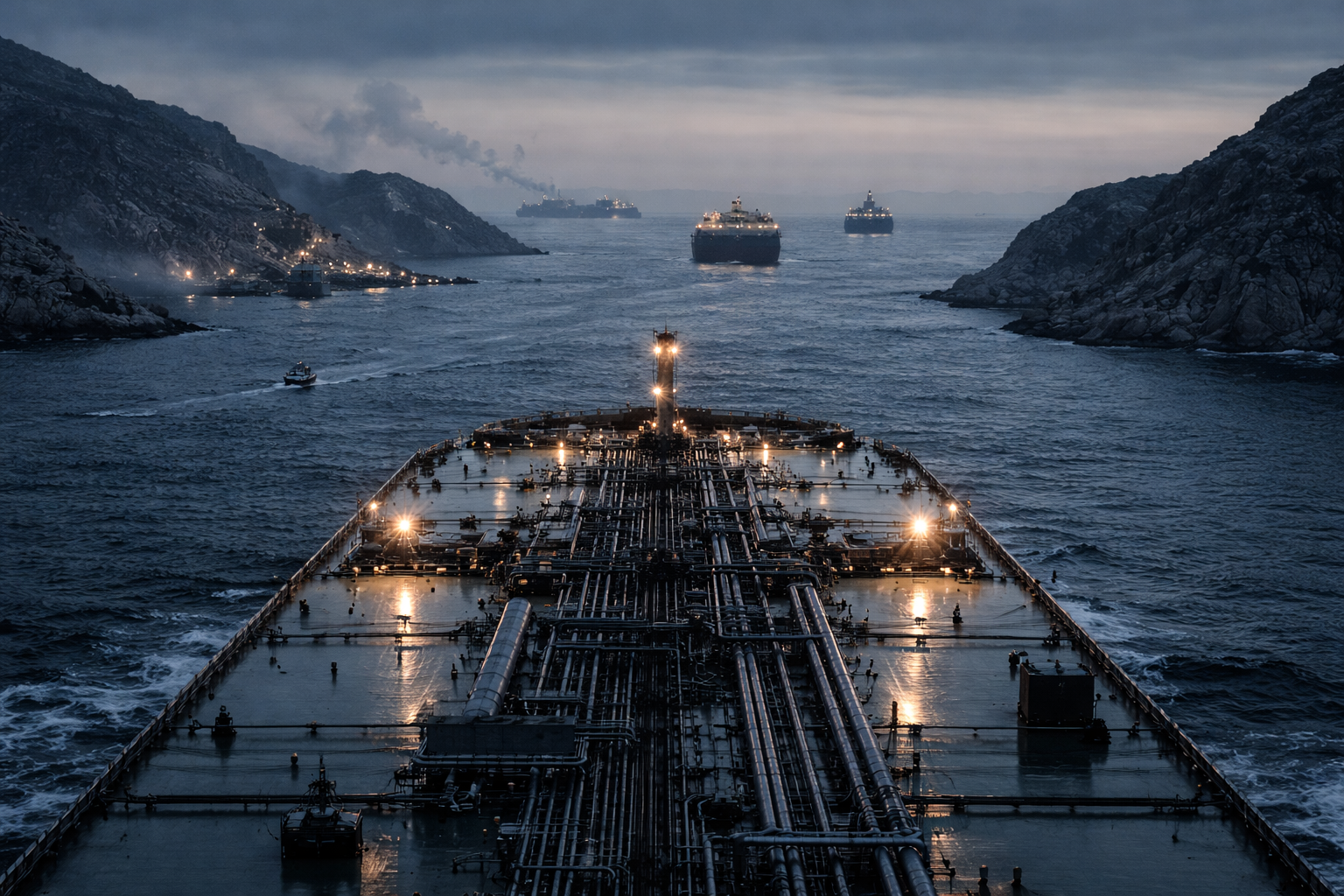
Global oil prices experienced an upward trend on Thursday, driven by renewed uncertainties surrounding a potential ceasefire between the United States and Iran, coupled with the ongoing closure of the Strait of Hormuz, a vital conduit for international energy shipments. Brent crude saw a 2% increase, reaching $96.53 per barrel, while West Texas Intermediate (WTI), a key U.S. benchmark, advanced by 2.8% to settle at $97.02.
This upward movement reversed the previous day's decline, which had followed an announcement of a ceasefire that included provisions for reopening the critical shipping lane. However, subsequent reports indicated Iran's intention to maintain the closure of the Strait of Hormuz despite the ceasefire agreement.
These reports suggested that Iran's stance was linked to Israeli military actions in Lebanon. Additionally, Iran's navy reportedly issued warnings that any vessels attempting to transit the strait without explicit permission would face targeting. Such declarations directly contradict a fundamental condition of the ceasefire, which stipulated unimpeded passage through the strait.
U.S. President Donald Trump affirmed that American forces would remain deployed in the region until Iran fully adhered to the terms of the ceasefire. These official statements and the reported maritime warnings have intensified concerns regarding the practical operability of the strait, even in the context of an agreed reopening. For global energy markets, access through the Strait of Hormuz is intricately linked to immediate supply expectations and perceived shipping risks, factors that can rapidly influence price fluctuations.
Broader financial markets also reflected a risk-averse sentiment, directly attributable to the uncertain status of the shipping corridor. In Asia, Japan’s Nikkei 225 index concluded the trading session with a 0.5% decrease. European benchmarks also registered losses, with the UK’s FTSE 100 declining by 0.4%, Germany’s Dax index falling by 1.3%, and France’s Cac experiencing a 0.8% drop.
Maritime intelligence firms have indicated that even if the Strait of Hormuz were to be fully reopened, the disruption to global trade would not cease immediately. They project that clearing the current backlog of vessels and restoring international trade flows to pre-crisis levels could require a period ranging from weeks to several months. This timeline underscores a significant operational unknown for markets: the potential delay between an announced reopening and the practical resumption of normal shipping patterns.
For national governments and commercial entities, the immediate priority remains the faithful implementation of the ceasefire terms, particularly those pertaining to safe passage through the strait. Until the operational status is unequivocally clarified and vessel movements normalize, both energy pricing and broader market sentiment are expected to remain highly susceptible to official pronouncements, maritime advisories, and evolving developments within the regional security landscape.