Brent crude nears $90 as key shipping routes face risk
Brent crude trades near $90 as Hormuz and Bab el-Mandeb security risks persist and US-Iran talks remain stalled, keeping shipment uncertainty high.
Atlas Newsdesk ·
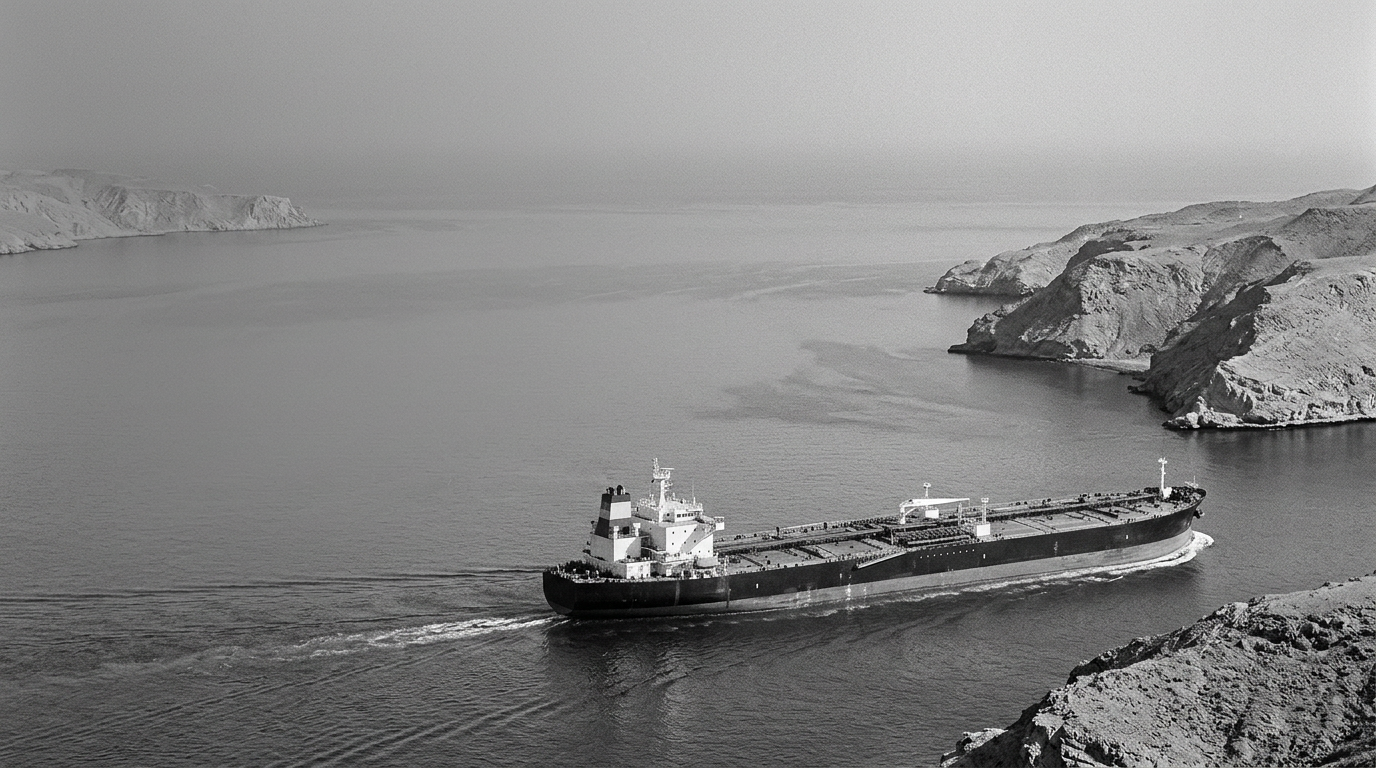
Brent crude has remained elevated, trading close to $90 per barrel, as tensions around the Strait of Hormuz and the Bab el-Mandeb Strait continue to strain major global fuel corridors.
Officials and market participants cited maritime security incidents in these narrow passages as a central driver of ongoing uncertainty over shipments. The backdrop has also been shaped by a continued stalemate in US-Iran negotiations, which the material links to persistent risk premia in energy markets.
Shipping chokepoints keep oil markets on edge
The Strait of Hormuz and the Bab el-Mandeb Strait were described as focal points because disruption in either corridor can move quickly through supply chains. In the account, markets treat threats in these routes as immediate given limited alternatives and the difficulty of rebalancing shipping schedules at short notice.
The source noted that an earlier phase of the US-Iran track briefly eased price volatility when investors saw higher odds of a diplomatic breakthrough. That stabilising effect has faded as the impasse has held, alongside the incidents at sea referenced by officials and market participants.
Travel and logistics face rising fuel-cost pressure
The sustained strength in energy prices is already appearing in corporate results, especially in sectors where fuel is a large, unavoidable cost. The material highlighted travel and logistics as particularly exposed because higher fuel bills can reduce margins even when companies try to pass expenses to customers.
Mandeb Strait
Tui was presented as a concrete example. The company reported a 27% year-over-year decline in operating profit to €234.6 million, missing analyst expectations of €274 million. The shortfall was attributed in the material to higher jet fuel spending and softer consumer demand.
In the same account, the combination of higher operating costs and weakening demand was framed as a cautionary signal for discretionary spending. As households become more sensitive to price increases, travel budgets can tighten, amplifying the effect of higher fuel prices on earnings.
Inflation goals complicate policy decisions
Beyond individual firms, the material said renewed energy shocks can challenge progress on stabilising prices. Fuel costs can feed into transportation, production, and distribution expenses, potentially pushing broader costs higher.
The key risk highlighted was that further supply-route disruption could intensify cost-push inflation. Policymakers were described as facing a more difficult path if higher energy costs coincide with still-fragile consumer demand in parts of the economy.
Separately, the material referenced an IMF forecast showing real GDP growth of 2.1% for USA 2026, up from a previous 2.0%. The source did not link that forecast directly to oil-market developments, but included it alongside the broader discussion of demand conditions.