Mideast Tensions Spike Oil Prices Past $107, Jolt Markets
Iran tensions hit global markets Thursday, pushing Brent up 6.5% above $107.6 as stocks fell and the dollar strengthened.
Atlas Newsdesk ·
Global markets fell on Thursday after former U.S. President Donald Trump made statements about possible actions against Iran, adding to already elevated tensions in the Middle East. Investors shifted toward assets typically seen as safer in periods of geopolitical stress, while energy prices moved sharply higher on renewed concerns about supply.
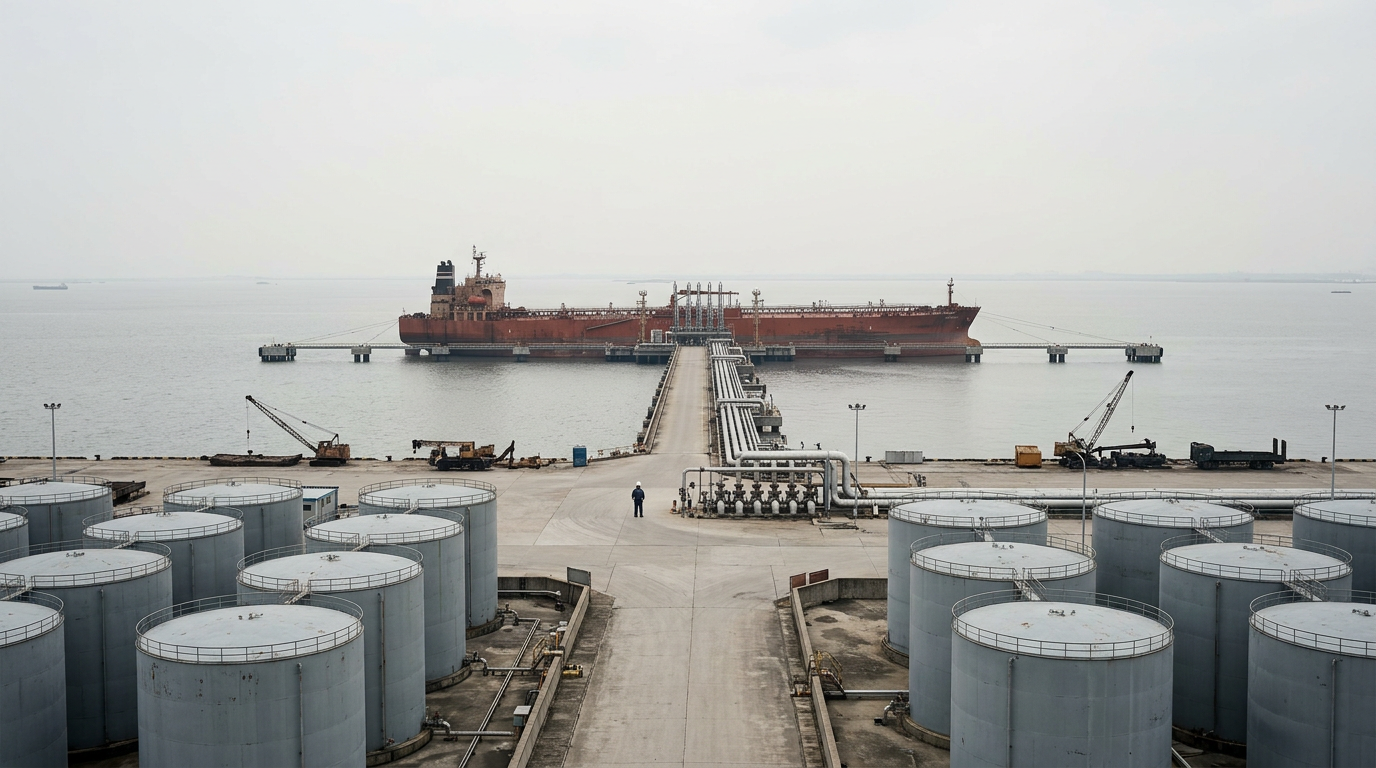
Brent crude oil climbed 6.5% to above $107.6 a barrel, reversing earlier declines. The move signaled a rapid repricing of risk tied to the region’s role in global energy flows, with traders reacting to the possibility of disruption even as the underlying situation remained uncertain.
Equity markets across Europe opened lower. London’s FTSE 100 started the session down 0.68%, while Germany’s Dax fell 1.5%, France’s Cac 40 dropped 1.35%, and Italy’s FTSE Mib declined 1.2%. The broad-based nature of the selloff pointed to a risk-off tone rather than a single-sector shock.
Losses were also pronounced in Asia. Japan’s Nikkei slid 2.4%, China’s CSI 300 fell 1.36%, and South Korea’s Kospi dropped 4.8%. Officials and market participants have often noted that South Korean assets can be especially sensitive to regional instability, and Thursday’s move reflected that heightened vulnerability.
Bond markets showed signs of repricing as well. The yield on 10-year UK gilts rose four basis points to 4.886%, and two-year UK bond yields increased by six basis points to 4.36%. At the same time, the U.S. dollar strengthened by nearly 0.5% against a basket of major currencies, consistent with demand for perceived safe-haven holdings during periods of uncertainty.
These shifts have potential knock-on effects for households, particularly through energy and borrowing costs. The Bank of England has warned that 1.3 million more UK homeowners could face higher mortgage payments, a risk that can become more acute when market rates move. Separately, UK petrol prices rose by a record 20 pence per liter in March, underscoring how quickly fuel costs can feed into consumer budgets.
For global investors, the immediate focus remains on whether tensions ease or intensify, and how long elevated oil prices persist. With markets reacting to political statements and fast-changing risk perceptions, price swings may continue as participants assess the balance between supply concerns, inflation pressures, and the outlook for growth.