Nepal floods leave 168 dead as border villages vanish in mud
Nepal floods after a glacier collapse killed at least 168 people and left more than 1,300 missing near the China border.
Raj Patel ·
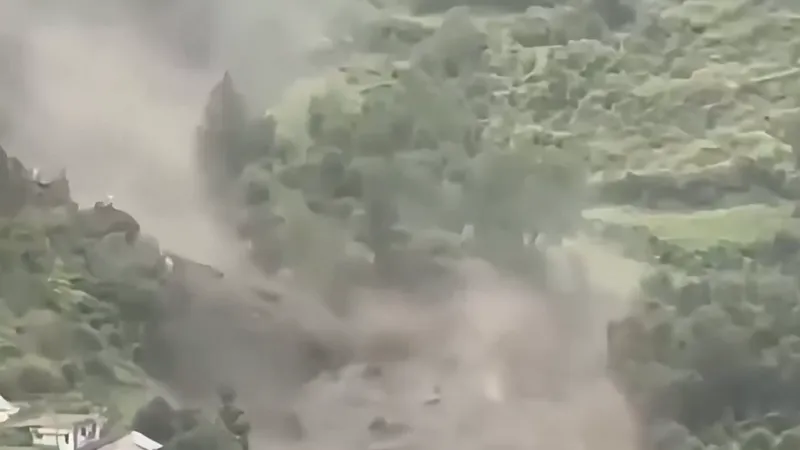
Nepal floods killed at least 168 people and left more than 1,300 missing after a glacier collapse near the China border.
The search continued Thursday across steep Himalayan valleys where mud, debris and damaged bridges slowed access a day after the torrent swept through several communities. The reported missing include foreigners and pilgrims, while hundreds of residents were displaced across the border region.
Glacier collapse sends mud downstream
The flood followed a glacier collapse, according to the account from the affected area, and moved through narrow valleys that also serve as economic routes and travel corridors. Those same valleys can concentrate water, mud and rock, leaving little time for people downstream to move out of the path.
Video from the disaster zone showed people trying to escape as the flood overtook streets and buildings. Drone footage recorded Thursday showed a wider field of damage, with bridges broken, vehicles buried and travel halted in some areas.
In Nuwakot, images showed mud coating upper levels of buildings after the torrent passed through. Debris was left hanging from tree branches and wires, while survivors were seen covered in mud as rescue teams searched for those still unaccounted for.
Soley’s 25 homes disappear
Soley, a village in Nuwakot with about 25 homes, was almost entirely destroyed, said Nirajan Paudyal, a Kathmandu-based journalist whose parents and relatives live there. Paudyal traveled to the area Thursday seeking information about his family after communication from the village broke down.
“There is no update till now. I fear there won’t be any update,” Paudyal said. His account points to one of the central problems for rescuers: in villages cut off by mud and broken infrastructure, the official toll may lag the reality on the ground.
The death count of at least 168 is already high for a localized mountain disaster, and the missing figure of more than 1,300 shows how incomplete the picture remains. The gap between those two numbers matters for emergency planning because the search operation must cover survivors, bodies, displaced residents and people who may have moved without being recorded.
Border routes face hard choices
The affected region sits along the Nepal-China border, where local settlements depend on roads, bridges and valley routes for access to markets, religious travel and public services. When those corridors fail, a flood becomes not only a rescue emergency but also a transport and supply problem.
The direct impact falls first on Nuwakot and nearby communities, where homes, roads and bridges must be cleared before normal movement can resume. For transport operators and tourism-linked businesses, the mechanism is straightforward: blocked routes reduce passenger movement, delay goods and increase the cost of reaching remote areas.
The wider Himalayan sector faces a narrower but related problem. If authorities treat this as an isolated cleanup, damaged infrastructure may be rebuilt on the same exposed routes; if they reassess glacier-fed flood risk, road, bridge and village planning could face higher costs and longer approval timelines.
The global macro effect appears limited unless cross-border routes stay closed long enough to disrupt trade or pilgrimage flows beyond the immediate area. In that scenario, the pressure would move from local rescue budgets to transport, tourism and border administration, while the human cost would remain concentrated in Nepal’s mountain communities.
If search teams regain access quickly, the next phase is likely to center on casualty confirmation, shelter and debris clearance. If mud, broken bridges and severed routes continue to slow the response, the missing-person count will remain the main uncertainty for families, officials and the industries that depend on Himalayan travel corridors.