Himalayan Glacial Collapse: 472 Dead, 1,500 Missing
A Himalayan glacial collapse caused by an ice-rock avalanche has killed 472 and left 1,500 missing near the Nepal-Tibet border, devastating infrastructure.
Atlas Newsdesk ·
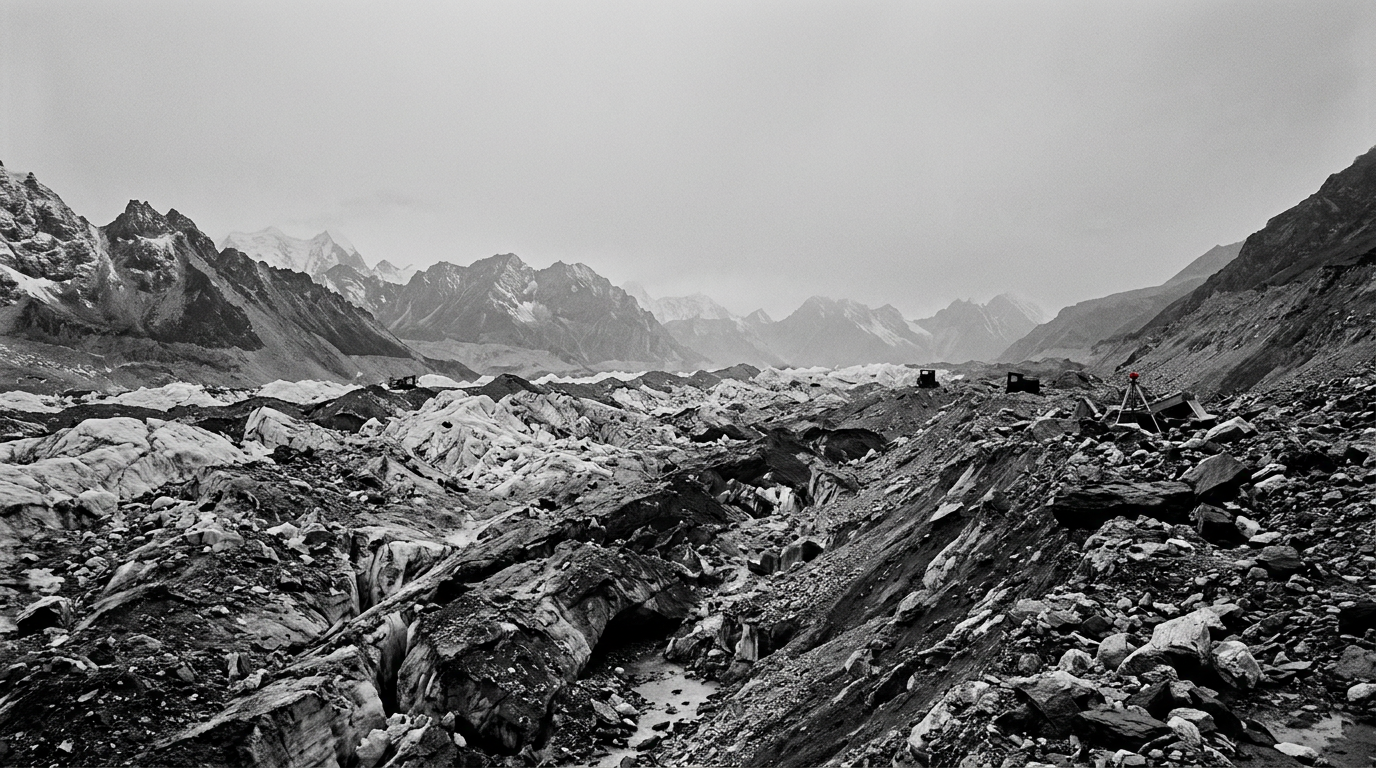
A major glacial event in the Himalayan range has resulted in the confirmed deaths of 472 people, with approximately 1,500 individuals currently unaccounted for in the region near the Nepal-Tibet border. The disaster, which commenced on Wednesday, was triggered by an ice-rock avalanche within the Lhende Khola river basin. This sudden event led to a rapid nine-meter surge in the water levels of the Trishuli River over a period of just 30 minutes, causing widespread damage to critical infrastructure.
Initial reports had speculated about a seismic cause for the incident. However, officials later clarified that the event was a mass-wasting phenomenon, characterized by a high-velocity flow of ice and debris, rather than an earthquake. The powerful and unexpected water surge obliterated numerous roads and bridges, severely impeding immediate search and rescue operations. Access to remote and isolated communities has become exceptionally challenging for emergency responders.
Widespread Devastation and Humanitarian Challenges
The fast-moving debris flow devastated several local villages in its path, destroying homes and livelihoods throughout the affected area. Essential transport links were severed, effectively isolating thousands of residents and tourists in remote locations. This isolation has significantly complicated the delivery of humanitarian aid and the evacuation of those in need, intensifying the unfolding crisis in the high-altitude region.
Authorities in Kathmandu are actively addressing the escalating situation. Local morgue facilities have rapidly reached their capacity due to the high volume of victims. Emergency protocols have been activated for processing unidentified remains, including the implementation of a numerical tagging system designed to assist in identification and maintain accurate records. This underscores the immense strain on local services and the urgent necessity for external support to manage the disaster's aftermath.
Ongoing Rescue Efforts and International Concern
Search operations are continuing with intensive efforts across the challenging and rugged terrain. Helicopters are being deployed to reach cut-off populations, deliver essential supplies such as food, water, and medical aid, and evacuate injured individuals. The combination of difficult landscapes and widespread damage makes these operations both perilous and slow, impeding swift progress and timely assistance.
Among the missing are 668 foreign nationals from 34 different countries. Many of these international visitors were engaged in popular trekking expeditions or the revered Kailash Mansarovar pilgrimage, which attracts numerous global devotees annually. The international community is closely monitoring the evolving situation, with several nations expressing deep concern for their citizens and offering support for the ongoing relief efforts. This incident highlights the inherent dangers associated with high-altitude tourism and the unpredictable nature of geological events in such sensitive environmental regions.
Such large-scale glacial collapses, though not entirely uncommon in the Himalayas due to its active geodynamics and increasingly volatile climate patterns, underscore the fragility of infrastructure and human settlements in these mountainous areas. The challenges of rescue and recovery are compounded by the extreme altitudes and the limited accessibility, making a coordinated international response crucial for long-term recovery and disaster preparedness.
Long-Term Environmental and Regional Considerations
The incident also raises broader concerns about climate change and its potential impact on Himalayan glaciers, which are vital water sources for millions downstream. While officials attributed this specific event to a mass-wasting phenomenon rather than direct climate change, the increasing frequency of extreme weather events and glacial melt in the region contributes to overall instability. This demands a re-evaluation of development projects and tourism strategies in vulnerable high-altitude zones to mitigate future risks.
The affected communities face a protracted period of rebuilding and recovery, requiring sustained humanitarian assistance and reconstruction efforts. The incident serves as a stark reminder of the complex interplay between natural hazards, human activity, and environmental vulnerability in one of the world's most ecologically sensitive regions.