Navy receives Nvidia supercomputer for Monterey AI work
Nvidia donated a GB300 Grace Blackwell supercomputer to an NPS-linked nonprofit, putting its newest AI servers on a U.S. Navy campus.
Jason Kwon ·
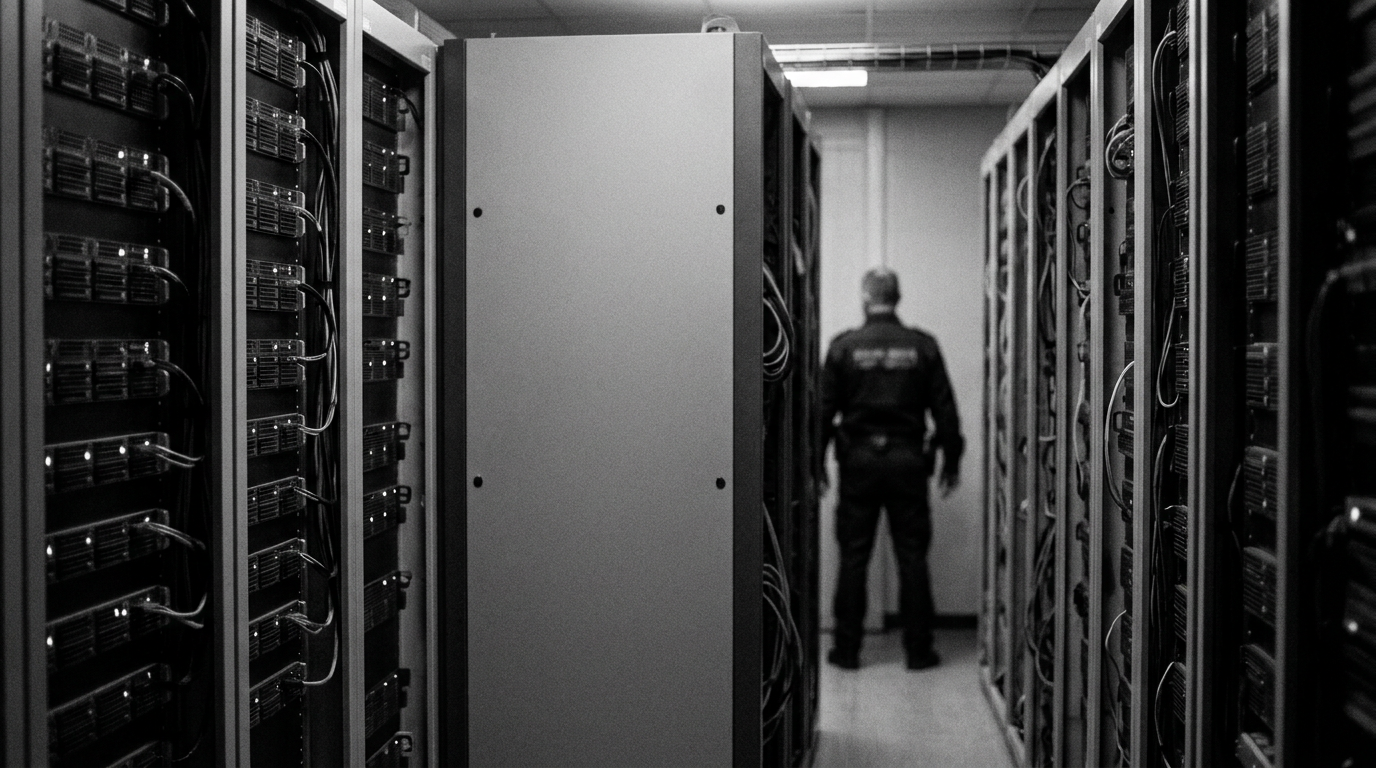
An Nvidia supercomputer has landed at the Naval Postgraduate School, giving a Navy-run campus access to the chipmaker’s latest AI servers.
Nvidia and NPS said on July 22 that the system was donated to the NPS Foundation, a nonprofit connected to the school, rather than directly to the military institution. The machine is based on GB300 "Grace Blackwell" servers, which Nvidia described as its most advanced AI computers.
GB300 servers reach Monterey
The system has been installed at the NPS campus in Monterey, California, Nvidia and NPS said. They did not disclose its size, leaving unanswered how much computing capacity the donation provides.
Adm. Samuel J. Paparo, commander of U.S. Pacific Command, and Nvidia CEO Jensen Huang planned to appear at an event announcing the system. Their presence places the donation at the intersection of military education, advanced computing and defense planning.
A Navy school meets Blackwell
NPS is operated by the U.S. Navy and grants master’s and doctoral degrees in areas including computer science and aerospace engineering. Its programs emphasize how technical fields apply to warfare, giving the Monterey campus a role in training and research tied to military requirements.
The donation matters because it puts Nvidia’s latest server technology into a military-linked research setting. Blackwell chips are already planned for U.S. government supercomputers built by the Department of Energy, but Nvidia and NPS described this installation as the first direct use of the company’s most advanced servers by the U.S. military.
Defense AI gets new hardware
Huang framed the donation in national security terms, saying, "AI will be a backbone of America’s defense." The statement shows how Nvidia is positioning high-end AI infrastructure as a tool for government and military users, not only for commercial cloud providers and research labs.
The timing reflects a wider contest between the U.S. and China to bring artificial intelligence into defense systems. The source material cited possible military uses ranging from targeting list development to drone warfare, both of which require fast data processing and specialized computing capacity.
For Nvidia, the Monterey installation deepens its visibility with U.S. defense institutions at a time when demand for AI chips remains tied to both civilian and government projects. For NPS and its foundation, the system could expand access to advanced computing for education and research, though the exact research agenda was not detailed.
If the system remains focused on training and research, the macro effect would likely be limited to defense workforce development and technical capacity building. Nvidia would gain a showcase deployment for GB300 servers, while the wider AI hardware industry would face pressure to demonstrate systems suited for sensitive government environments.
If military adoption broadens from campus research into operational workflows, the effect would be larger. Defense AI procurement could become a stronger demand channel for advanced chips, Nvidia would face greater scrutiny over military use and supply controls, and rivals would need to compete on performance, security and compliance.
If governance, classification rules or export-control concerns slow the rollout, the donation may function more as a reference installation than a procurement signal. The open questions are the system’s scale, how NPS will allocate access and whether future military AI projects standardize around the same class of hardware.