Morocco Crown Prince Gets Key Army Role in Succession Plan
Crown Prince El Hassan's army post appointment is a key milestone in Morocco's royal succession, mirroring his father's path to the throne.
Lauren Collins ·
A Strategic Military Appointment
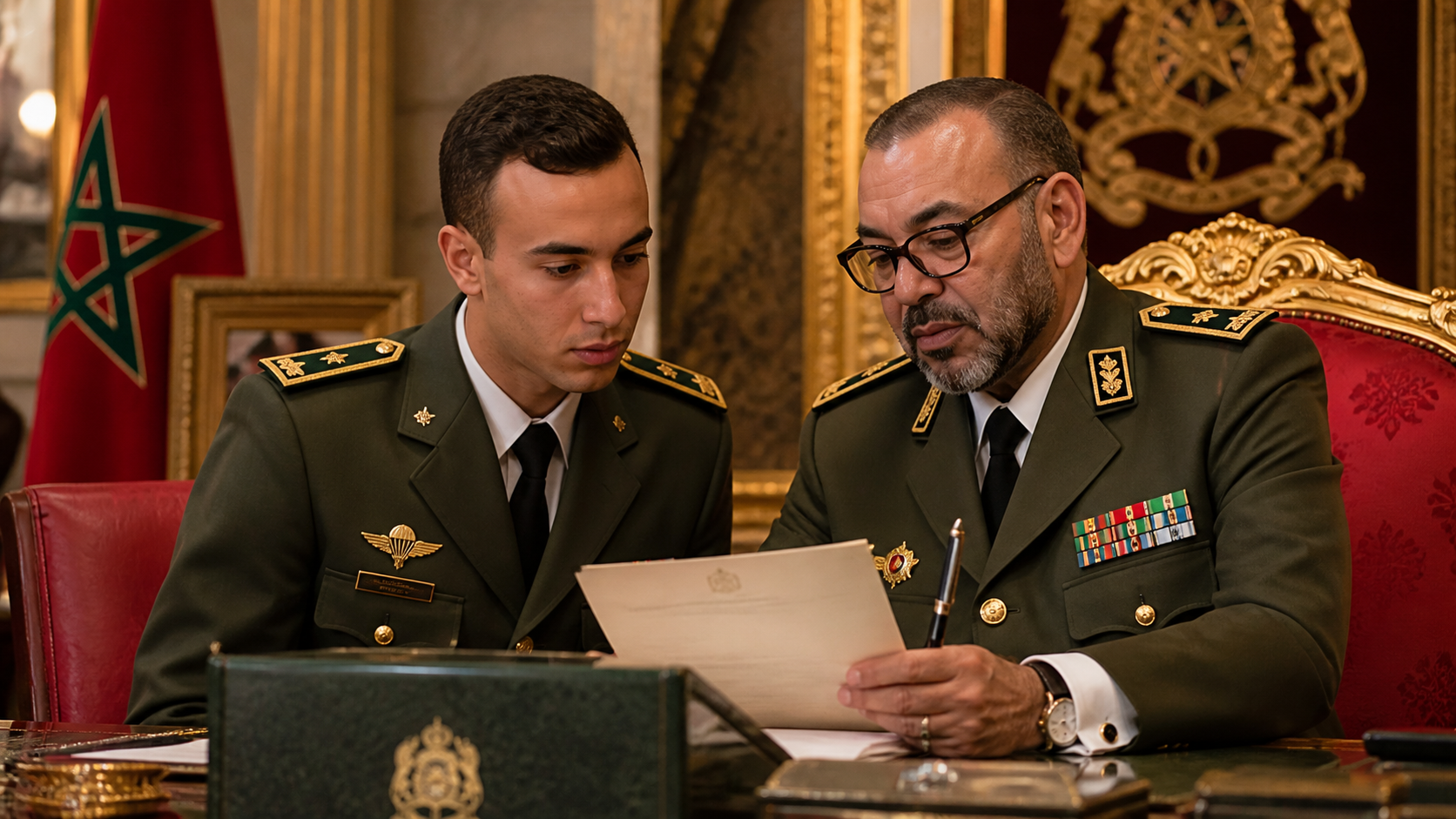
In a significant move for the future of the monarchy, Morocco's Crown Prince El Hassan has been appointed to a strategic military post, signaling a new phase in his preparation to ascend the throne. The appointment places the 22-year-old heir in the new position of coordinator for the army general staff's offices and services.
The decision was announced by the royal cabinet under the direction of his father, the 62-year-old King Mohammed VI. Holding the rank of lieutenant colonel, Prince El Hassan's previous military duties were largely ceremonial. This new role represents a substantive shift, embedding him within the command structure of the Royal Moroccan Armed Forces.
As chief coordinator, the Crown Prince will gain unprecedented access to sensitive information. His responsibilities include reviewing reports from military intelligence and counterespionage services before they are presented to the king, who serves as the army's supreme commander.
Mirroring a Royal Trajectory
This development closely follows the precedent set a generation earlier, underscoring the methodical nature of succession planning within the 400-year-old Alouite dynasty. In 1985, the late King Hassan II appointed his own heir, the current King Mohammed VI, to the very same position.
At the time of his appointment, Mohammed VI was also 22 years old. This parallel highlights a deliberate tradition of immersing the future monarch in the nation's security apparatus at a crucial point in their training. It ensures the heir gains practical experience and a deep understanding of the military's role in national stability.
By replicating this career step, the monarchy is sending a clear message of continuity and stability to both domestic and international observers. The process ensures that the transition of power, when it occurs, will be seamless and built on a foundation of established protocol and experience.
New Responsibilities and Implications
The Crown Prince's duties extend beyond intelligence oversight. He will be directly involved in monitoring critical national security issues, including border security and evolving regional threats. This hands-on experience is vital for a future head of state in a geopolitically sensitive region.
Furthermore, Prince El Hassan will oversee the modernization of the armed forces and its associated social services. This portfolio combines strategic military development with a focus on the welfare of personnel, providing a comprehensive view of the armed forces as a national institution.
This appointment formally integrates the next generation of leadership into the highest levels of Morocco's state security framework. It solidifies the line of succession and provides Prince El Hassan with the foundational experience required to one day assume the role of supreme commander and chief of the general staff.