US Navy Chokes Off Iranian Trade Routes
U.S. naval blockade on Iran follows failed Pakistan talks, targets maritime trade and oil waiver as allies plan Paris summit on Hormuz.
Lauren Collins ·
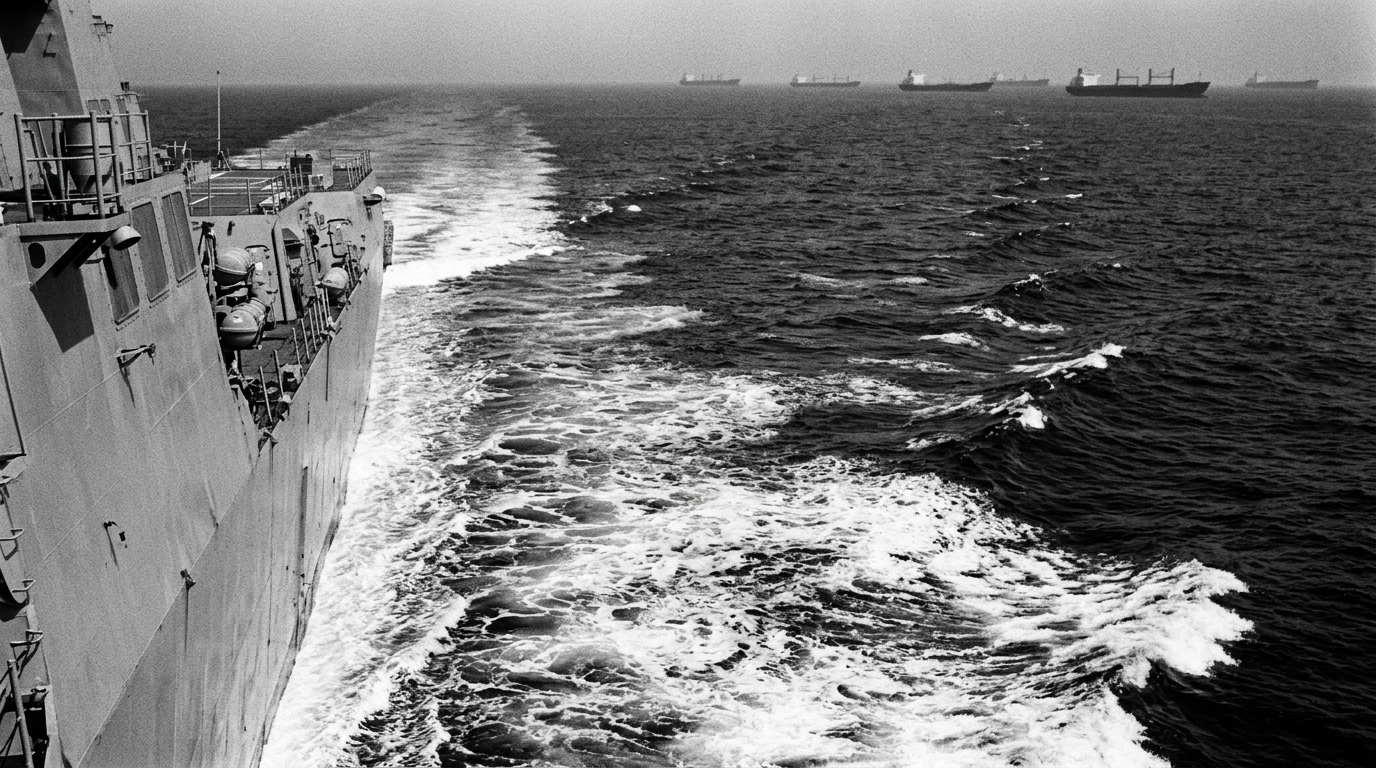
The United States military has begun a naval blockade on Iran , a move that the U.S. said is designed to stop maritime commercial traffic into and out of the country. The action followed U.S.-Iran talks in Pakistan that ended without an agreement, according to the information provided. Former President Donald Trump declared the blockade, framing it as a step to increase economic pressure on Iran and to respond to Iran’s near-total closure of the Strait of Hormuz.
U.S. Central Command (Centcom) said it achieved “maritime superiority in the Middle East” within 36 hours of the blockade taking effect. The blockade is described as affecting an estimated 90% of Iran’s sea-based international trade, effectively targeting the main channel for Iran’s maritime commerce. The stated objective is to restrict Iran’s ability to conduct economic trade by sea while the Strait of Hormuz remains heavily constrained.
Alongside the Iran-focused measures, U.S. Secretary of State Marco Rubio pointed to separate diplomacy involving Israel and Lebanon. Rubio described the Israel-Lebanon talks taking place in Washington as a “historic opportunity” to address instability in the region. The discussions come after renewed conflict between Israel and Hezbollah, which has intensified pressure on Lebanon, particularly in the south.
Lebanon’s President Joseph Aoun said he hopes the Washington talks will ease the suffering of the Lebanese people, with specific reference to communities in southern Lebanon. Lebanon’s envoy to the United States, Nada Hamadeh Moawad, said the priority is protecting Lebanon’s territorial integrity and sovereignty, while also calling for an end to the conflict. The statements underscore the political stakes for Lebanon as it seeks relief from the effects of the fighting.
Economic pressure is also being tightened through sanctions policy . The United States will not renew a 30-day waiver on sanctions for Iranian oil, according to the information provided, adding another constraint on Iran’s ability to sell oil under eased terms. Separately, the United Kingdom and France are scheduled to co-host a summit in Paris focused on reopening the Strait of Hormuz, highlighting the international dimension of the shipping disruption.
Despite the regional tensions, U.S. Treasury Secretary Scott Bessent said the U.S. economy remains strong and projected growth of over 3% for the year. That view contrasts with the International Monetary Fund’s revised lower growth forecasts, which were attributed to the conflict’s potential impact on the global economy. Key uncertainties include how long the blockade and Strait of Hormuz constraints persist, and whether diplomatic efforts in Washington and Paris produce changes on the ground.