Michigan Senate Bill 1047 proposes separate utility rates as data centers eye private power
Michigan’s SB 1047 proposes a new rate class for large-load customers. Learn how this could shift data center spending toward on-site power deals.
Edward Mullen ·
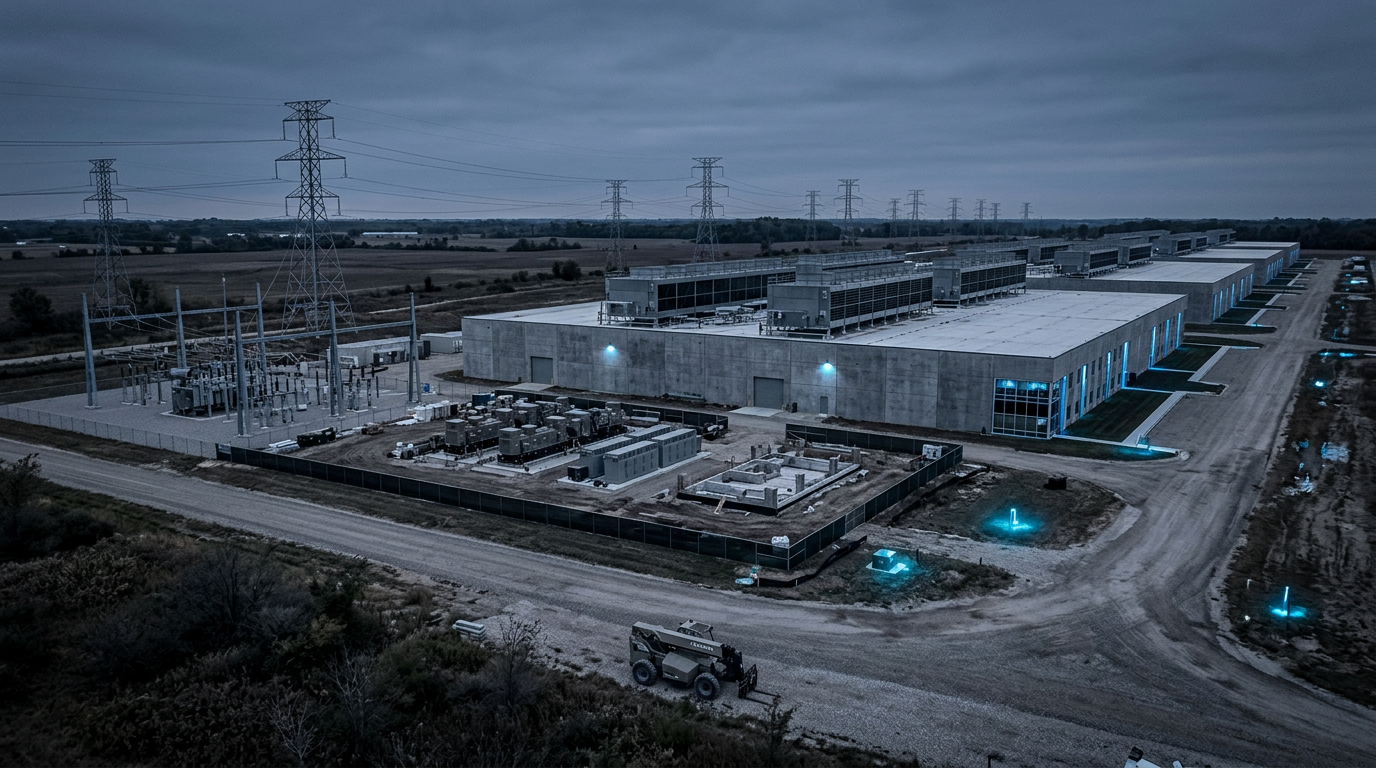
Data center developers assume they can secure affordable, predictable retail tariffs from state-regulated utility monopolies. But legislative efforts like Michigan’s proposed rate class segregation for large-load users are fracturing that structural assumption.
Anticipating targeted grid surcharges, hyperscalers will soon abandon standard utility agreements altogether, shifting their budgets from operational power bills to the capital expense of constructing private, behind-the-meter power plants.
A companion signpost arrived the same day: Senate Bill 1053, sponsored by Senator Mary Cavanagh with Senators Mallory McMorrow, Stephanie Chang, and Sylvia A. Santana as co-sponsors, was officially introduced to modify how utility allocations are set, per the Legislature’s page. Read together, both introductions signal that Lansing is now working on tariff structure for the heaviest power users, a category that includes AI data centers.
Separate rates for “large-load” customers is now on the table in Lansing
The SB 1047 page frames a clean intent: carve out “a separate rate class” for customers consuming very large loads and adjust the statute accordingly. That sounds surgical, but rate-class design is where decades of utility economics get decided: thresholds, demand charges, capacity commitments, and cost allocation methods become the bill a CFO actually pays.
The Legislature’s listing does not define the large-load threshold or the exact tariff mechanics; the clock now moves to committees, amendments, and ultimately the Public Service Commission to translate a class definition into a live bill. The absence of those details is the policy risk surface.
Why this reads like a power-procurement story for cloud and AI
For AI and cloud operators, electricity is the dominant recurring operating expense of each new build. A distinct “large-load” class almost always implies a different risk profile for bills — whether higher average rates, steeper demand charges, or stricter capacity commitments.
Executives reading SB 1047 will treat it as a procurement problem: if utility retail becomes pricier or less predictable for their next Michigan site, do they stay on-tariff or re-architect the project so that more of the spend becomes upfront infrastructure on private land? Nothing on the Legislature’s page promises a discount; the headline risk is that the separate class prices in grid costs that hyperscalers can avoid if they don’t take service as a conventional retail customer.
The unpriced exit: behind-the-meter co-location is the obvious workaround
There is a hole you could drive a substation through: SB 1047 addresses public-utility rates; it does not speak to private, behind-the-meter generation or direct-wire co-location. If a data center is physically sited with a dedicated power plant or industrial generator, much of the exposure to a “large-load” tariff can be sidestepped because the retail transaction with the public utility shrinks or vanishes.
In that world, the operator trades ongoing utility bills for capital commitments — buying, financing, or contracting private power — to stabilize long-term cost and control. The Legislature’s posting does not mention private-wire arrangements or standby/exit charges that might narrow this path; by omission, it leaves the bypass strategy wide open in executive planning models.
The counter: utilities can still make the grid the better deal
Skeptics will argue that a separate class does not automatically mean higher net costs. Utilities can propose performance-based credits, interruptible options, or bespoke demand-response programs that keep retail service attractive to the biggest loads.
Regulators can also craft standby and departure charges that blunt the private-wire incentive by pricing the value of grid backup. The Legislature pages here don’t confirm any of that — and they don’t list the specific tariff levers — but this is the counter-position utilities will take as these bills move.
If they succeed, staying on the grid could remain the rational choice.
What changes for Michigan buyers and employers over the next year
If SB 1047 advances with its “separate rate class” intact, procurement teams for prospective Michigan data centers will restructure RFPs to bundle land, cooling, and power into a single package that includes an on-site generation option. Legal teams will model joint ventures or long-term offtake agreements with private generators, because that turns a volatile monthly utility line into an amortized build-and-own asset.
Finance leaders will redraw budgets: less operating expense to the utility, more capital expenditure on-site — a shift that favors fewer sites committed for longer durations.
There is also a work-force angle. Moving megawatts behind the meter is not a spreadsheet exercise; it is an engineering and construction program.
Expect earlier engagement with local skilled trades to build and maintain on-site electrical infrastructure and generation assets, and a premium on in-house energy procurement and compliance talent who can navigate the evolving line between regulated utility service and private supply inside Michigan law. If even a minority of large-load projects choose the bypass, utilities’ load-growth assumptions become less reliable, forcing changes in capital planning and potentially in how they recruit and retain system planners.
Six-month signals: who pays the next megawatt
In the near term, watch for three things on the Legislature’s own pages. First, any committee amendments to SB 1047 that define “large-load” by megawatt thresholds or codify cost-allocation methods; those details will reveal whether the class is punitive or simply differentiated.
Second, whether SB 1053’s changes to allocation mechanics get tied to the new class — a pairing that could hard-code how much grid expansion cost lands on the largest users. Third, signs of the bypass calculus: local economic-development announcements touting on-site power packages at prospective data center sites, or utility filings advertising tailor-made large-load tariffs to preempt a private-wire exodus.
The direction of those moves will tell executives whether Michigan wants its hyperscalers on the retail meter or behind the fence.