Mexico target 2026 quarterfinals as Aguirre leans on Azteca edge
Mexico seeks to overcome its Round of 16 World Cup elimination streak as co-host in 2026, leveraging home advantage and an experienced squad.
Mehmet Şahinoğlu ·
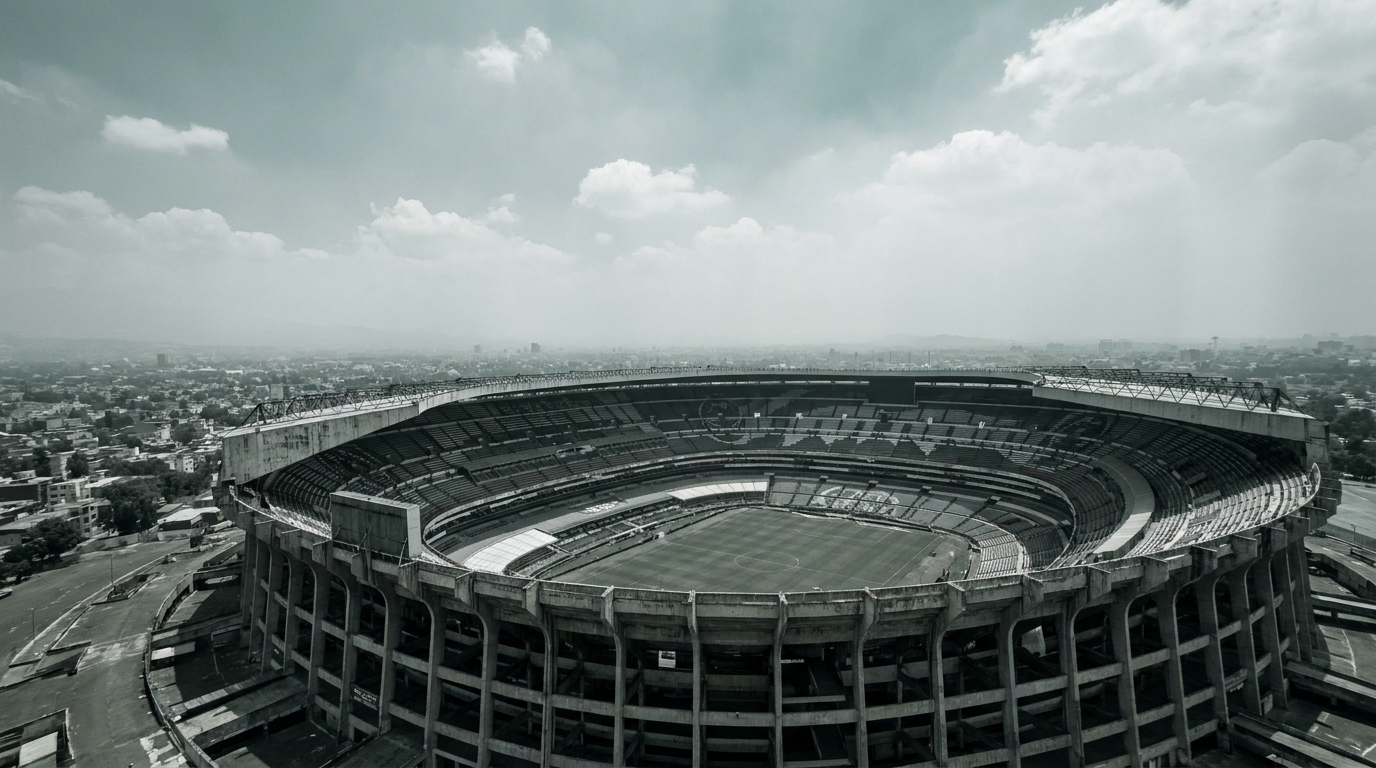
Co-hosts Mexico will enter the 2026 FIFA World Cup targeting a first quarterfinal since 1986 as they seek to end a long run of round-of-16 exits. Head coach Javier Aguirre, back for a third tournament in charge, believes home advantage at Estadio Azteca and familiar venues can be decisive. El Tri open on June 11 against South Africa in Mexico City in Group A, which also features the Czech Republic and South Korea.
Staff and officials expect altitude, climate and crowd support to tilt key moments Mexico’s way. The objective is to break the “Curse of El Quinto Partido,” a label attached to seven consecutive last-16 eliminations from 1994 to 2018 and to Aguirre’s own exits in 2002 and 2010. Turning that edge into precision in both penalty areas remains the central challenge.
Aguirre returned to the post in 2024 and guided the team to Gold Cup and Nations League titles, reinforcing belief that a home tournament can help break the barrier. The staff view unit cohesion, tempo control and clarity in both boxes as the determining factors for whether Mexico can convert home-field momentum into a deeper run.
A quick, passing approach built through midfield underpins the plan. Selection balance has centered on combining experienced internationals with emerging options to increase flexibility during a condensed group schedule.
Tactical approach and key personnel
Midfield and attack options
Mexico plan to build through midfielders Alvaro Fidalgo and Alexis Vega, with 17-year-old Gilberto Mora and Orbelin Pineda available as alternatives. Holding midfielders Edson Alvarez and Luis Romo anchor the structure and can drop into central defense to facilitate playmaking from deeper zones. Luis Chavez and Erik Lira provide further depth in central areas, offering rotation choices over a demanding group calendar.
Up front, 35-year-old Fulham striker Raul Jimenez leads the line and ranks third on Mexico’s all-time scoring list with 44 goals. Santi Gimenez and Armando “Hormiga” Gonzalez offer different profiles in reserve, giving Aguirre aerial presence and penalty-box options. On the flanks, Roberto “Piojo” Alvarado and Cesar “Chino” Huerta add pace and width to stretch back lines and support transitions.
Defense, goalkeeping and depth
At the back, Johan Vasquez and Cesar Montes are the only natural center backs in the squad, which heightens the value of Alvarez or Romo sliding into the back line when needed. Jorge Sanchez is the likely starter at right back, with Club America’s Israel Reyes in contention and negotiating a move to AS Roma. On the left, veteran Jesus Gallardo currently holds the edge over 22-year-old Mateo Chavez.
In goal, Raul Rangel has stepped in for Luis Malagon after an Achilles rupture ruled Malagon out. Veteran goalkeeper Guillermo Ochoa, 40, is set for a record sixth World Cup, surpassing Antonio “Cinco Copas” Carbajal’s tally of five and providing leadership for a remodeled squad. Naturalized options in the pool include Fidalgo, Colombia-born forward Julian Quinones, and US-born midfielders Brian Gutierrez and Obed Vargas.
Group A outlook and home-field dynamics
Azteca history and schedule
Mexico are positioned as Group A favorites alongside the Czech Republic, South Korea and South Africa. The opener against South Africa on June 11 in Mexico City is a rematch of the 2010 tournament curtain-raiser. History at the venue favors El Tri: across two World Cups held in Mexico, they own a 5W-0L-2D record in seven matches at the Azteca.
The second group match is scheduled for June 18 in Guadalajara against South Korea, with kickoff at 9pm ET (01:00 GMT). Officials expect the elevation and climate in Mexico City and Guadalajara to challenge visiting opponents while amplifying the hosts’ pressing and energy levels through the group stage.
Potential knockout path
Should Mexico advance, subsequent fixtures are likely to be staged in Los Angeles or Houston, cities with significant Mexican support that could extend the home-field dynamic beyond the group phase. That potential path increases the importance of winning the group and managing squad rotation to maintain intensity across the opening fixtures.
After years of near-misses, Mexico’s bid to reach the fifth game will hinge on converting home advantage into precision in both penalty areas. The first checkpoint arrives on June 11, when El Tri test their blueprint against South Africa in Mexico City.