Marcos Inspects Manila Venue Ahead of November ASEAN Summit
President Ferdinand Marcos Jr. reviewed preparations at Manila's Philippine International Convention Center for ASEAN meetings scheduled for November 16–18…
Lauren Collins ·
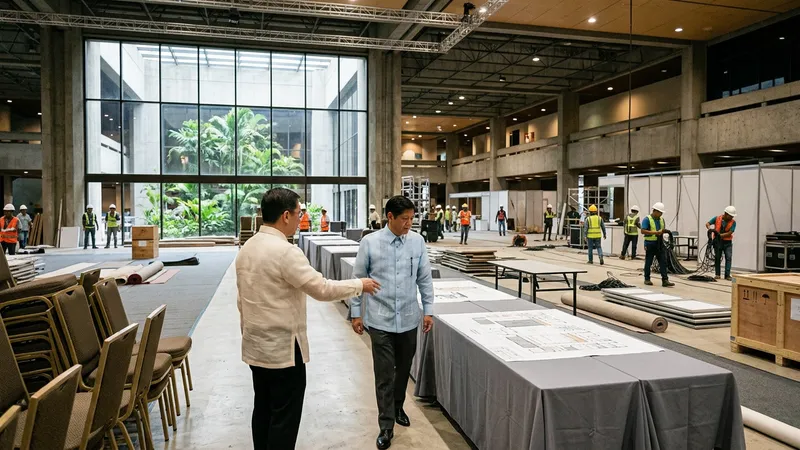
President Ferdinand Marcos Jr. inspected the Philippine International Convention Center in Pasay City as Manila prepares to host ASEAN meetings from November 16–18. The venue review is an early public marker of the Philippines' role as regional convenor, while Washington watches whether the meetings produce concrete coordination on maritime security, trade, or diplomacy.
The inspection did not include an announced U.S.-Philippines defense initiative, a new access arrangement, or a confirmed senior U.S. visit. It nevertheless places Manila's summit preparations in a period when the United States has made its alliance with the Philippines a central part of its Indo-Pacific security posture.
The Association of Southeast Asian Nations brings together 10 Southeast Asian countries and operates largely through consultation and consensus. Its annual leaders' meetings also draw outside partners through related summits, creating a setting where regional governments can engage the United States, China, Japan, Australia, India, and other powers without formally choosing between them.
For Manila, hosting carries both administrative and political weight. The government must provide security and logistics for a large diplomatic gathering, while President Marcos can use the chairing role to shape the agenda and present Philippine priorities to regional leaders.
Washington's interest is not limited to the summit program. The United States and the Philippines are treaty allies under the Mutual Defense Treaty, and their security relationship has become more prominent as Philippine officials report repeated friction with China in disputed waters of the South China Sea.
The Enhanced Defense Cooperation Agreement, known as EDCA, allows the United States access to agreed Philippine locations for activities including training, disaster response, and prepositioning of equipment. The agreement does not create U.S. bases, but it has become a frequent subject of political debate in Manila because of its relevance to regional contingencies and the Philippines' relationship with China.
The White House sets overall foreign-policy direction, while the State Department manages diplomacy and the Pentagon oversees military cooperation. Congress can also affect the relationship through appropriations, arms-transfer oversight, and hearings on regional security. None of those institutions has announced a summit-linked policy change in connection with Marcos's venue inspection.
Manila's convening role
The November gathering will give the Philippines a formal platform to raise issues that matter to its diplomacy, including maritime conduct, economic ties, supply chains, and regional crisis management. ASEAN statements are often carefully negotiated, meaning their language can show where governments agree while also revealing the limits of consensus.
That process matters to Washington because the United States seeks support for rules governing navigation, peaceful dispute resolution, and resistance to coercion. Manila, however, also has to protect economic and diplomatic room to deal with Beijing, making its regional role different from simply acting as a U.S. security partner.
The distinction is important in interpreting the summit. A Philippine call for adherence to international law or protection of maritime rights would not by itself establish new defense alignment with Washington; it could instead reflect Manila's own legal and territorial interests. Likewise, a restrained communiqué would not necessarily signal a change in the bilateral alliance, since ASEAN documents must accommodate governments with differing views of China.
The immediate facts are narrower. Marcos visited the convention center in Pasay City, and the government is preparing it for meetings scheduled over three days in November. The source material does not establish the final agenda, the list of foreign leaders attending, or whether the United States will send a Cabinet-level or presidential representative.
U.S. signals before November
If Philippine and U.S. officials announce a defense consultation, an EDCA-related project, a joint exercise, or a high-level visit before the meetings, Washington would have a clearer basis for describing the summit period as part of deeper security coordination. Such steps would affect the bilateral relationship directly and could prompt closer scrutiny from other ASEAN governments seeking to avoid sharper regional blocs.
If no such measures emerge, the meetings may remain principally a diplomatic test of Manila's ability to build consensus among ASEAN members. That outcome would leave the U.S.-Philippines alliance intact while offering less evidence that the summit itself is changing Washington's regional military posture.
For the broader region, the main uncertainty is whether ASEAN can produce language or initiatives that address maritime tensions without exposing divisions among its members. The observable benchmark is straightforward: by December 31, 2026, public announcements should show either new U.S.-Philippines security activity connected to the summit period or a largely diplomatic gathering without concrete bilateral defense commitments.