Lebanon’s Aoun warns Israeli attack on bridge ‘prelude to ground invasion’
An Israeli airstrike on Lebanon's Qasmiyeh Bridge on March 22, 2026, escalates regional tensions, raising concerns of a ground invasion.
Lauren Collins ·
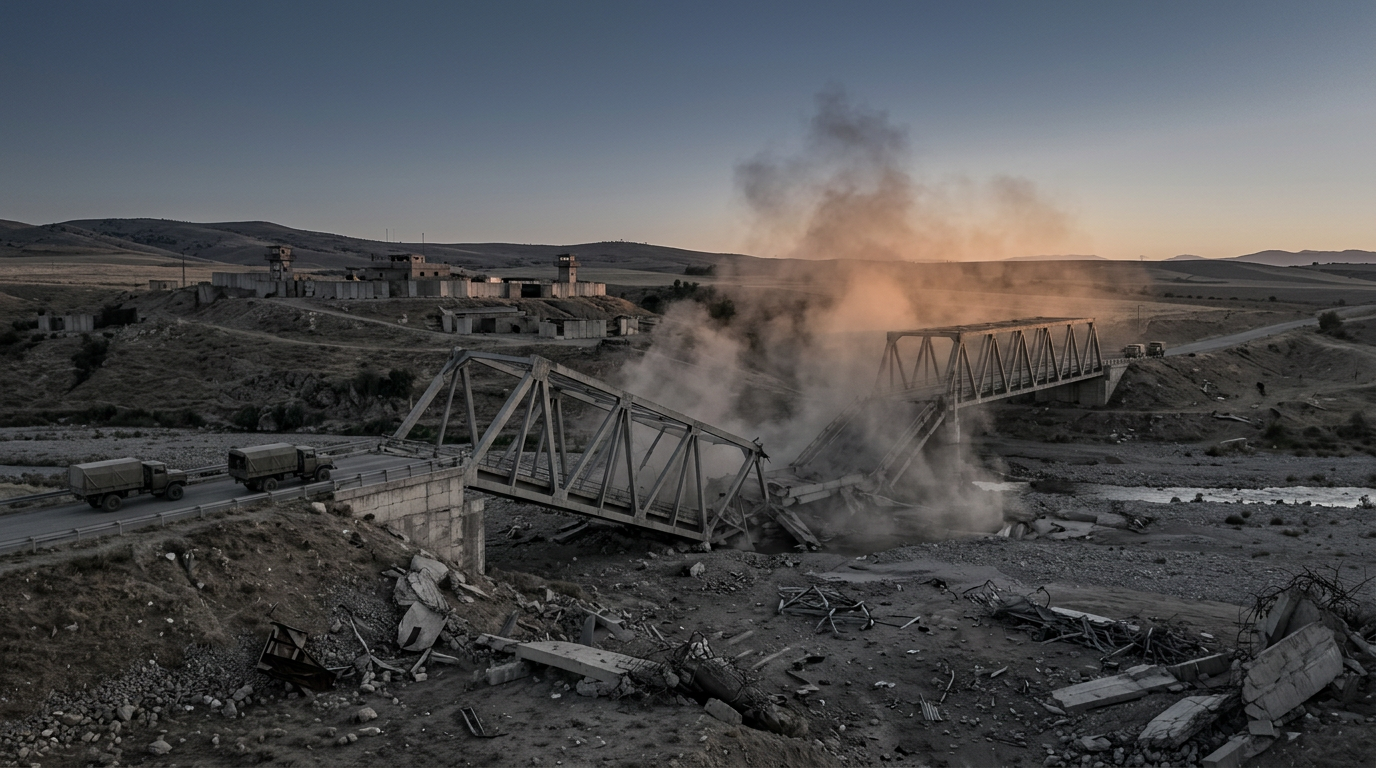
Israeli forces conducted an airstrike on the Qasmiyeh Bridge in southern Lebanon on Sunday, March 22, 2026. This infrastructure, crucial for connecting the southern region to the rest of the country, was targeted amidst escalating hostilities. The incident follows a directive from Israeli Defence Minister Israel Katz to dismantle all crossings over the Litani River and demolish structures near the border, indicating a strategic shift in operations against Hezbollah.
Lebanese President Joseph Aoun publicly stated that these attacks could signify a preliminary phase for a ground invasion, aiming to establish a buffer zone along the Israeli frontier. This assessment underscores the heightened political and military tensions in the region.
Escalation of Hostilities
This latest Israeli action occurred after Hezbollah recommenced rocket attacks into Israel on March 2. These rocket launches were reportedly a response to the killing of Iran's Supreme Leader Ali Khamenei, an event attributed to Israeli and U.S. forces.
Lieutenant General Eyal Zamir, the Israeli army chief, indicated that the military campaign against Hezbollah is in its early stages and is expected to be protracted. He confirmed that preparations for specific ground operations are currently underway, signaling a potential expansion of the conflict's scope.
Humanitarian Impact and Casualties
The Lebanese Health Ministry reported four fatalities on Sunday resulting from two separate strikes in the southern area. These recent deaths contribute to a total of 1,029 individuals killed and over one million displaced during nearly three weeks of conflict.
An Israeli civilian also died near the border, marking the first Israeli civilian casualty from Lebanese fire in the current phase of the conflict. This incident highlights the direct impact of the hostilities on civilian populations on both sides of the border.
International Law Concerns
Ramzi Kaiss, a researcher at Human Rights Watch, voiced concerns regarding the extensive destruction of homes and the potential isolation of the region south of the Litani River. Kaiss warned that such actions could precipitate a humanitarian crisis and potentially constitute war crimes under international law, drawing attention to the broader legal and ethical implications of the conflict.
The Qasmiyeh Bridge, a vital piece of civilian infrastructure, represents a significant target in the ongoing military exchanges. Its destruction could severely impede humanitarian aid and civilian movement, exacerbating the already dire situation for displaced populations.
Regional Context and Outlook
The current escalation is set against a backdrop of long-standing regional rivalries and proxy conflicts involving Israel, Lebanon, Iran, and the United States. The targeting of critical infrastructure and the explicit mention of potential ground operations suggest a deepening of the conflict beyond previous engagements.
Observers are closely monitoring the rhetoric from both sides, particularly the Israeli military's statements regarding a "prolonged" operation and the Lebanese President's concerns about a "ground invasion." These declarations indicate a potential for sustained military action and further destabilization in the Levant.
Implications
Country Impact: Lebanon faces severe humanitarian challenges due to displacement and infrastructure damage. The potential for a ground invasion could further destabilize its political and economic landscape, increasing regional tensions.
Industry Impact: The destruction of critical infrastructure, such as bridges, will disrupt supply chains and economic activity in southern Lebanon. Reconstruction efforts will require significant international aid and investment, impacting regional development.
Market Impact: Increased geopolitical risk in the Middle East could lead to volatility in global energy markets, particularly oil prices. Investor confidence in regional assets may decline, affecting bond yields and equity performance in emerging markets.