US Hosts Lebanon-Israel Ceasefire Talks
Lebanon-Israel ceasefire talks began Tuesday in Washington after major air strikes in Lebanon and amid a separate United States–Iran ceasefire.
Lauren Collins ·
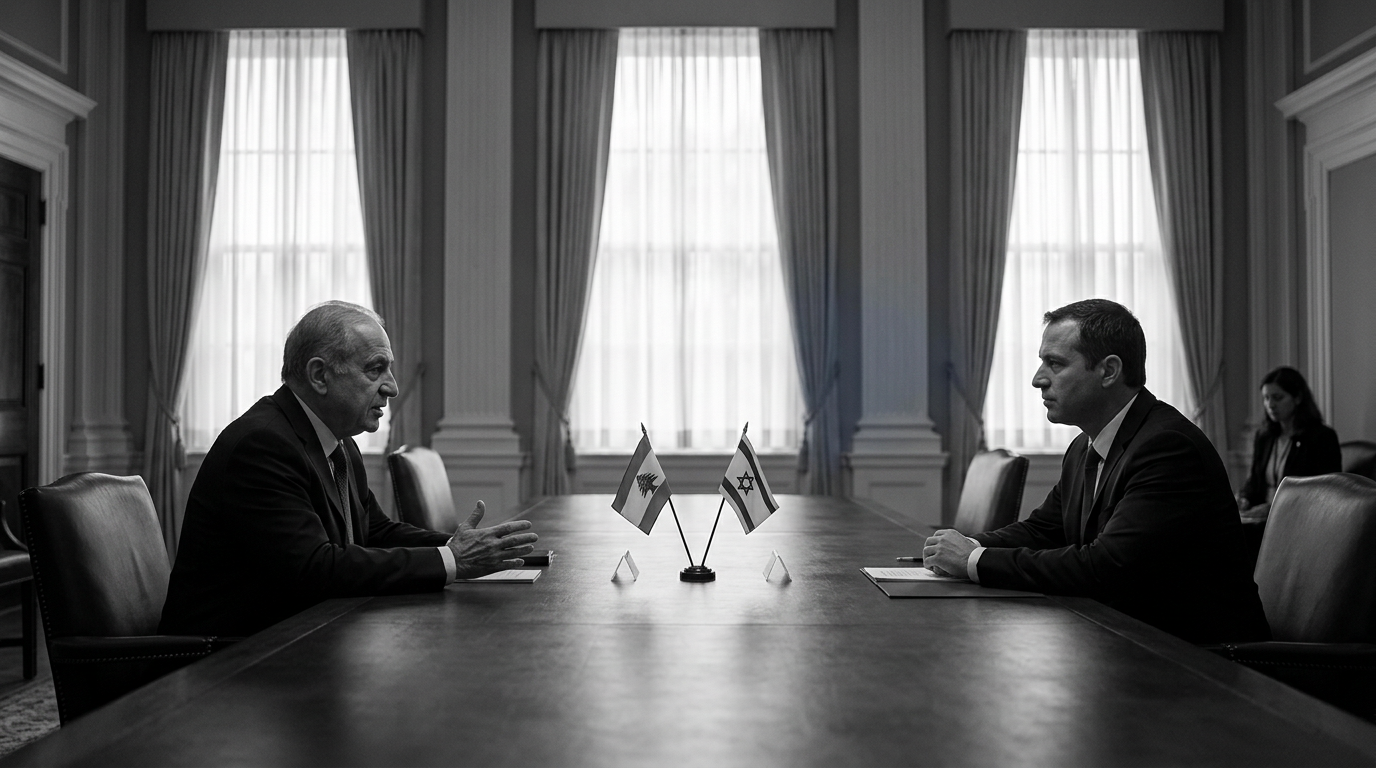
Lebanon and Israel began direct negotiations on Tuesday in Washington, D.C., with the stated focus on reaching a ceasefire agreement after a period of heightened violence. Officials said the discussions are being conducted through ambassadors from both countries, a notable diplomatic move because Lebanon and Israel do not formally recognize each other.
The talks follow a sharp escalation that included widespread Israeli air strikes in Lebanon that left over 300 people dead in a single day, according to the source material. The start of negotiations also comes after a ceasefire agreement between the United States and Iran, which the source material links in timing to the current diplomatic push.
Lebanon’s internal political and security landscape remains central to the negotiations. The Lebanese government, led by President Joseph Aoun, has limited leverage over Hezbollah, described as a powerful Shiite militia and political party backed by Iran that maintains a significant armed presence in Lebanon. This constraint complicates any ceasefire framework that depends on enforcement across multiple armed actors operating on Lebanese territory.
Hezbollah’s recent actions are cited as a driver of cross-border retaliation. The source material says Hezbollah fired rockets into Israel in February following the death of Iran’s supreme leader, and that such actions have often been met by Israeli responses. The sequence underscores how developments involving Iran can intersect with the Lebanon-Israel front, even as the Washington talks are framed around a bilateral ceasefire.
Hezbollah’s origins and long-running disputes over weapons are also part of the backdrop. The group was established during Israel’s occupation of Lebanon in the 1980s, and it has repeatedly resisted disarmament efforts. The source material points to the 1989 Taif Agreement and UN Resolution 1701 (2006) as key reference points that called for the demilitarization of all militias.
More recently, a 2024 ceasefire deal is described as having included Hezbollah’s agreement to remove fighters from southern Lebanon. However, the group’s secretary-general, Naim Qassem, has rejected nationwide disarmament, according to the source material, leaving a gap between localized steps and broader state control over arms.
Public sentiment inside Lebanon appears split. A December Gallup poll found that nearly 80% of Lebanese support limiting weapons to the national army, while a majority of Lebanese Shiites disagreed, the source material says. Against that backdrop, a key uncertainty for the Washington talks is how any ceasefire terms would be implemented given Lebanon’s limited authority over Hezbollah and the absence of formal diplomatic recognition between the two states.